
 Scopique
 Scopique
I have to beat a suitable drum for this feature because in my opinion, it’s going to have a greater impact than the previously massive impact feature, “master modes”. Master modes set off subsets of both PvP and PvE players on different sides of the same coin, but engineering is going to affect everyone in some way, all of the time.
The Original Design
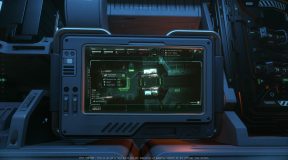
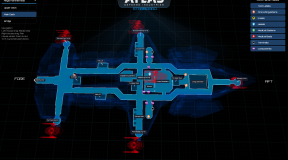
For those outside of the Star Citizen loop, engineering is “care and maintenance of our ships”. Whereas in games like Starfield, the X-series, EVE Online, and Elite Dangerous, ships take damage but are easily repaired either in drydock or in situ through a menu. Star Citizen is big on simulation, so engineering is a “hands on” way for players to experience the joys of regularly scheduled oil changes in a video game about space ships.
The original design manifesto is pretty long, but here are the highlights:
- Ships have components governing ship functions, and can be damaged, leading to reduced capabilities or even ship destruction.
- Ships have shields, armor, and hulls, and damage must penetrate this stack before reaching components.
- Weapon penetration statistics take into account the weapon type, size, range, and cone of impact.
- Components (internal and external) can experience wear through use, requiring replacement eventually.
- Fuses regulate power flow throughout the ship. Damaged or missing fuses will interrupt power, taking components offline.
- Damaged components can cause fires inside the ship, which can spread if not dealt with.
The Testing
Engineering went to the PTU from a tech preview channel somewhere around November 28th of 2025. According to the notes, all ships had the same survivability as they do in 4.4, but with addition of engineering, the expectation was that players who had a crew or were on top of their repairs could extend the life of their ships in combat beyond this standard survivability. Because of wear, players would need to keep an eye on their ships as a matter of course, as a worn down component would eventually break even without taking combat damage.
It seemed the Big Deal out of the gate was the power situation. Fuses sat in the middle of power routes, and if they got damaged or were removed, power would cease to flow through their downstream channels, potentially taking several components off-line even if those components took no damage themselves. In addition, reducing a power plant’s HP to 0 would cause the ship to instantly explode.
Apparently this (and other factors) didn’t sit well with players — including myself, who had limited experience with the system on the PTU but didn’t like the look of the patch notes — so CIG started an aggressive campaign to act on player feedback.
The Feedback
At the beginning of December, CIG increased the armor health across the board. They also apparently allowed players to repair their power plant, meaning that such an action was not part of the original spec.
One day later on December, 4th, CIG released patch notes and followed up with a video interview with Thorston Leimann, lead systems designer, and in both it was mentioned that the team did some soul-searching after the feedback from players in tech preview and on the PTU, and were going to approach engineering from a new angle, one which moves away from “punishing ‘make your life miserable’ mechanics”. This involved the following changes (at least):
- Missing or damaged fuses no longer prevented power from flowing downstream; they now just reduce available power we can allocate to components.
- Repair tools work faster.
- Wear and tear was mostly disabled.
- All components can be replaced or repaired at stations.
The removal of wear and tear is important as this system affected everyone, so even folks who never experienced combat would need to mind their ships. I assume it was removed not because it was a bad mechanic, but because CIG felt they had more important systems to balance without ever-decreasing numbers getting in the way. Players also felt that they weren’t able to repair their components fast enough before they became disabled, so the first pass answer was to decrease the repair time at the tool level.
The next week, we got a message on Spectrum from Nicou-CIG with additional updates:
- Power plants were causing too many ship explosions, so power plant TTK was increased.
- Repair speed was previously tripled, and even more changes were planned.
- Shields were buffed, and further shield and armor health adjustments were planned.
- Changes to differentiate damage from ballistic and energy weapons.
- Fuses got a health buff overall, and single-seater ships would take no fuse damage.
- Penetration distance and radii were reduced.
At this point, fuses seemed a “nice to have”, or irrelevant in single-seat ships. This period also sparked continuous touches to power plants as well as changes to weapon penetration and cone radii.
On December 10th, all ships had wear and tear removed from fuses and weapons. More updates were done to armor reduction on hit from ballistic and energy weapons.
The next day, power plant TTK was doubled, and became the only component that received damage when a ship’s hull HP was reduced to 0. CIG really wants the power plant to be the most important component — and rightfully so — but they seem to be struggling with exactly how to make it important, without making it too important.
On December 12th, the updates were focused on damage. Penetration was made to scale radially, effectively narrowing the most important part of the impact so that it didn’t cover as much area as it did previously. The original design of weapon impact covered a wider area which allowed a single shot fired to potentially affect more armor and more components, and this update narrowed the affected area. Components all received resistance updates, increasing their TKK.
That brings us to today, December 17th, when I awoke to the following changes:
- Ship Overkill: Once all ship parts reach 0 health we activate another health pool buffer (this amount is hidden). Once the buffer reaches 0 health, it will trigger an unavoidable explosion of the ship. If the player manages to repair the hull (to counter it), the buffer is ignored. If the hull reaches 0 health again the buffer starts again.
- Multi-shield Implementation: When a ship now has more than 2 shields, all shields will contribute to overall shield health, even the ones not given power by the generator. Regen, however, will be affected as only 2 shields at a time have power and can regenerate health. This will affect overall regen speed as the 2 shields with the lowest power requirement will regen first and then subsequent shields after.
Thoughts?
I freely admit that the original engineering design was, in my mind, brutal. I originally viewed it as a means of forcing multi-crew gameplay which would have made even small multi-crew ships like the Cutlass Black basically unusable by a single player. After some thinking on the subject, I realized that it wouldn’t be so bad, as engineering was actually a way to extend survivability beyond the usual TKK.
Other players who got to experience the in-combat gameplay weren’t happy, it seems. One complaint was that power plants were exploding too quickly, as players couldn’t race through larger ships fast enough to stave off an explosion. CIG’s response was to reduce repair time once players arrived on the scene, and then radically increase a power plant’s durability. Like the removal of a fuse’s responsibility in power management, other components were made almost indestructible as a means of putting them aside while the team addressed what to do about power plants.
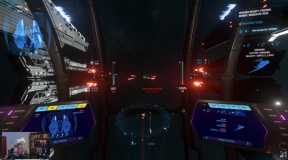
On a wider scale, updates to how weapons punch through ships to reach components is in constant flux. Apparently the “shotgun blast” of every weapon was doing more damage than players or CIG wanted, and has since become more narrow at the point of impact and also less powerful, reducing penetration. On smaller ships, hitting almost anywhere is pretty much guaranteed to hit a component, but in larger ships, which are mostly empty space, it’s inherently more difficult. Narrowing the cone and penetration is a boon for larger ships, and possibly smaller, single-seater ships as well and seems to me like an actual means of addressing the situation, as “not hitting components prone to explosion” is the best way to increase a ship’s TKK. Of course, ships should have opportunities to explode, so I get that CIG can’t just make every hit a pencil thin, non-penetrating point of damage and call it a day.
I’m surprised and disappointed by the recent changes, though. “Once all ship parts reach 0 health, we activate another health pool buffer…”. This phantom HP pool seems like a bennie that doesn’t make a lot of logical sense in a simulation-centric game. As if to mitigate this hand-waving, once this magical pool of HP is emptied, the ship immediately explodes — no take-backsies. Players can repair the hull, though, and the pool is replenished until the hull reaches 0 HP again? I’m confused as to how repairing the hull affects “all ship parts”, too. I hope this is just a stop-gap measure to allow CIG to focus on the life-cycle of other components and doesn’t end up being the end result implementation. Not only is this extra HP pool coming out of nowhere, it’s non-monitorable, so we have no idea when it actually triggers and how long it will last. On top of this, ships with more than 2 shield generators will allow all shields to contribute to shield health, including ones not powered. I don’t know how that gets explained. Shield regen only happens for 2 shields at a time, though, so having more than 2 shields might help initially, but once the shields are down, subsequent shield components become deadweight until the main shields (ones with the lowest power requirements) are full. That’s an important caveat, and I fully expect many players to equip “backup shields” with lower power requirements, only to have those regen first, and not their better, more expensive shields, leading to complaints on Spectrum.
At this point, I don’t even know what the engineering system is doing. CIG’s obviously selectively disabling systems to work on as few at a time as possible, leading me to believe that they activated too many systems all at once. However, since engineering is a complex, integrated system, there’s no way they could have avoided it. These patches look to me like a “spaghetti at the wall” approach to finding a sweet spot rather than just picking a goal and putting their foot down. I haven’t seen CIG bend this fast to community feedback, ever, but I think that engineering is such a hyped up system (blame CIG who has been talking about it for almost half a decade now) and one that affects all ships, all the time, that it has the potential to piss everyone off in some way if done poorly, and even make the game unplayable or at least critically un-fun.
I’m very curious to see the state of the mechanic when it does get released. CIG usually releases before their holiday break at the end of the year and as we’re still in the “year of patching” I wouldn’t expect 4.5 to be any different. The updates were happening in the PTU by the day, so it’s a bit like Russian Roulette as to what kind of state the system will be in when the patch drops.



2 Comments
Tipa
December 18, 2025 - 7:19 amNot a player, but I really thought having a dedicated slot for an engineer player, IF AVAILABLE, would be expanding the kinds of gameplay open to players. Starship Simulator lets you do exactly that, be the engineer on an Enterprise-like starship while NPCs take the other crew functions. In this scenario, you would hire NPC engineers who would be just good enough to keep you flying in most situations. The idea being that a large ship crewed by players would be devastating, but you could get by with NPC crew.
As things are now, according to your description, I don’t see any need for a dedicated engineer player at all.
Scopique
December 18, 2025 - 8:05 amAfter the patch dropped last night I saw folks in chat talking about signing up as dedicated engineers for PUGs, so some people are down for that kind of gameplay.
I haven’t seen or experienced it yet, or even heard about it, but I would guess that in combat, engineers will be very important. The longer an engagement lasts the more damage a ship will take, and statistically the likelihood that components will get damaged or that fires will start will increase. Also, engineers are in charge of creating power profiles, so they’ll need to be in charge of routing power where it’s needed (all power to shields!).