Scopique
 Scopique
Starfinder is an offshoot of Paizo’s popular Pathfinder TTRPG. It uses the same ruleset and is set several thousands of years in the future of the same game world as Pathfinder. I have run a few Starfinder TTRPG games in the past and have most of the published first edition ruleset and supplement books on my shelf so I was pretty excited to learn that there was going to be a CRPG set in the Starfinder universe.
A demo was just released for Steam’s current “Party RPG Fest”, so I ran it through some/most of it’s paces.
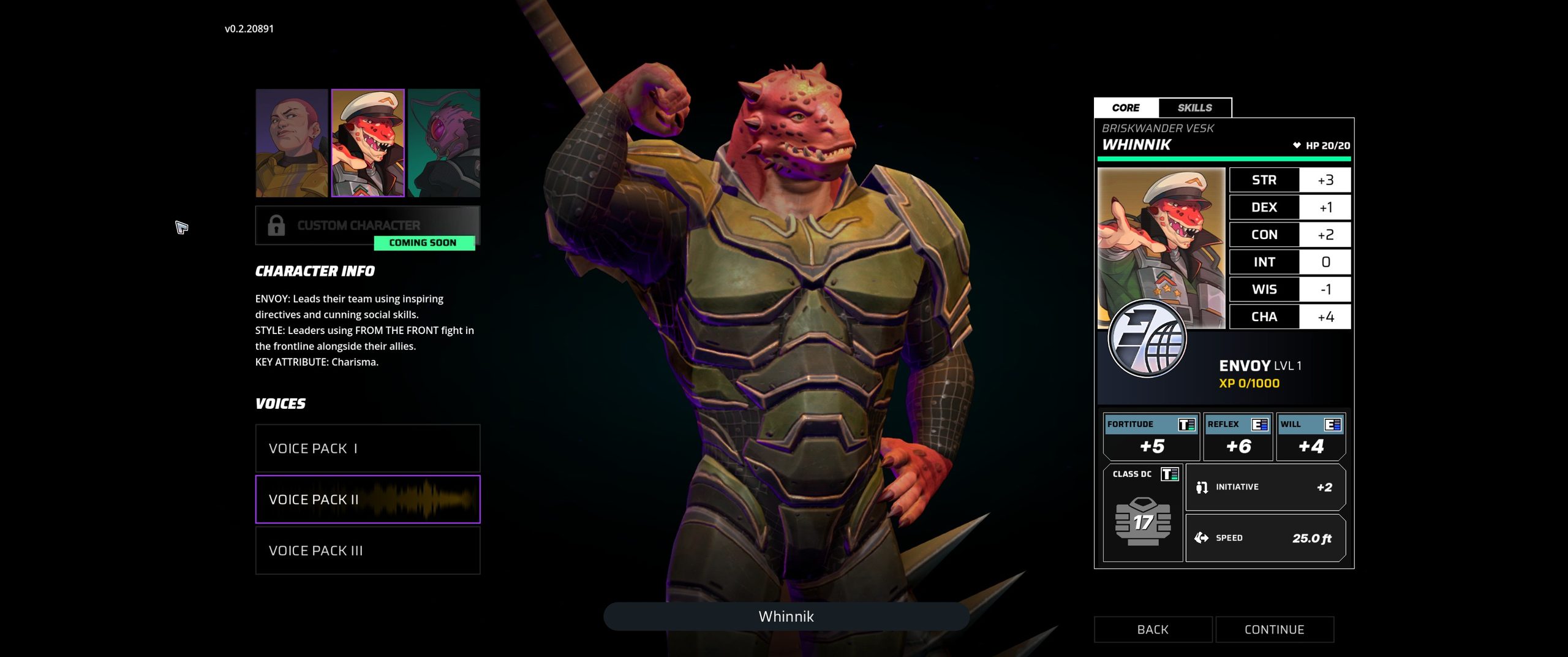
We begin by choosing from three pre-defined characters: a human, a lizard-like Vesk, and an insectoid Shirren. The stats are set from the get go, so our choices are painfully limited and I find this disappointing. I’m not sure if this is a demo limitation or if the full game will allow us to roll our own characters but I’m hoping for the latter as it would be true to the spirit of the setting’s TTRPG roots. Recent patch notes hinted that these were pre-gen characters, which makes me think that we will get to create our own in the final product.
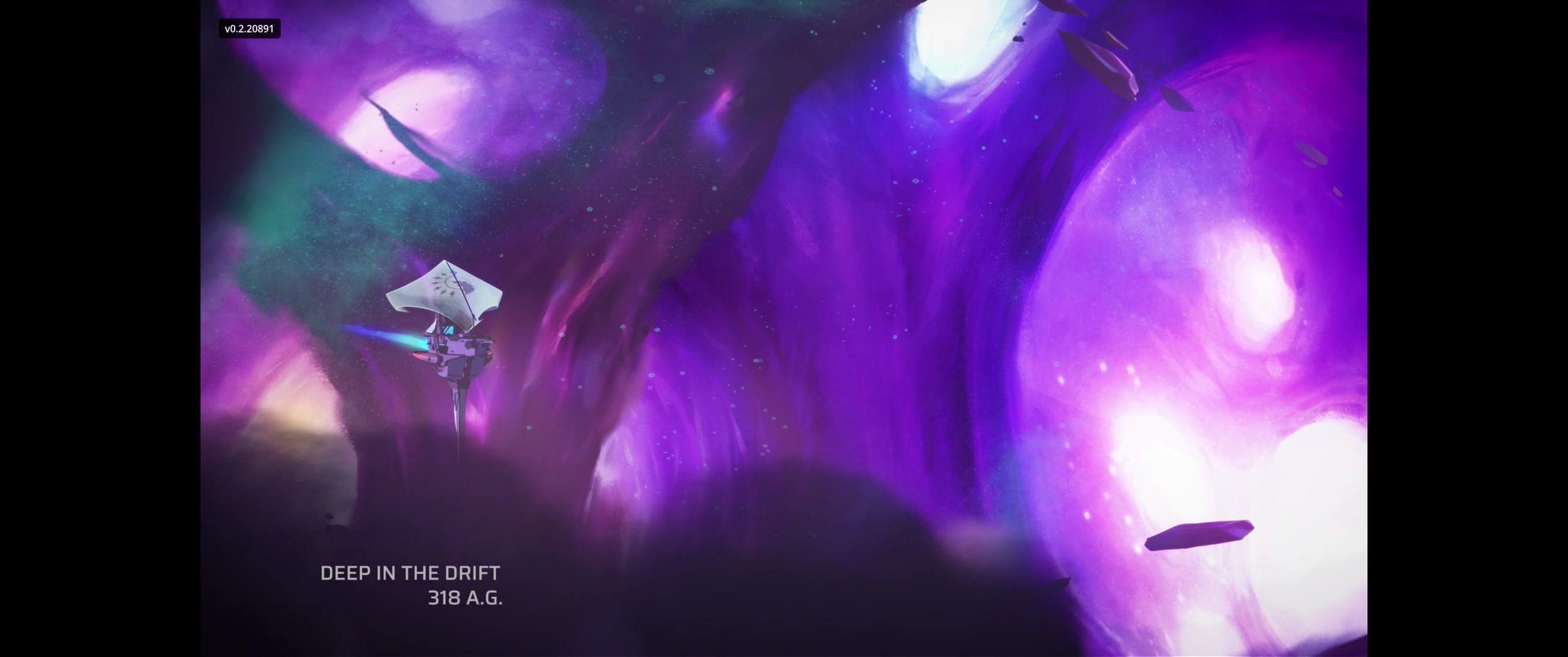
After our character selection we find ourselves aboard a pirate ship, the Moon of Misfortune, traveling through the Drift, an interdimensional space that explains how our characters can travel long distance through the universe. Upon exiting he Drift, however, the ship is ambushed by the Corpse Fleet, a rogue navy comprised primarily of undead. They have have assaulted and blockaded Absalom Station, Starfinder’s version of Babylon 5.
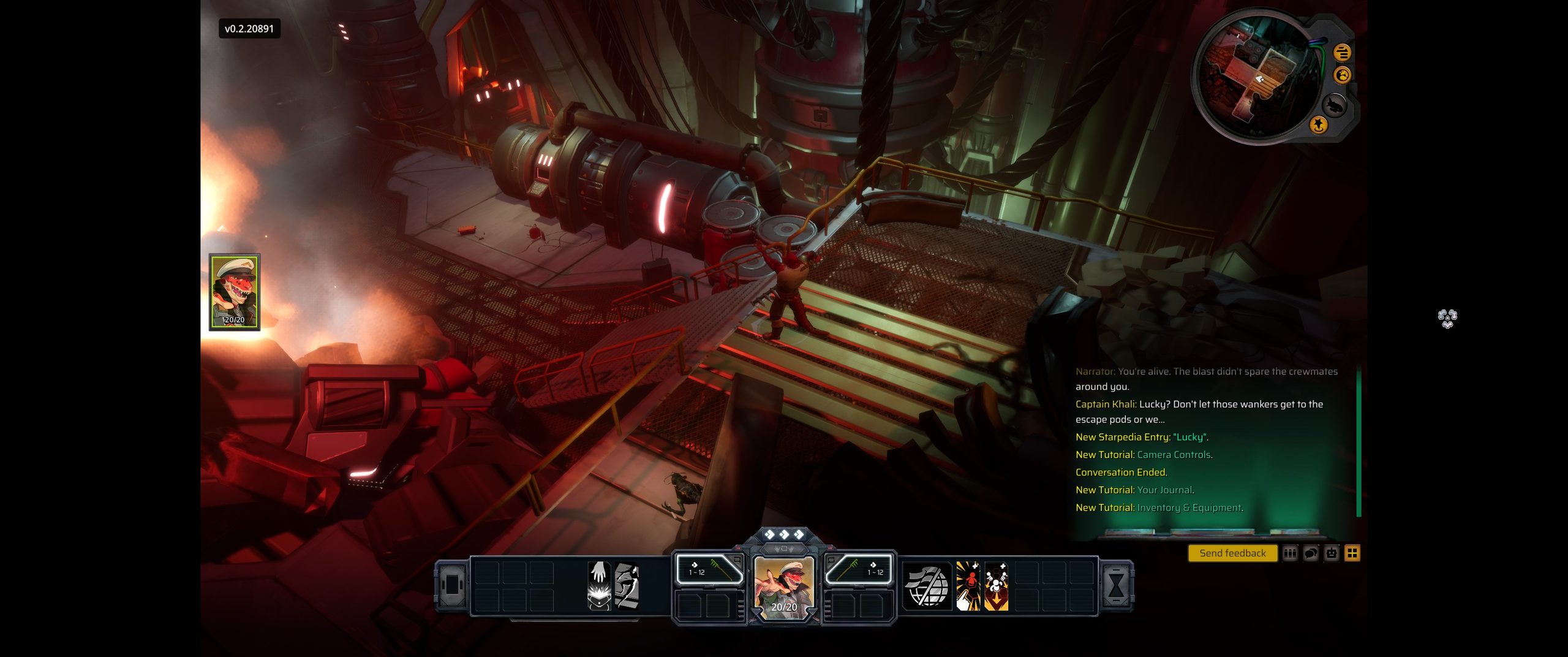
With our ship out of commission and most of the crew dead, our only task now is to get to the escape pods. We move using WASD or left-clicking on the ground, and interact with items like doors and containers by left-clicking on them. Right-clicking on items provides a context menu which might offer additional actions. Clicking and holding the mouse wheel allows us to rotate the camera as does Q and E. Holding ALT will highlight items that we can interact with in our immediate vicinity.
A “chat window” is on screen which allows us to re-read popup messages we might have missed, such as the general tutorial panels that appear above the chat box area. Starfinder Afterlight has a hover mechanic which displays additional information when we hover or click on differently colored text, which provides insight into the Starfinder universe and lore, or opens popup panels we might have missed.
We also have a mini map in the upper right corner which will show our pathway options as well as interactable items and NPCs, but it doesn’t show objective markers which would be a useful addition to help with navigation.
The bottom of the screen shows our currently selected character and their abilities. Most of this doesn’t do much until we’re engaged in combat, though.
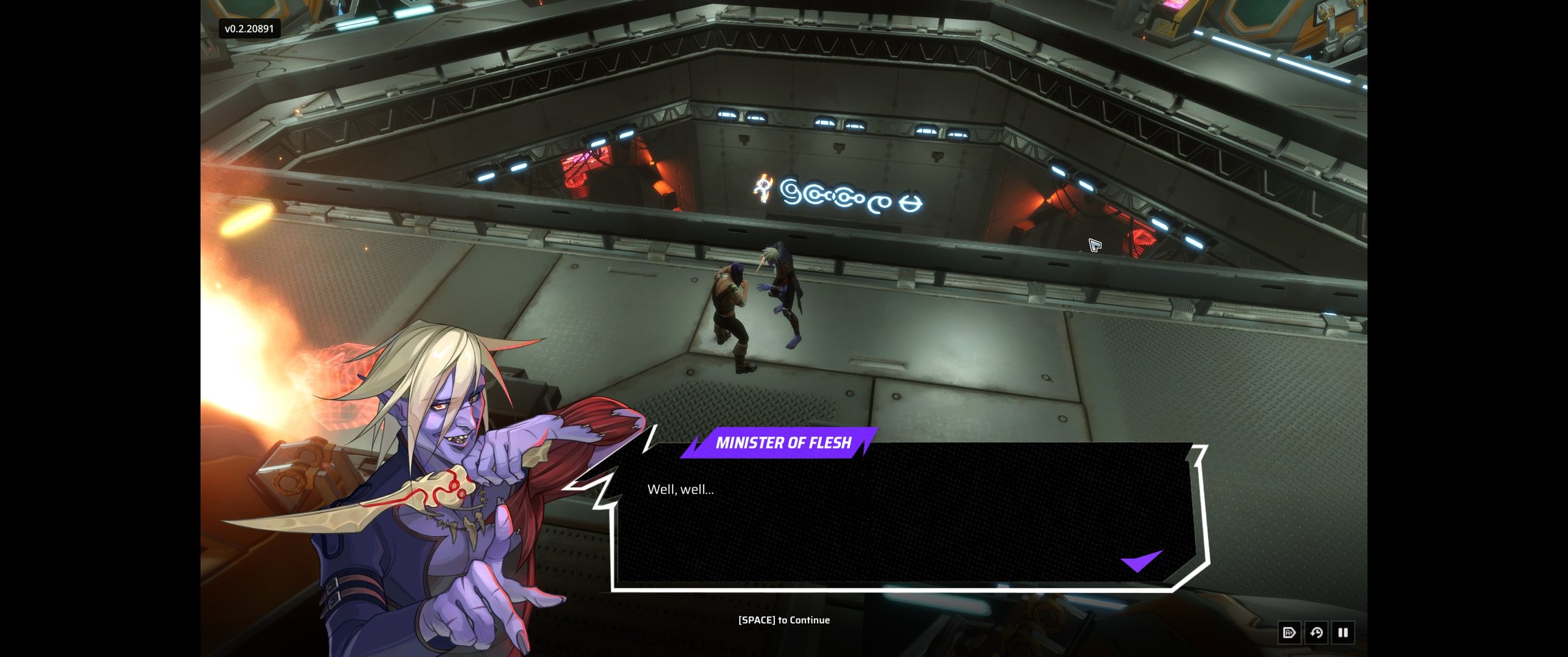
Combat is turn based and follows the rules of Starfinder. After initiative is determined, each character has three actions available during their turn allowing them to move, attack or perform any combo thereof up to three times, total. If we have ranged attackers, we can initiate combat early to get one good shot in, but otherwise combat starts when hostile NPCs detect our party members. The toolbar at the bottom provides each character with access to the feats, any special attacks they might have, and it seems like the toolbar is open for future expansion but most of it was pretty sparse during the opening of the game.
Once we leave the ship, the story kicks in. We start out by looking for our Captain, Khali, whose pod crashed on the same planet as ours did, only we landed with some…slight temporal complications.
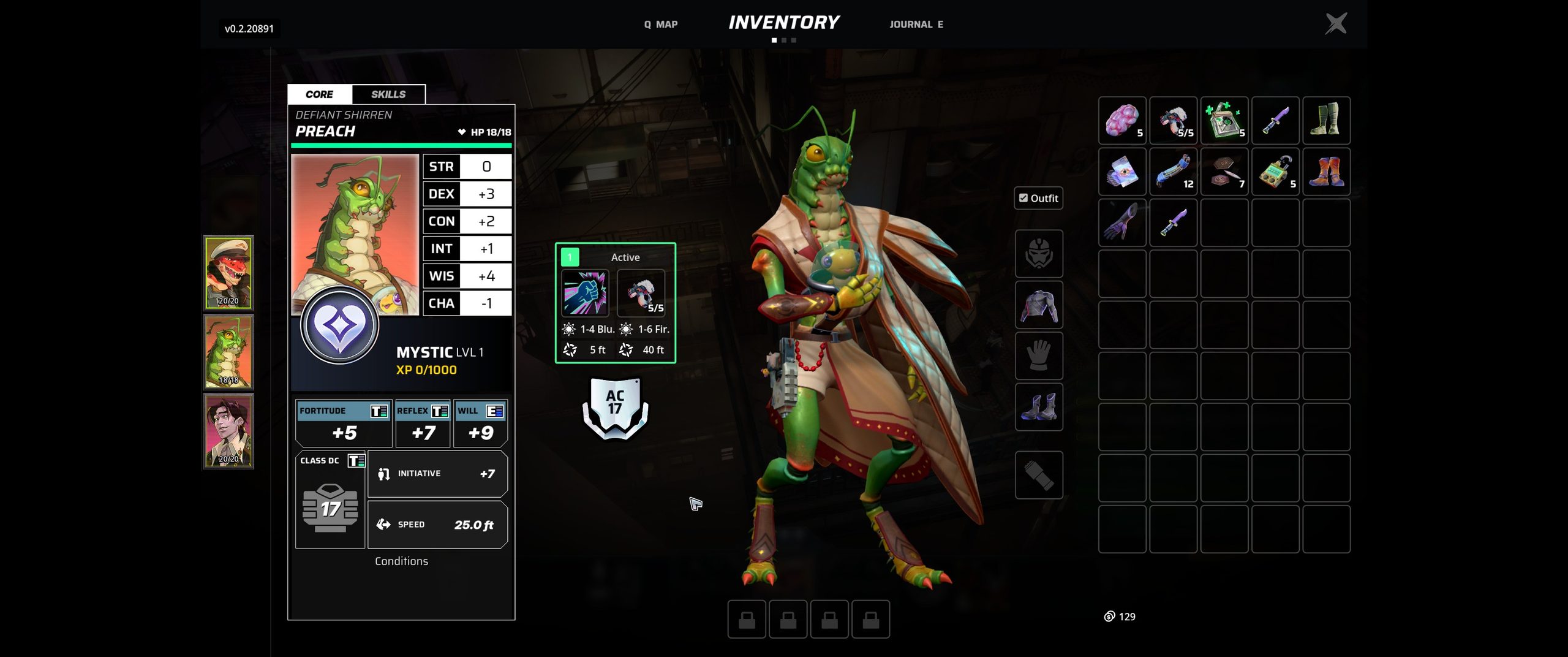
Our first non-crew companion is a Shirren named Preach who is carrying around a larvae. Preach is in charge of teaching the larvae the ways of their religion, making Preach the “moral compass” of the party. As we take actions, our party members and other NPCs will judge and remember our decisions, affecting our individual reputations with those characters.
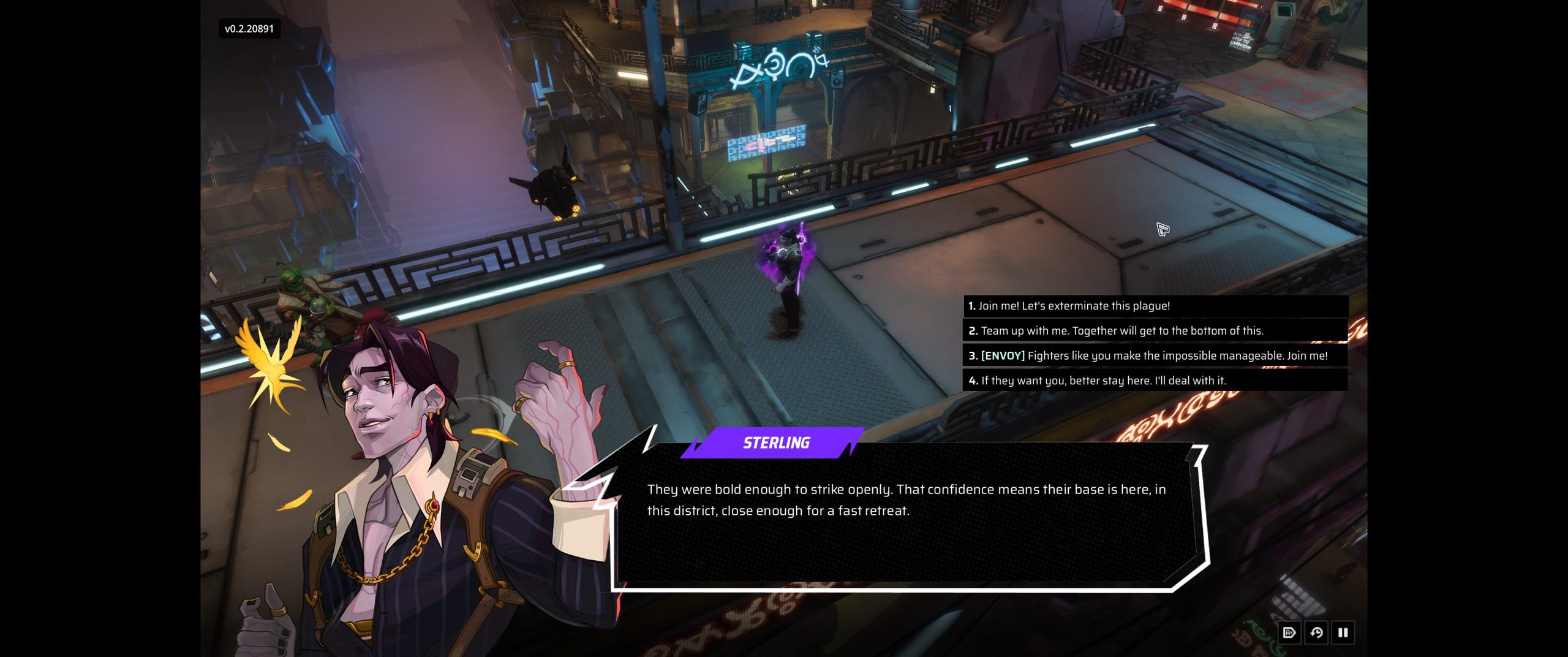
During interactive scenes with NPCs, we get conversational popups, and occasionally we get conversation options. I’m not entirely sure what, if any, differences there are in the options we’re presented with or whether they affect the story in any way. Some options will only appear if we have a specific race, class, or skill.
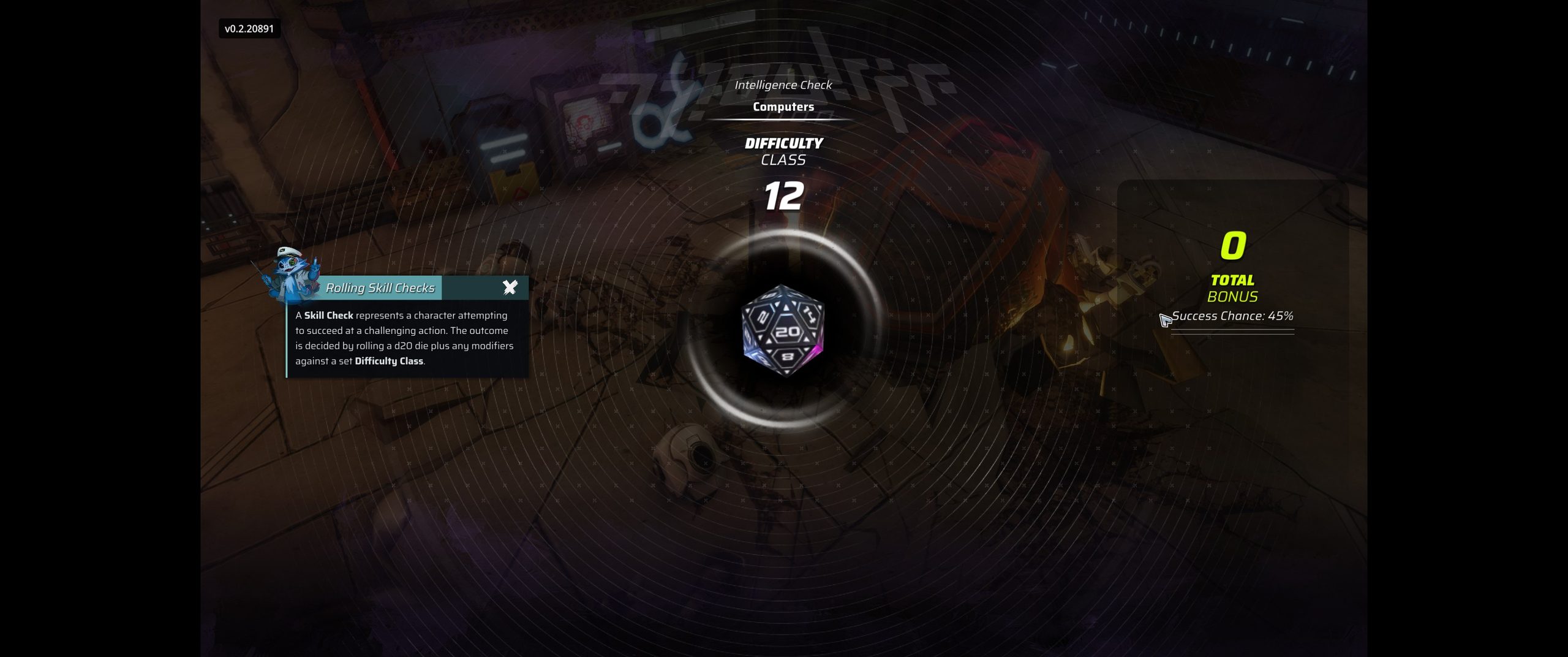
Use of skills is determined by the game. When we need to perform a skill check, we’re presented with a d20. In the -Finder games, tasks are undertaken by comparing a difficulty class value (higher is more difficult) against a character’s skills or traits plus the roll of the d20. Surpassing the difficult skill results in a success; 20 is a critical success, and 1 is a critical failure. Standard stuff.
Thoughts
Overall, I’m not really sure how I feel about Starfinder Afterlight after playing some of the demo. I quit before getting too far into it in order to preserve the narrative for launch, should I decide to purchase the game. I don’t know if I can articulate my hesitation, though. I felt that the maps were a bit claustrophobic, leading to a sense that they were small and easy to get through, which then lead to a sense that the game wasn’t presenting me with many options aside from talking to select story-focused NPCs and rushing towards combat.
Combat itself was just OK, but I’m chalking that up to the fact that I had no idea what I was doing. I have to roll it back to character selection: there was no info on what any of the stats meant, or why I might eventually want to favor a character with one set of dominant skills over another, but I hope that explanation comes with being able to roll our own characters in retail. In combat, then, there were buttons and skills that weren’t explained (there are tooltips, but they weren’t helping), so while I could intuit how to play the game due to decades of similar titles and familiarity with Starfinder, I felt I was a bit adrift, and might have been leaving some power-moves on the table.
If I had to compare the game to a touchstone, I got a very strong Shadowrun Returns vibe. I really like the Shadowrun games, but they were released in 2013. In 2026 I’d hope we’d have built upon that legacy, not simply copied and pasted it. Overall, the game felt a little weak, but I admit that it might be because it’s a demo, and that I cut my playtime short before I experienced other mechanics. Based on recent patch notes, I feel like the demo is really just a taste experience, and the final product will be more fleshed out. At least, that’s what I hope will happen.
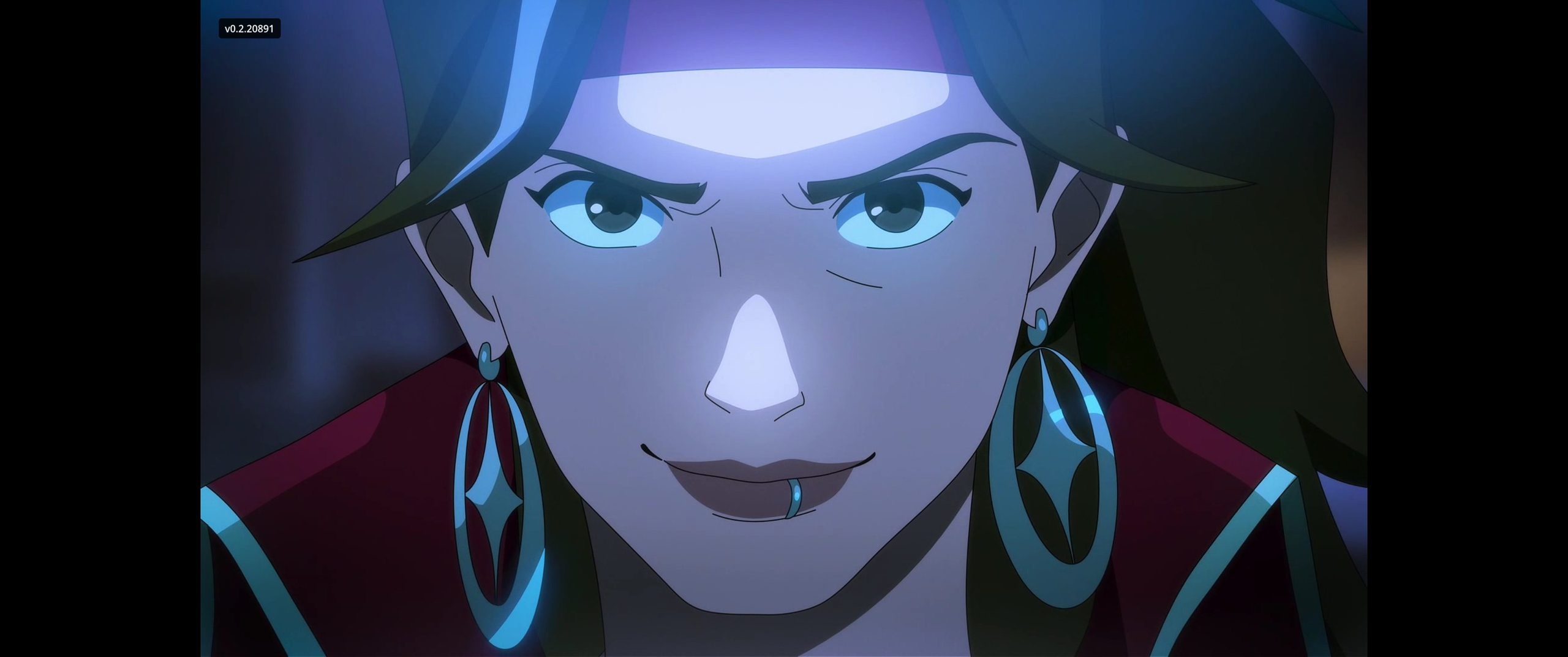
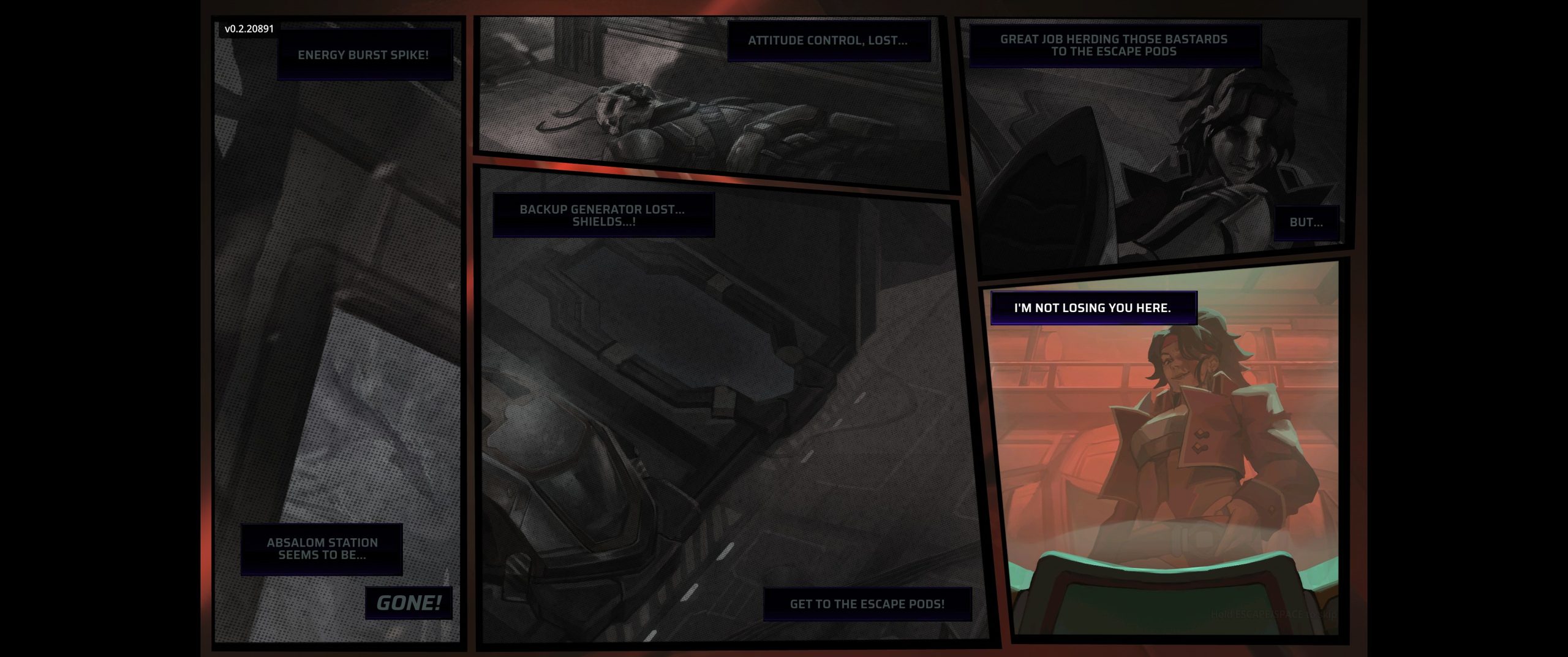
The art direction is top-notch. Cut-scenes are presented in a mix of animation and comic book format. NPC portraits are high quality and showcase the different species found in the Starfinder universe. Most character animations are also excellent, although my melee attacks did feel a bit weak, like my Vesk alter ego was phoning in his actions.
I was kind of taken aback by the voices and deliveries. Not every character is voiced, but the main NPCs are, and there is a narrator who sounds a lot like Kronk. The thing about Starfinder is that it’s kind of weird. It’s not a setting cut from it’s own cloth; it’s a continuation of the Pathfinder universe, an evolution of that world and the species that inhabit it (although the planet, Golarion, has actually vanished in the Starfinder universe, and no one knows why). As a result, we have dragons, undead, floating brains, orcs, elves, androids, lasers, and space ships, so I don’t think we could ever expect a 100% serious reading of the setting. I wasn’t prepared for how weird some of the voice and deliveries were. Not bad, not at all; just weird. It certainly gives each character their own personality, although some NPCs are obviously cribbed from templates designed by trope or other properties (the character Sterling is obviously channeling Astarion from Baldur’s Gate 3, and the Vesk sound like variations of Arnold Schwarzenegger because big guy, I guess).
Despite waffling, I’ll probably pick this up on launch because I really like the Starfinder setting. I am willing to attribute the overall tepid sense I got from the demo to it being a demo rather than a chunk carved from a final product as some demos tend to be.
I kind of think of Starfinder Afterlight as a good introduction to the world of turn-based CRPGs, and will appeal to those who, like me, are tired of everything being set in a high-fantasy world. Starfinder has a distinctive voice of it’s own, and occupies that narrative “what if?” niche alongside Shadowrun, and I think that’s kind of cool. However, if you’re looking for a game on par with what Larian Studios puts out, then you’ll probably want to look elsewhere.