Scopique
 Scopique
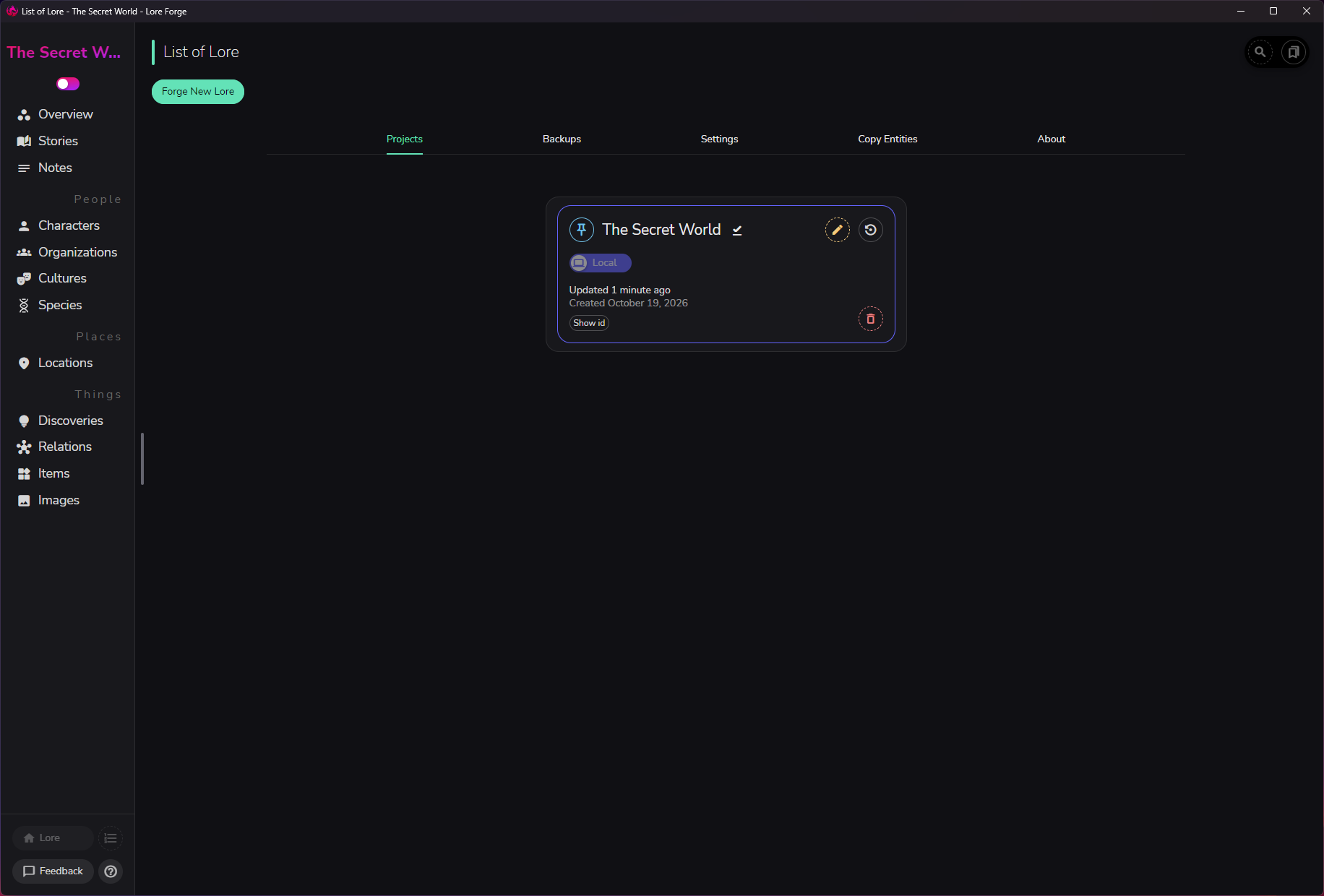
While I feel like I’m scraping the bottom of the barrel in terms of search results, I also feel like sometimes the best stuff is buried beneath a whole lot of crap.
Now, I’m not settling, nor am I saying that Lore Forge checks all of my boxes, but it does seem to tread a tightrope over a pit of disappointment. This is a free app that can be downloaded in either an installed version or — thank gawd — a portable version. I really appreciate portable versions because I can test them out knowing that if/when I uninstall them, they won’t be leaving stuff all over my system. So that’s a plus already.
Lore Forge seems to favor writing, as in novel, novella, fanfic, or whatever other type of long-form prose you might need. 60% of the app does fall into the categorization bucket, however. The app starts with a project that creates two sides of the house: the data side, and the writing side.
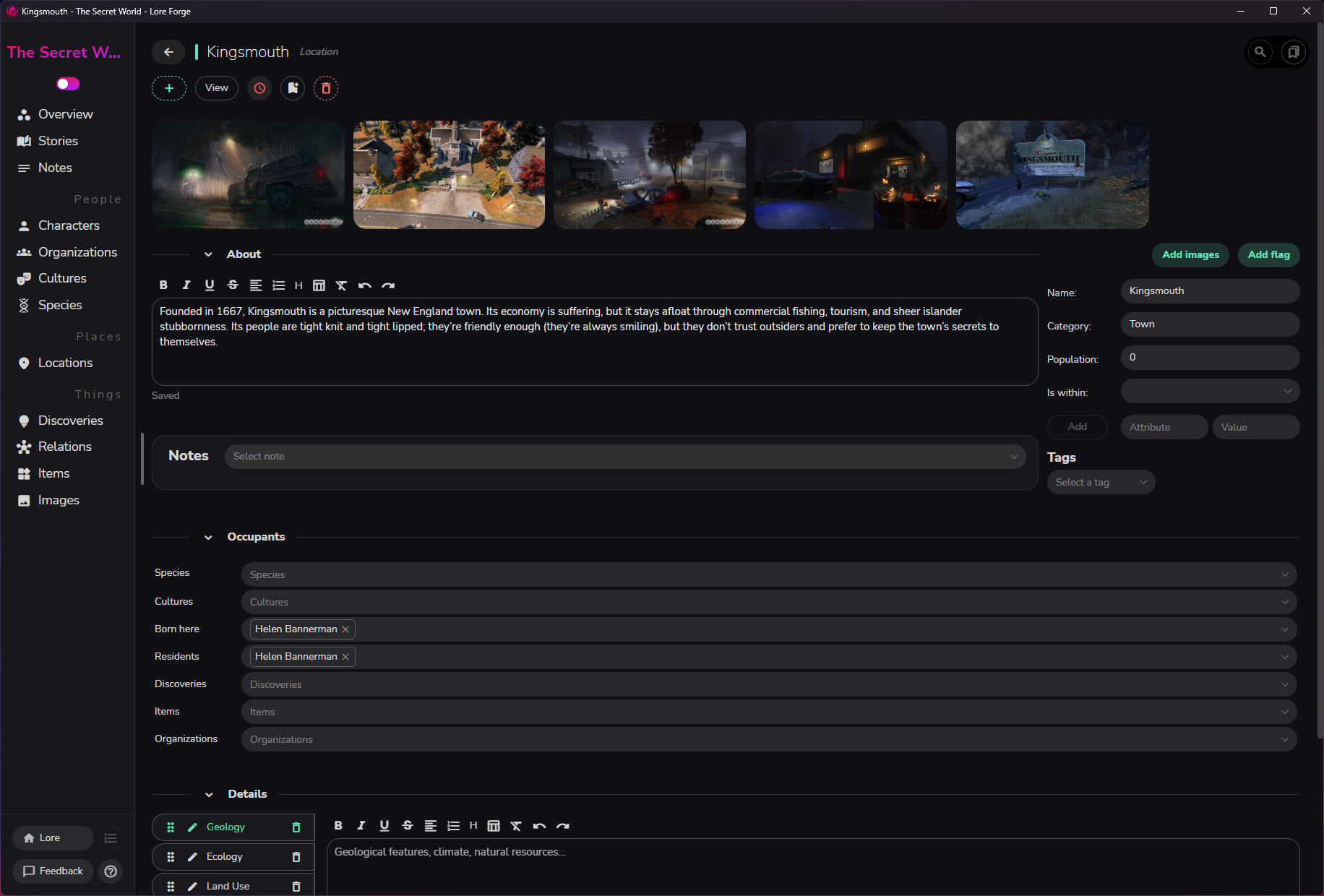
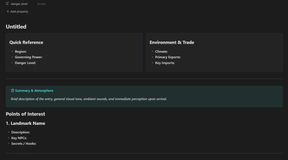
The data side comes pre-loaded with several categories such as character, cultures, and locations. Creating an entry in locations, for example (shown above), presents a series of form fields to fill in. As far as locations go this is pretty heavy-handed for my needs. There are entries for species that can be found here, the cultures that inhabit the location, characters who were born and/or live here, discoveries to be found, items to be had, and organizations to befriend or fight. I respect the blanket Lore Forge throws over the data points, and I can see how they’d be useful for someone wanting to keep info straight when writing a story. There are also details below for longer-form text, including entries for geology, land use, demographics, energy, and security. When I was much, much younger I would have been all over this, but now…it’s too much to concern myself with.
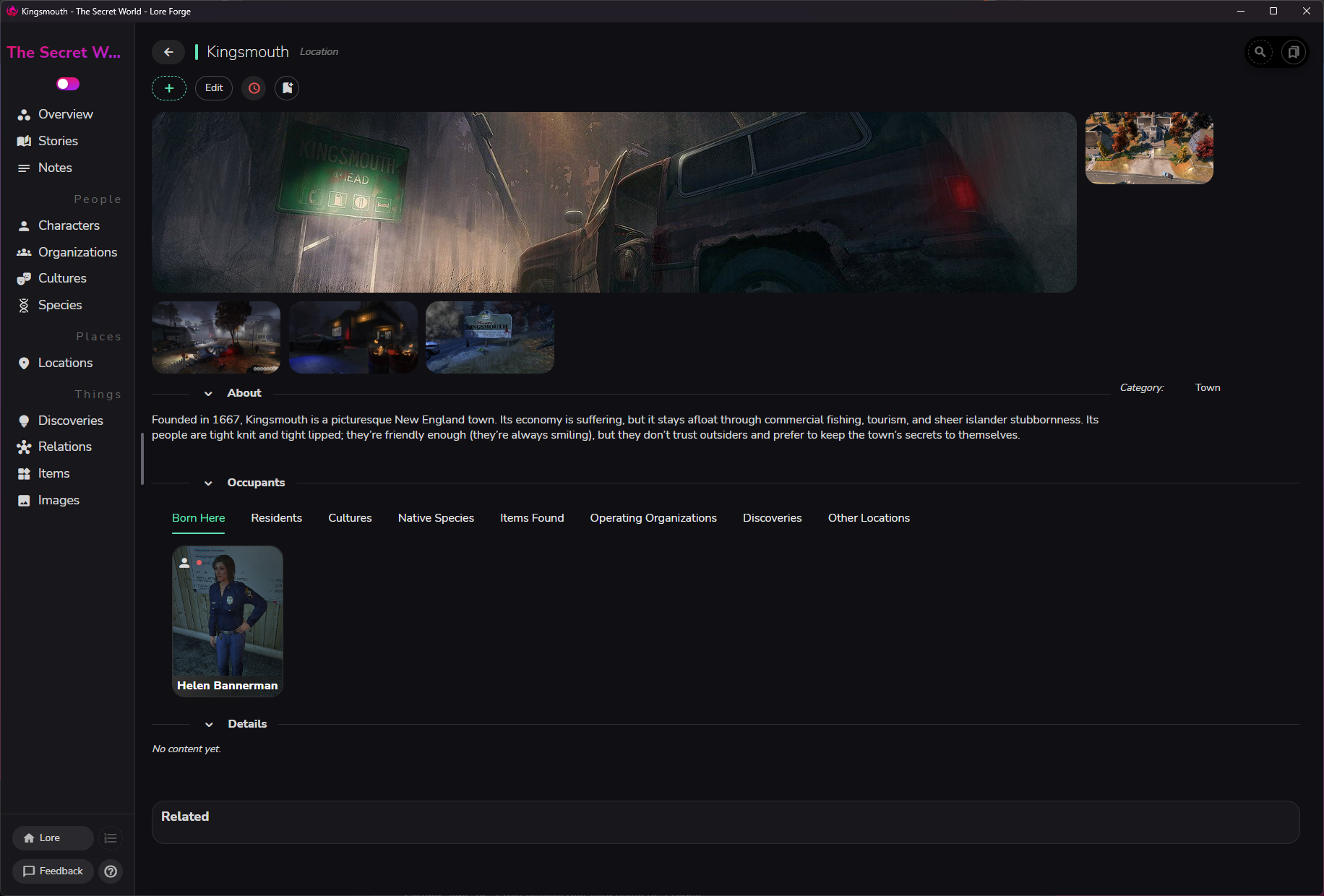
Once an entry is created, selecting it at a later date (or purposefully clicking the “View” button) will switch to a readable mode. That the readable mode is the default when revisiting an entry is most certainly a win in my book, as it treats the data as a resource and doesn’t assume that the primary purpose of the app is strictly data entry.
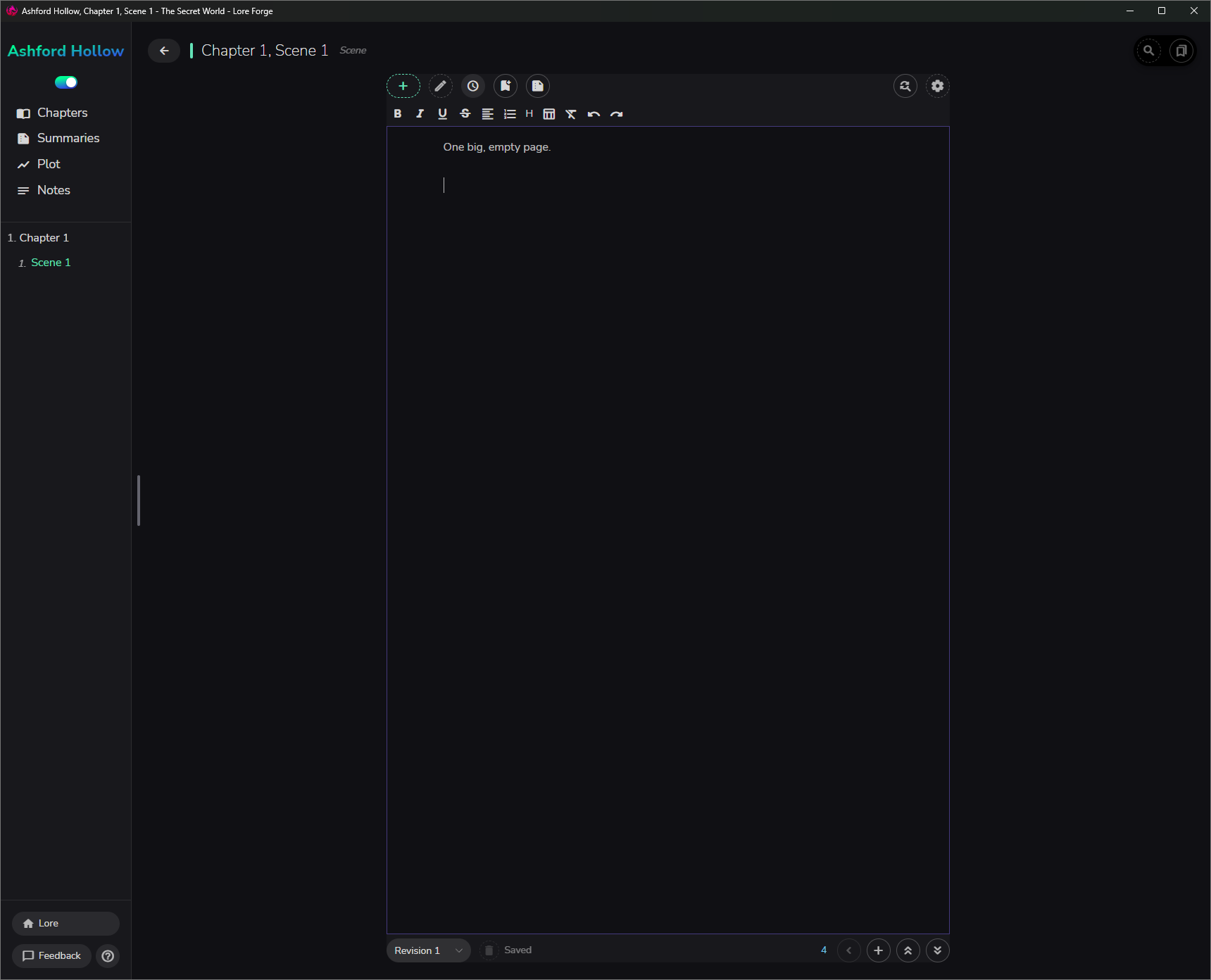
Switching to “Stories” things get a little more traditional. The basic navigation is one of chapters and scenes. Once a scene is added, the app presents this black void of an entry box, some formatting tools, and little else which is kind of a bummer. Since I assume this app is really geared towards narrative works I understand that hyperlinking content from the data side would wreck the aesthetics and mitigate the purpose of the story tools, but without a link to data, I don’t really have a use for this part of the app.
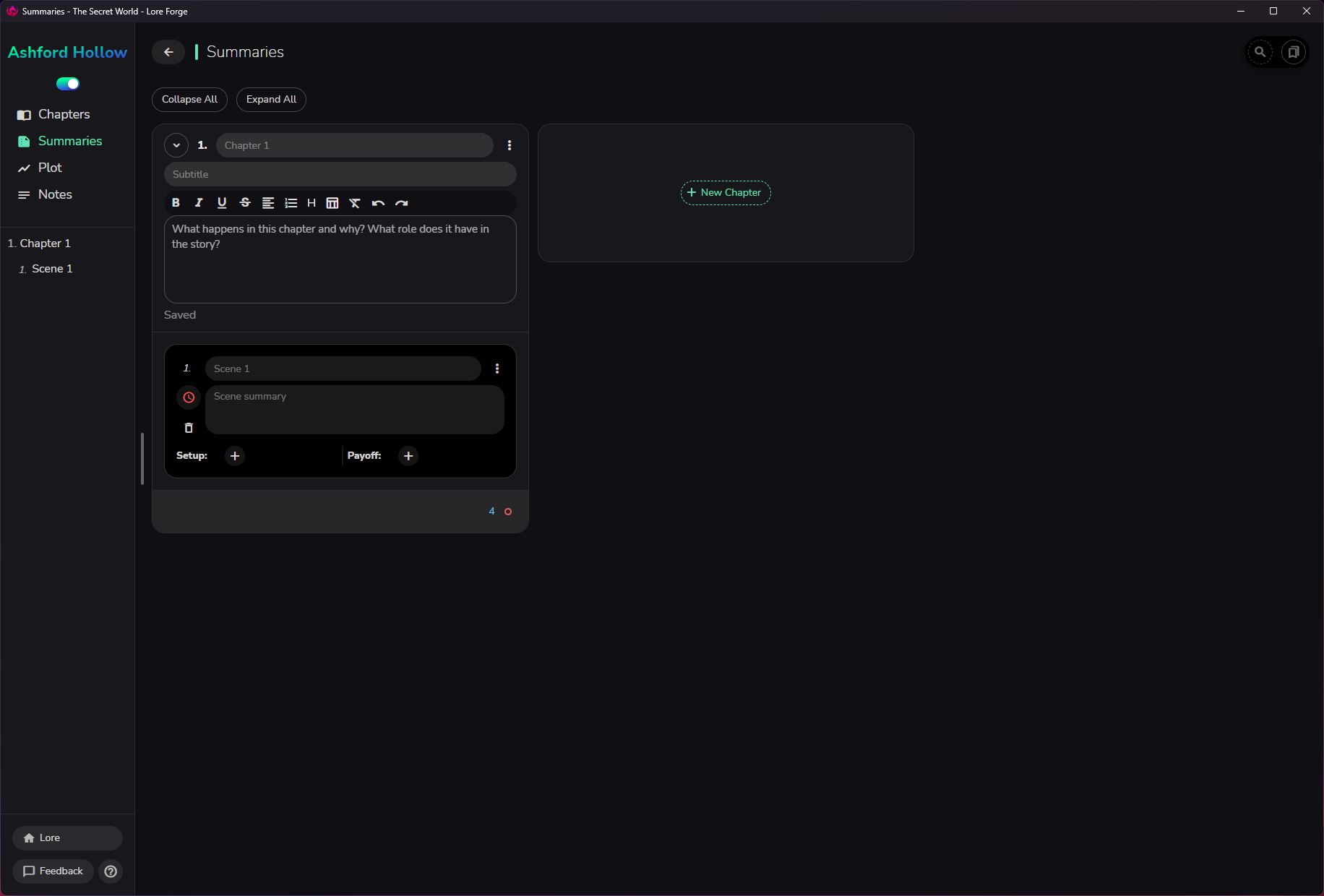
Still, other people might. Chapters and scenes can be viewed as summaries, which might be helpful for keeping things organized and on track.
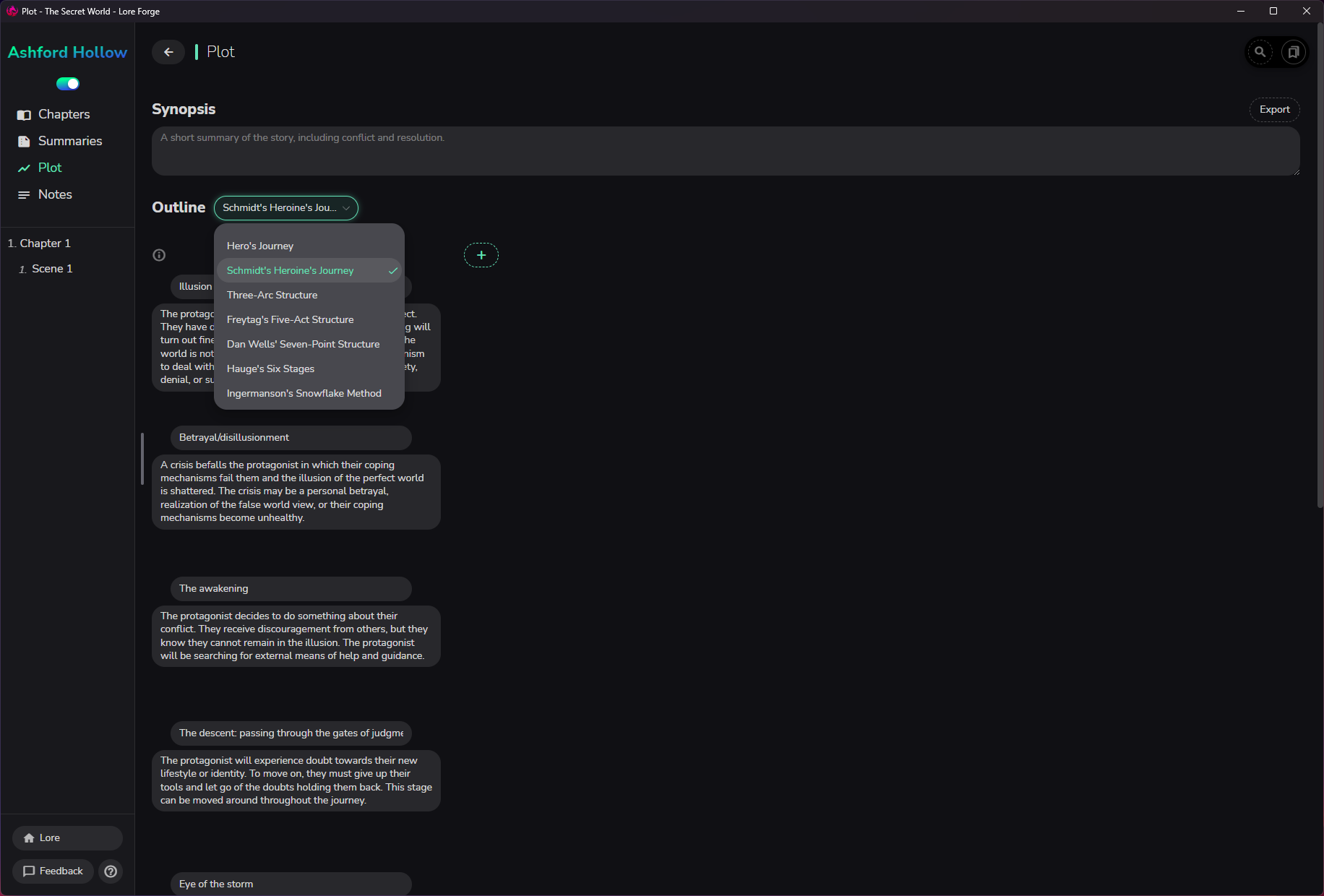
The “plot” option offers several established literary guidelines that authors can choose and fill out if that’s someone’s jam.
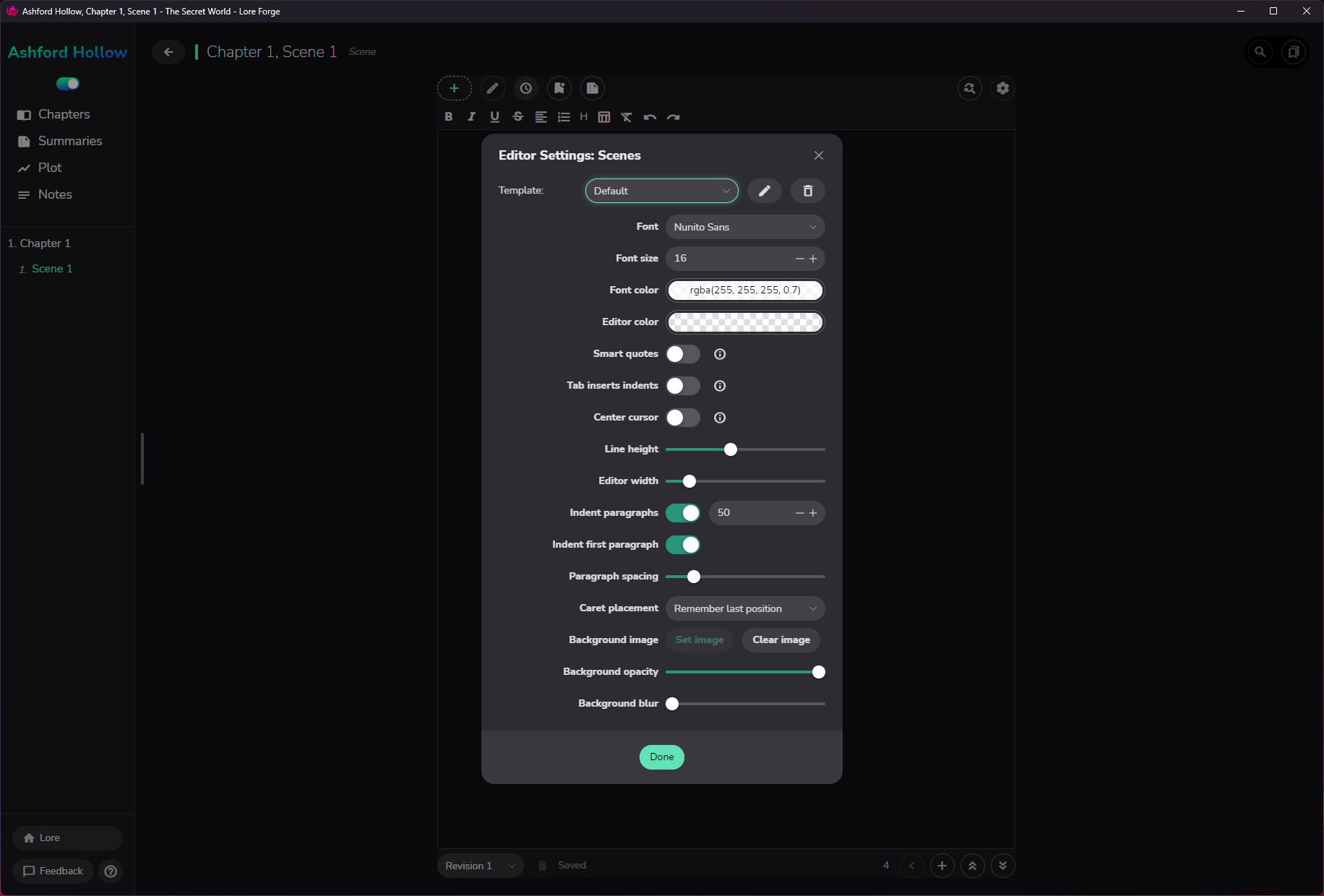
The good news is that the editor has many settings that allow an author to tweak their workspace to fit their comfort.
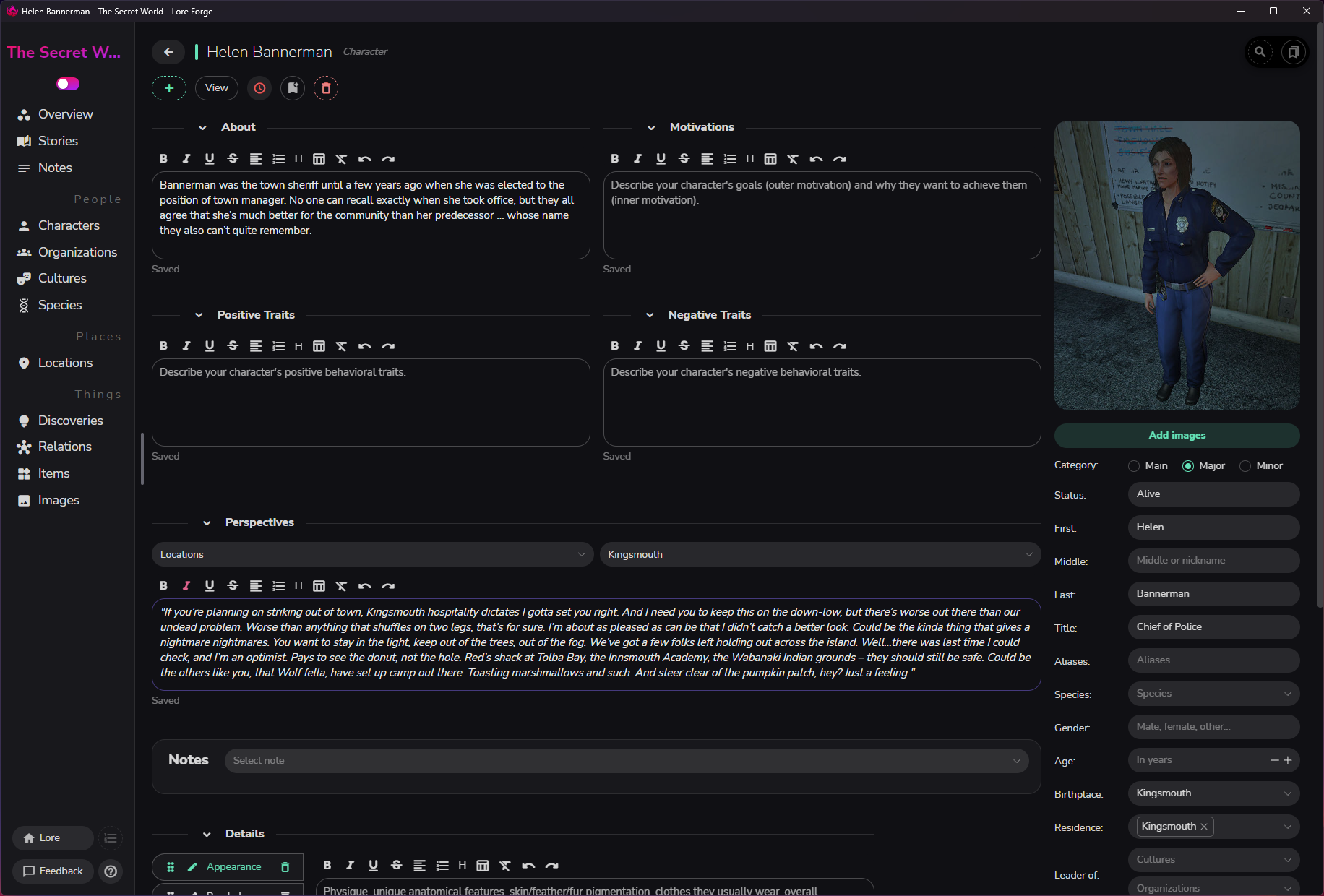
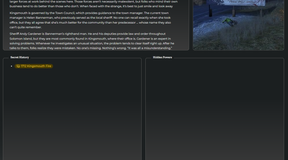
All of this is great, but the data tracking aspects are really what I’m after. I feel that there’s a lot of data points here; in the case of a character, you can see that Lore Forge doesn’t consider any data point beneath consideration. There’s even a whole sidebar for demographic information, and if the supplied bullet-points under “Details” aren’t enough, users can add their own.
I’m getting a really good vibe from Lore Forge, but I’m not entirely sure how it’ll sit for the long haul. While I still prefer the option to create my own forms to fit and adjust by data entry to only the data I want and none that I don’t, I do not think that Lore Forge is going overboard in what it presents as stock data points. I also feel like their presentation is good: well chosen fonts, good layout, nice balance of sizing for text entry ports and yes, all of this is the kind of thing I look for in an app. I think I’ll run with Lore Forge this week with a real push to add some data, and I’ll report back on how the experience felt once I reach a point at which I know. Or at which I think I know.