
 Scopique
 Scopique
Back in the early days of gaming, the length of gameplay in a cartridge was cleverly masked through the art of “doing the same dumb thing over and over until you ran out of lives”. The only way to track progress and provide a sense of accomplishment was to assign “points” to things, or to keep track of time played, and to display that tally on the “game over” screen. As computing power increased, game worlds expanded to allow players to spend more time doing different activities across increasingly larger game worlds. Say what you will about live service games, but it’s because we have learned to off-load processing to data centers that we can have games with limitless landscapes and near-limitless landmasses.
A recent video I saw got me thinking about what is better to have: limitless opportunities across a near infinite landscape within a game, or more localized reasons to stick around a particular area, even if there are more places to visit beyond our normal home range.
On Vesper
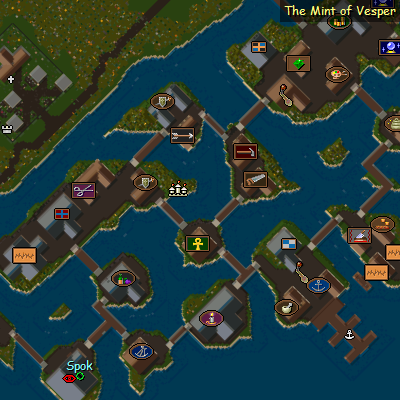
Back in my Ultima Online days I chose to be a blacksmith over almost everything else because I liked the idea of being able to craft and sell items that other people relied on. The city of Vesper was a natural choice for base of operations because of the mountains that lie to the northwest. The world of UO was not very large — when I started, there was only the original landmass– and while early MMOs could be pretty hardcore with both PC and NPC dangers, it was never impossible for me to have traveled the entire continent. UO was a sandbox, which meant that were I to travel it would have been mainly for my own contrived purposes, and since I had everything I needed in Vesper, I literally never left. I figured this was OK as it allowed me to save the rest of Britannia for a time when I wanted a real, honest change in how I played the game.
Planet Citizen
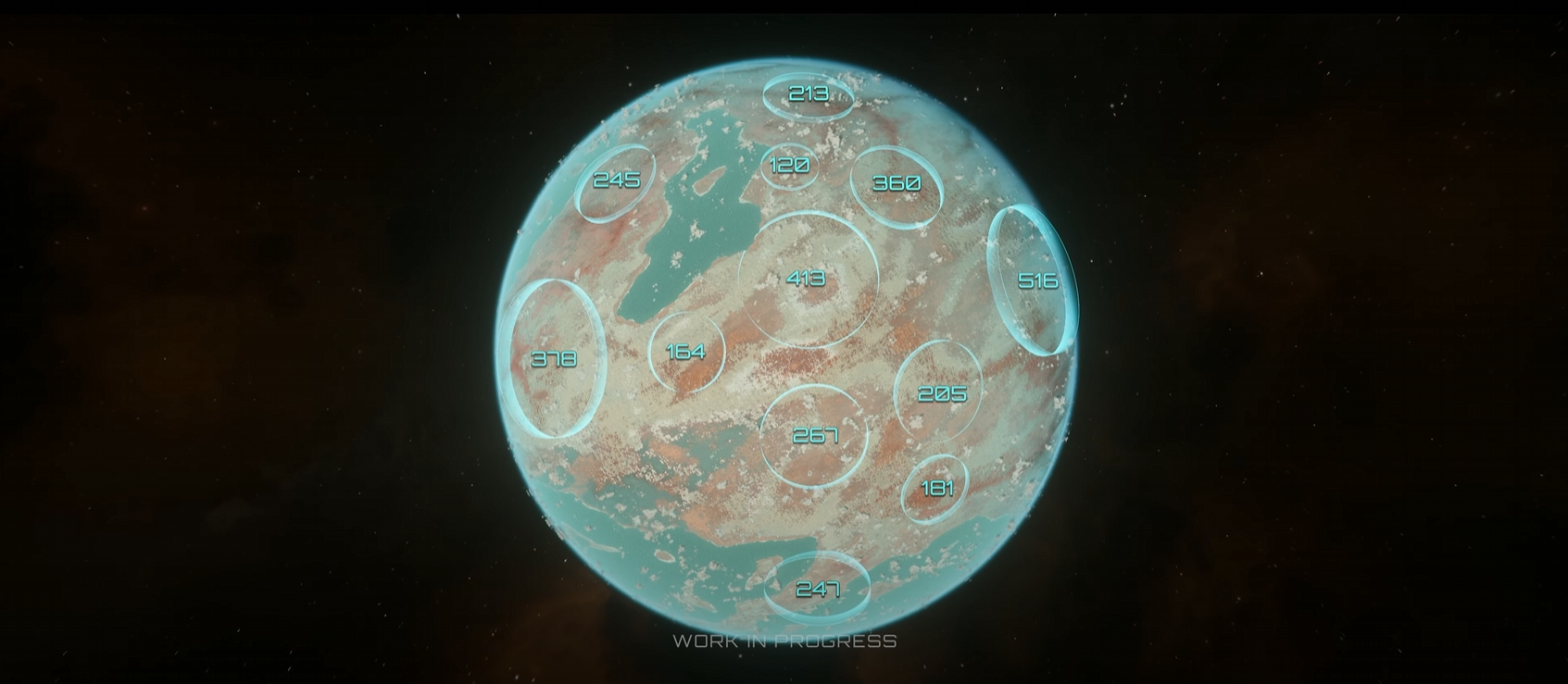
During CitizenCon 2954 (2024), CIG talked about how they wanted their planetary generation technology to logically create population distribution on habitable worlds and moons.
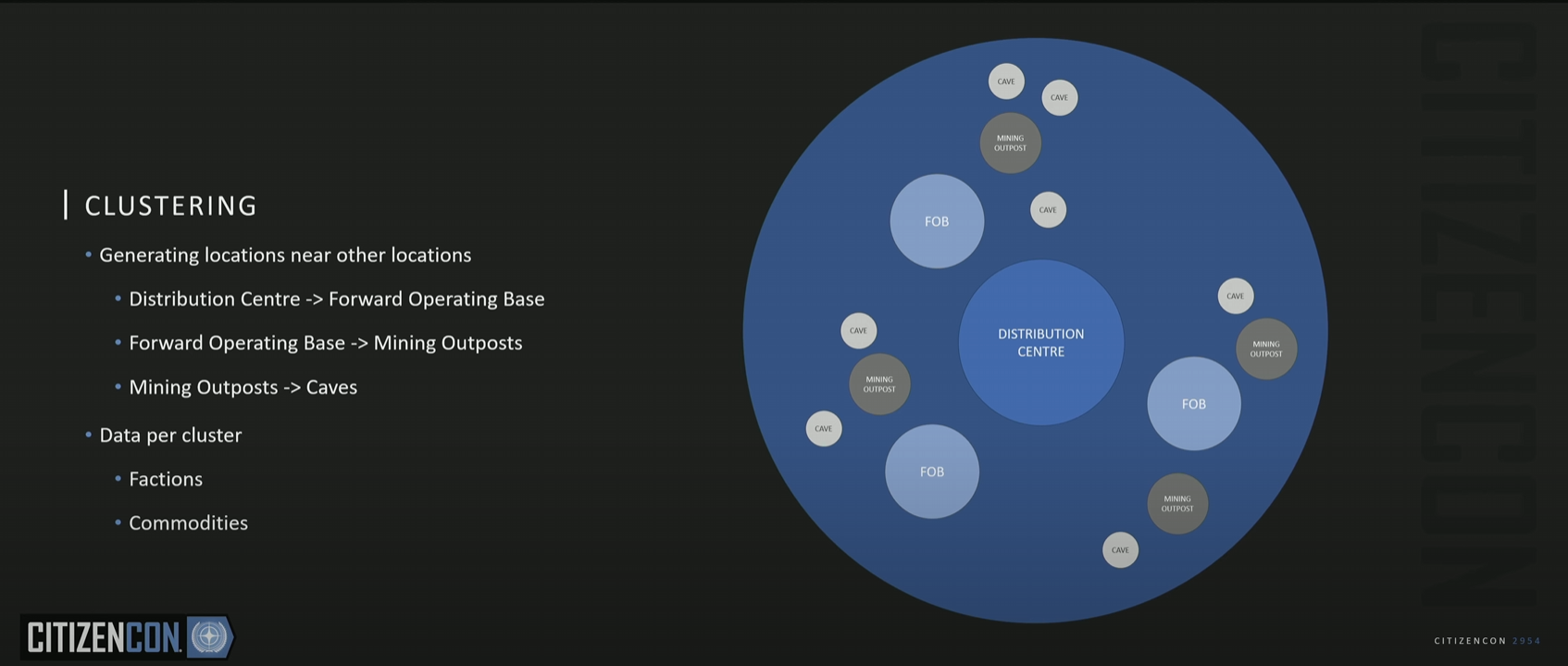
Their goal is to create pivot-points like distribution centers, around which are larger operations that feed into the hubs. These larger operations are in turn supported by resource locations and settlements where NPC workers live. This cluster of human-made structures would then be replicated and distributed across the face of the planet or moon, creating hundreds or maybe even thousands of living, breathing locations that would not only look busy on paper, but which could serve as complete, encapsulated locations for players to shop and run missions. In effect, CIG is aiming to create “Vesper conditions” for players so that we don’t have to travel to the other side of the galaxy every time we take a mission or need to earn rep or cash.
The Expanse Was Correct
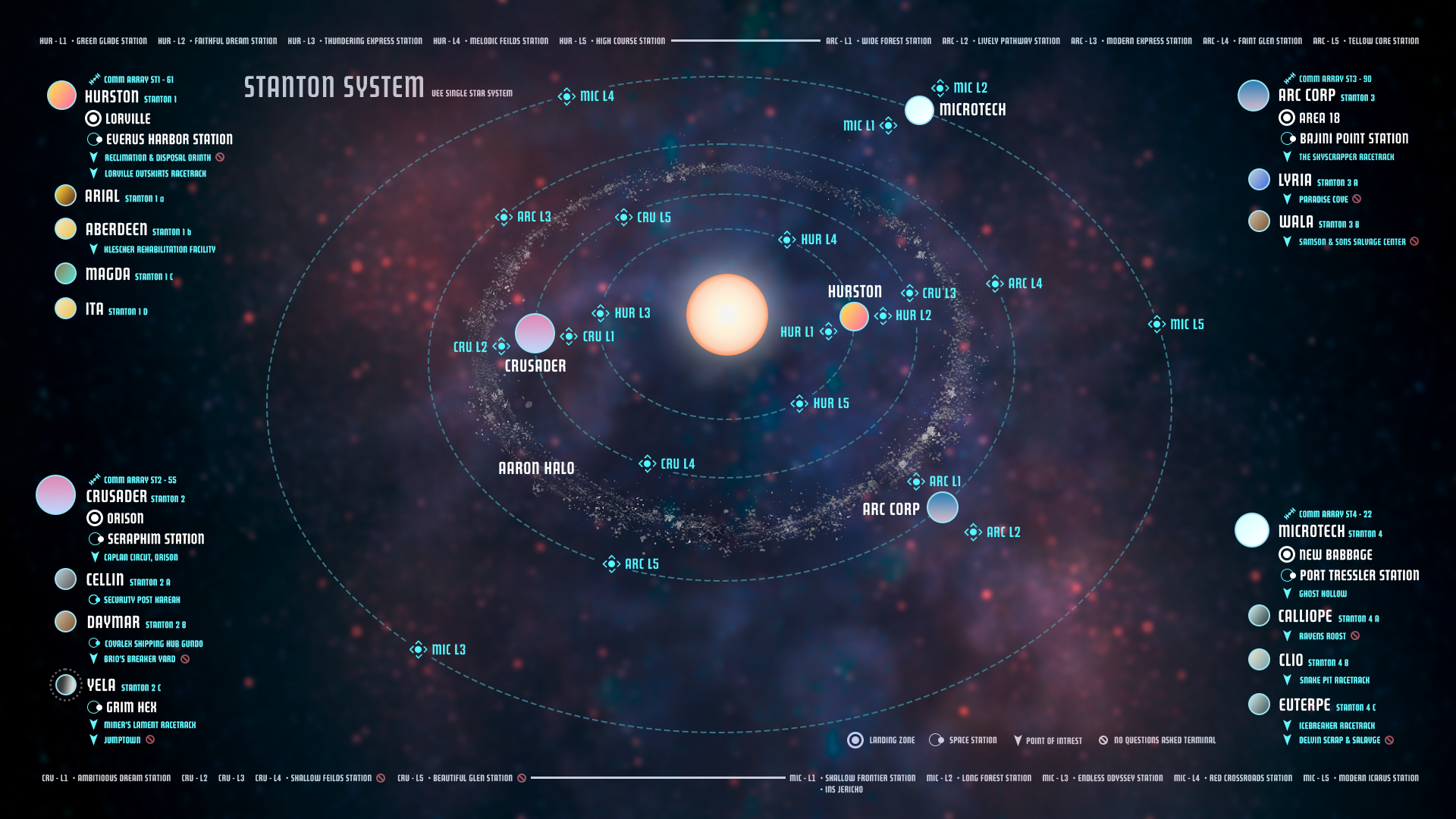
Space is big. Real big. A lot of us grew up on the cinematic version of space: compressed and unexplained because it was merely a place where space battles happen. It wasn’t until The Expanse got popular that sci-fi fans started thinking about the realities of space and how it would re-write how we thought about travel from place to place.
Video games treat space just as “a setting” because the point of the game isn’t to spend a lot of boring time getting from point A to point B. In games such as Star Citizen, No Man’s Sky, X4, and Elite Dangerous, getting around is a mechanical way of preventing everything from happening all at once. It doesn’t need to be entirely correct according to the actual Laws of Nature; it just needs to feel correct and to provide suitable elements, bot physical and visual, to remind us that we are, in fact, in space.
If a game wants to push the boundaries of what it means to travel in space, and has the horsepower to do it, then travel becomes a third-wheel in our experience. In Star Citizen, each ship has a quantum drive and each drive has what is basically a “speed” stat that can tell us how long it will take to travel. When we select a destination, we’re told how much quantum fuel it will use, and how long it will take, to get to where we want to go. Some of these trips can take a few minutes to almost an hour and a half if you were to use a ship with a weak quantum engine. I found those figures on the web so take them with a grain of salt, but traveling from one side of Pyro to the other in a stock MSR can be excruciating, not to mention probably impossible on a single tank of gas. Of course, anyone who has ever done the run to Hutton Orbital in Elite Dangerous knows a similar pain.
Now, imagine if we had to travel those kinds of distances just to complete a single, moderately rewarding mission.
Support Local Business
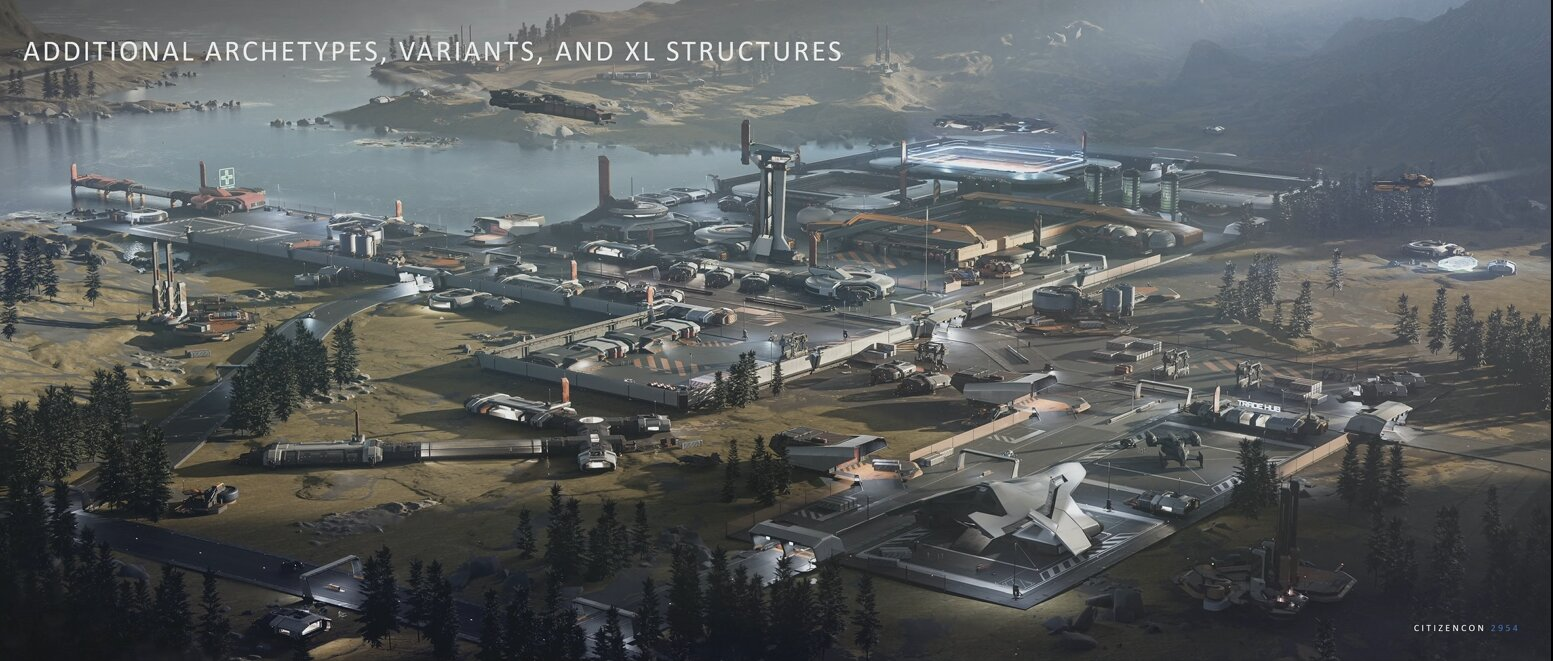
Personally, I’m down for CIG’s goals with Genesis and NPC location placement. I’d really like it if their plans included the option to “rent” a persistent HAB in the outskirts of one of these population centers to serve as our bind point and place where we wake up when we log in. If they did it right, I’d be able to buy food and equipment nearby, and then travel — by ground vehicle, along roads — to other parts of the town. NPCs would offer me work including but not limited to search and recovery, gang clean-up, construction, repair, and shipping. I could spend most of my time moving around the web of planetary installations taking missions and earning money and rep. In fact, I’d say that this could be a better starting experience for new players than the current approach as it would be a lot easier to earn money by just walking around or by doing some light driving than it is by having to acquire and maintain an expensive starship.
Leaving the planet or moon would then be a luxury, and a decision not taken lightly. Heading off-world is something we fans take for granted since it’s often the main point of the narrative we’re presented with. It’s “STAR Trek”, not “NEIGHBORHOOD Trek”, and what I think we often ignore is for every starship full of people, there are exponentially more who have not, and probably will never, leave their world. In video games, we need that option, of course; it’s “STAR Citizen” not…well, you know. We gravitate towards these games because of the space ships, and they’re designed to put space travel and everything it entails front and center, but personally, I’d be OK if space travel was presented as a whole new gameplay shift. In fact, Star Wars Galaxies was kind of like this. The original game had no space-based gameplay and we moved between worlds compliments of shuttles that faded to loading screens. When Jump to Lightspeed introduced space combat, it was like a whole new game tacked on to the original (for better or worse).
Considering space travel in Star Citizen can be fraught with danger from both NPC and PC threats, and because it can open the doors to more complex and more lucrative gameplay mechanics, I’m not so sure it should be the first gameplay mechanic that players are introduced to, nor should it be the dominant mechanic either. Distance to travel from one side of Pyro to the other is just the tip of an iceberg; moving goods from Pyro to Nyx, or eventually from Stanton to Castra to Terra or some combo thereof is shaping up to take several hours of real world time on account of the distances that need to be covered. Depending on what’s being done, it might involve a single ship, or might require a whole fleet of ships covering security, cargo, and support. It might even take several sessions to complete. Space, in this case, is really a late- or end-game condition. Of course, I’m absolutely certain this kind of design would get massive blowback, mainly because people think of Star Citizen as a “game about space ships”, but also because so many have invested so much money in their space ships and dammit, they want to use them all the time. That’s fine; no one is saying that players can’t spend all their time in space, but I really do like the idea of allowing planetary living to become as important, as expansive, and as fulfilling as everyone believes the space game should be.



2 Comments
Nimgimli
September 8, 2026 - 10:41 amYour UO blacksmithing mention reminded me of hauling ore around. Did everyone do this? You had a big pile of ore… far too much to carry. You’d pick it up from one side of your character and drop it on the other. Then you’d move your character past the pile and repeat and slowly you’d inch your way across the terrain. Meanwhile you’d often have a friend nearby to protect you and your ore from PKs.
I wonder how Hello Games will handle travel in Light No Fire. A fantasy game where the world is modeled after our earth and all players are in that same world. I guess we’ll have magical transporters or something. Maybe supersonic dragon mounts!
Scopique
September 9, 2026 - 5:29 pmOh yeah! I had forgotten how creative we had to get in UO with over-encumbrance.
I’m really hoping that Light No Fire doesn’t try to provide fast-travel or long distance travel right out of the box. I miss the days when such things were a special event, if those days ever really existed.
Comments are closed.