Scopique
 Scopique
I haven’t purchased a new game in what seems like forever. It seems like forever; I might have actually picked up something at some point in the past few weeks or months, but the fact that I can’t really remember should indicate how well any purchases went over with me. I have been fighting with Star Citizen, of course, and had been making good progress in The Planet Crafter, but aside from that, it’s been a series of quick logins to Idle Champions to spend earned gold, and that’s about it.
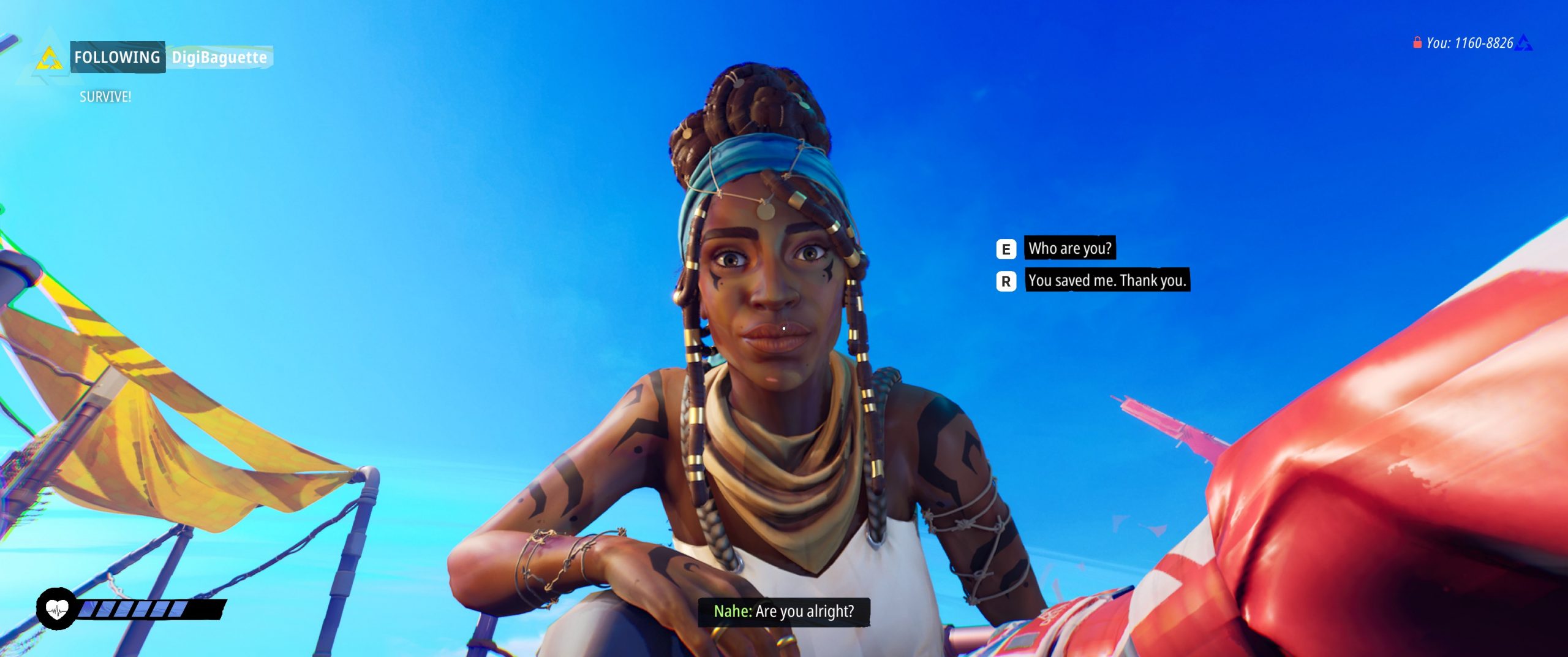
Tides of Tomorrow, though, caught my eye. The screenshots on the Steam page were…interesting. I wasn’t entirely sure what it was about. It’s very colorful, and has a style that reminded me a bit of Borderlands and a bit of Bioshock, but both by way of Lisa Frank. It calls itself a “plasticpunk” adventure, which put me off — I’m tired of everything adding “-punk” to it’s name and expecting it to instantly mean something which it almost never does — but after playing it for a while, I think this is one of those cases where I can accept the label. But what is “plasticpunk”.
Macroplastics
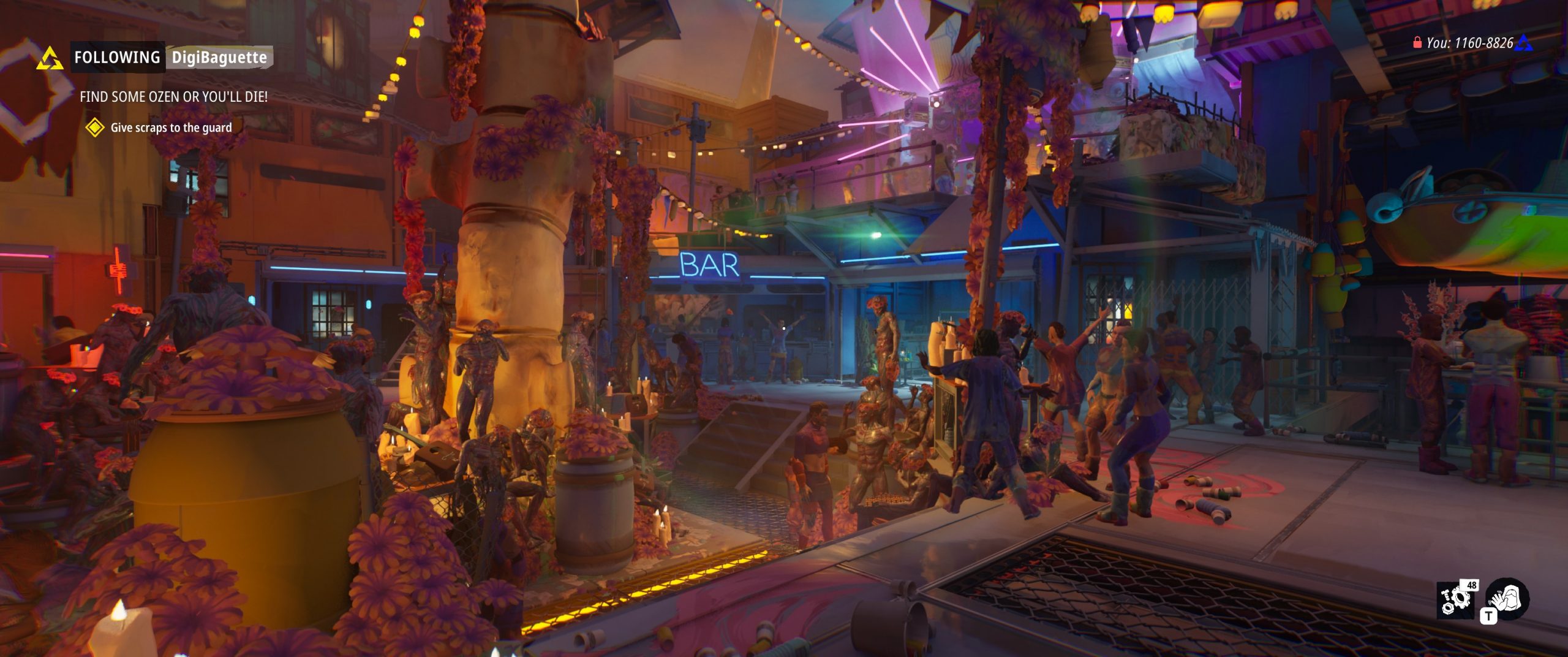
At an undisclosed point in the future, the world is literally awash with plastic, so right tout the gate this game is allegorical. The seas are filled to the brim with all kinds of bottles, boxes, and unidentifiable bits of former dinosaurs. It’s so bad that humanity has spawned a new disease: Plastemia. So far the game doesn’t explain how; let’s just draw the obvious line between a world full of hardened petroleum and a condition brought about by the pervasiveness of plastic and roll with the conceit. The symptoms include a discoloration of the skin over time which produces rainbow-like patterns not unlike oil-in-water. The end result, however, is grim: a complete hardening of the body, now converted to plastic.
As the protagonist, we are not immune from Plastemia. We learn early on that the condition can be slowed through the occasional use of Ozen, an inhalable substance that is hard to find, considering it’s controlled by various cartels. Think of this as a healing potion; one cannister of Ozen replenishes one square of health, and since health depletes on a kind of controllable schedule for the most part, acquiring Ozen is always a concern.
We are, however, Someone Special. The game begins when Nahe, a kind of “Morpheus” character who pops up now and again as a mysterious Greek chorus to clue us in on our destiny in the world, extracts us from beneath the waves where we’ve been languishing. She calls us a “tidewalker”, a designation which has little meaning early on, but seems to be something that NPCs in the game recognize on sight. Some are appreciative, some…decidedly are not.
Gameplay
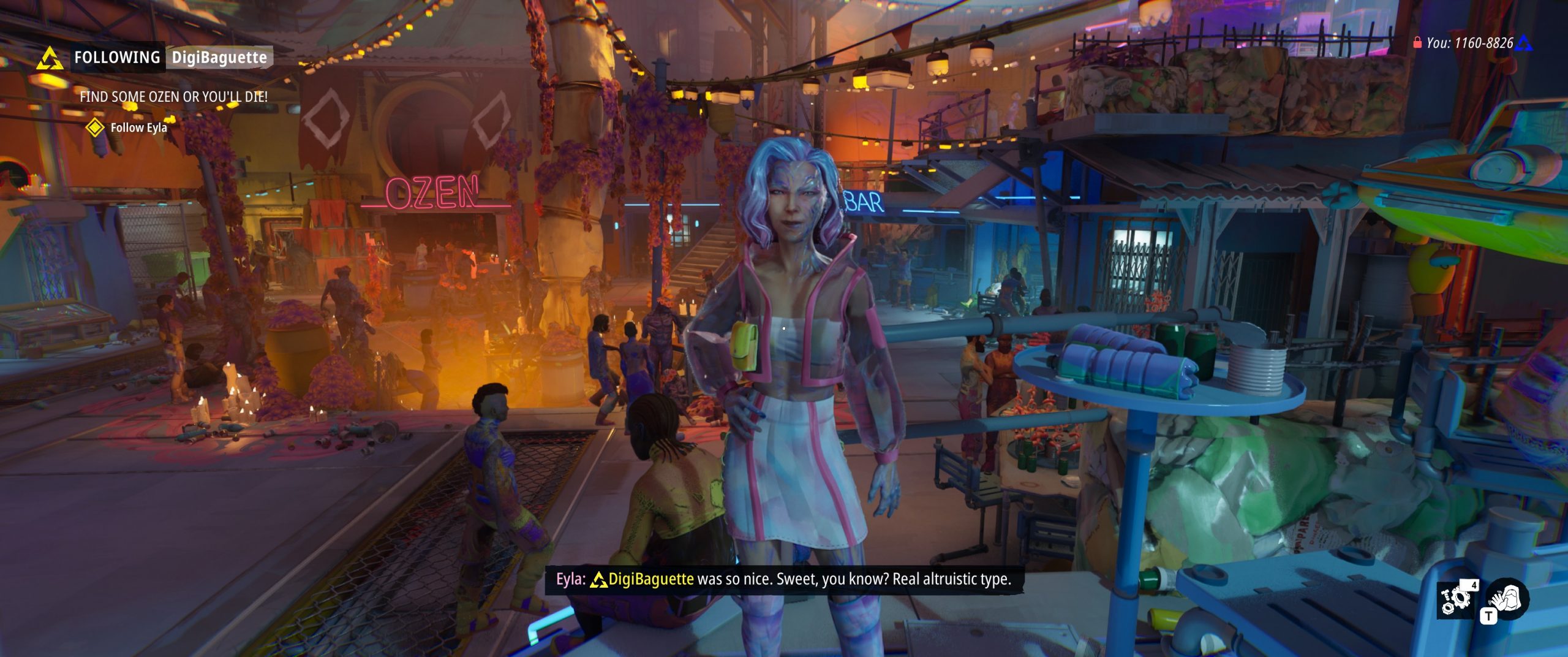
So far, Tides of Tomorrow is mainly about walking around, picking up stashes of “scrap”, or currency, talking with key NPCs, and solving some lite puzzles. Early on, there’s a boat chase which required me to fire a fairly weak cannon at the ship I was chasing, but it was an on-rails experience as far as I can tell; the target was meant to get away, leaving me at the point where I had decisions to make.
Action takes place in discreet areas, all situated on the water so the boat is a means of transitioning between those areas. The transition is where we lose health; every move between zones costs two health pips which simulates travel time and our own degrading condition; Ozen will only replenish one pip per hit (as far as I can tell, currently). I have found a merchant who sells Ozen, but I am lacking the funds to purchase a can as of the time of this post.
One weird feature is that jumping is conditional. There are places where it’s mandatory to jump from platform to platform, but I cannot, for example, jump on top of a crate which presents itself exactly as experienced gamers would expect for a jump to be possible. Pressing the spacebar in normal circumstances does nothing, and was a bit off-putting to not be able to jump where I assumed I could. I don’t think there’s combat, although the early ship-based chase was more of a set-piece than an actual contest, but I’m still early in the game.
The Ringer: Async Multiplayer and Branching Stories
The developers, Digixart, made another game called Road 96 which I haven’t played (but will, thanks to ToT) which apparently sported procedurally generated gameplay. In Tides, there are procedurally generated situations, but the situations I get are determined by which other player I follow as in “come after” and not in the more traditional “influencer” sense.
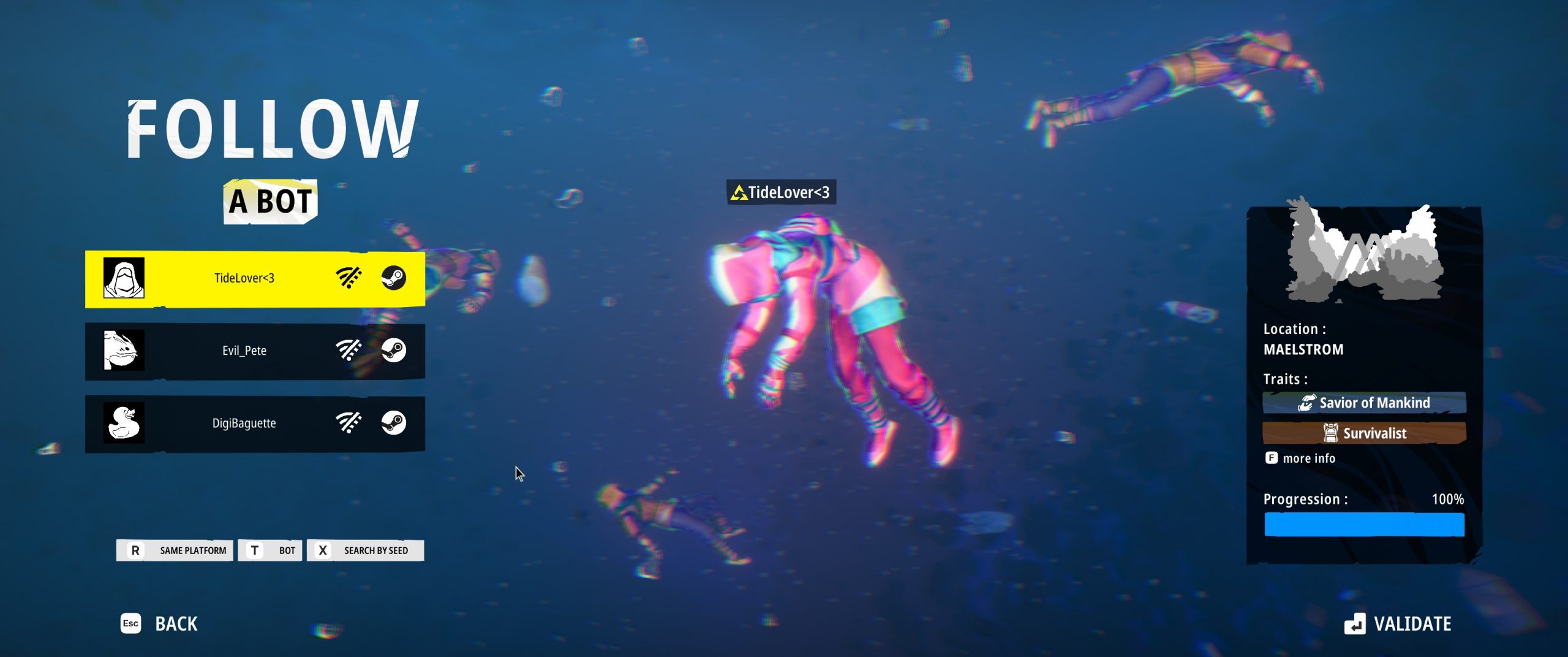
When starting a new game, I got to choose from a raft of other Tides players (pun intended). I could choose from everyone on my platform (Steam), from everyone cross-platform, from popular community choices, from friends, or from bots.
What this means is that as I roam around the world, I will be able to examine a kind of psychic footprint of the player who came before me. Using the right mouse button, I can focus on these energy blobs in the world and when close enough to them, will see an echo of the actions of the player I chose to follow.
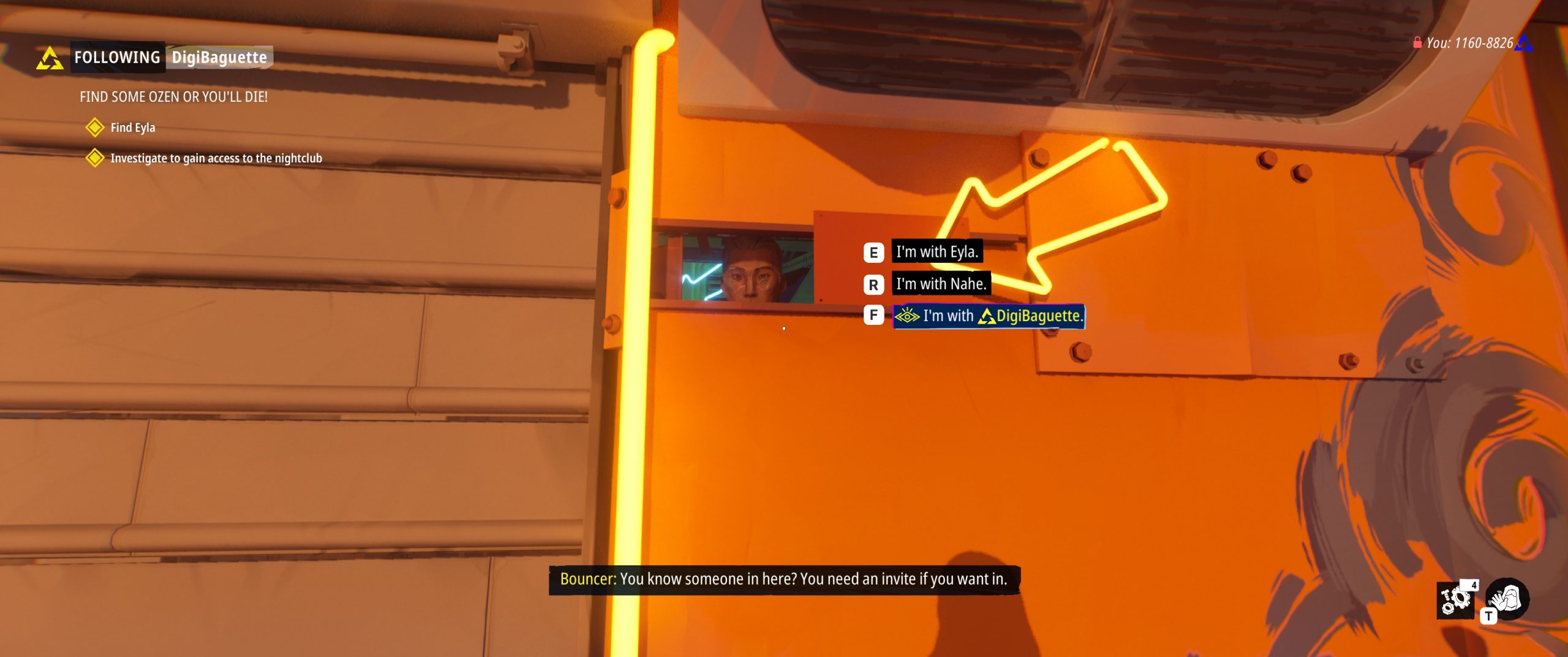
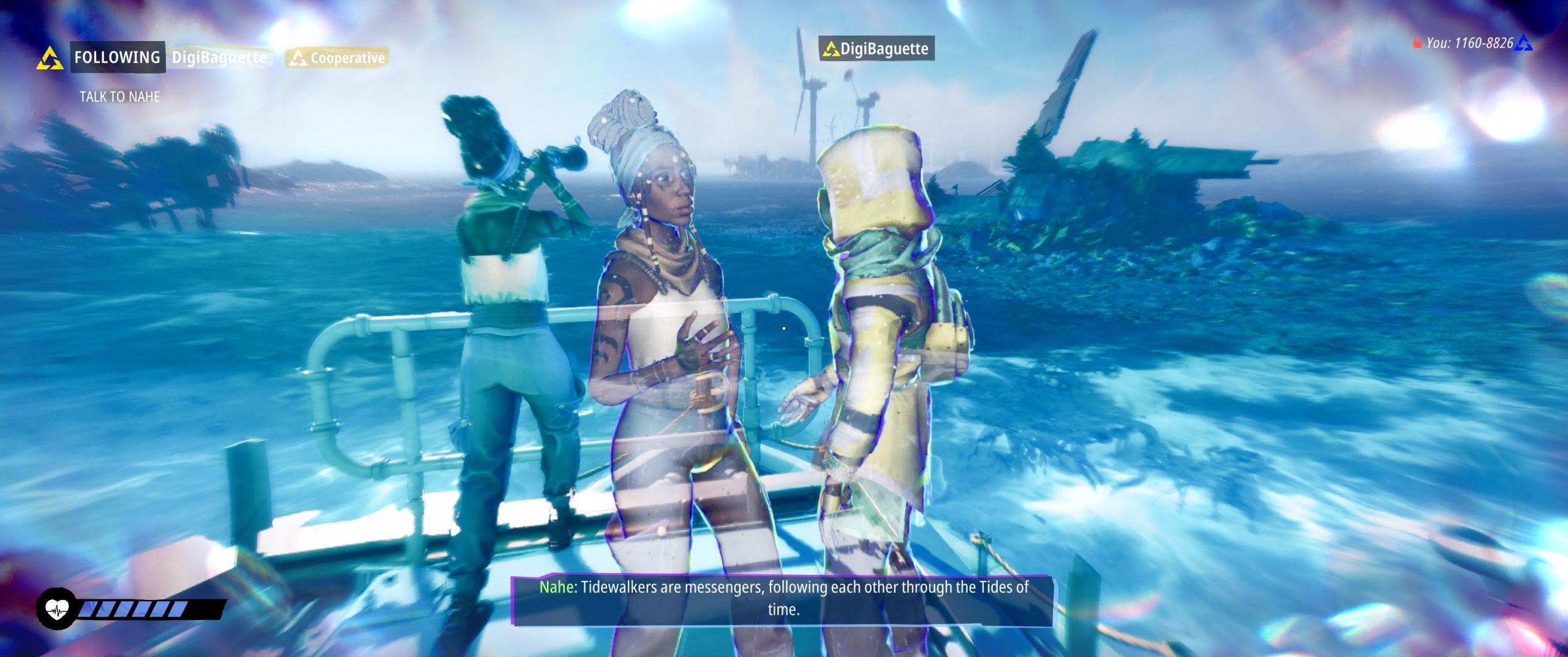
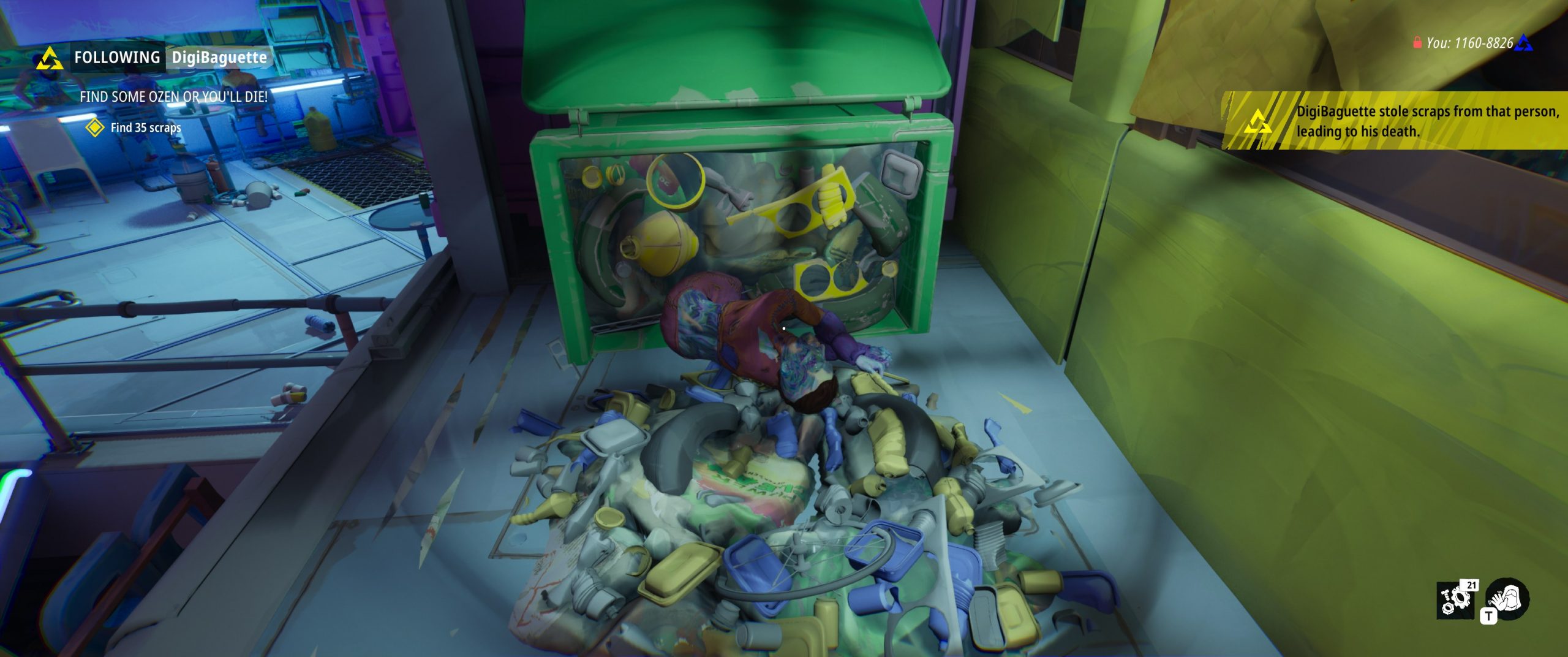
Depending on what the player does, I can see them emoting, where they walk, and how they interact with NPCs. When I interact with the same NPCs, I have to deal with the consequences of my predecessor’s actions. Did the one I follow argue? Did they give a gift? Did they get into a battle? I can either distance myself or trade on my predecessor’s actions, assuming the NPC allows me to; sometimes, interactions go nowhere because of what happened before I arrived; in one case I saw my predecessor argue with an NPC they were stealing from. When I got there, the NPC was dead as a direct result of my predecessor’s selfishness. It’s not just limited to NPCs; a conscientious player can use emotes to point a follower in a direction to reveal hidden things, and “ghosts” can be followed down alleyways or up ladders to find treasure.
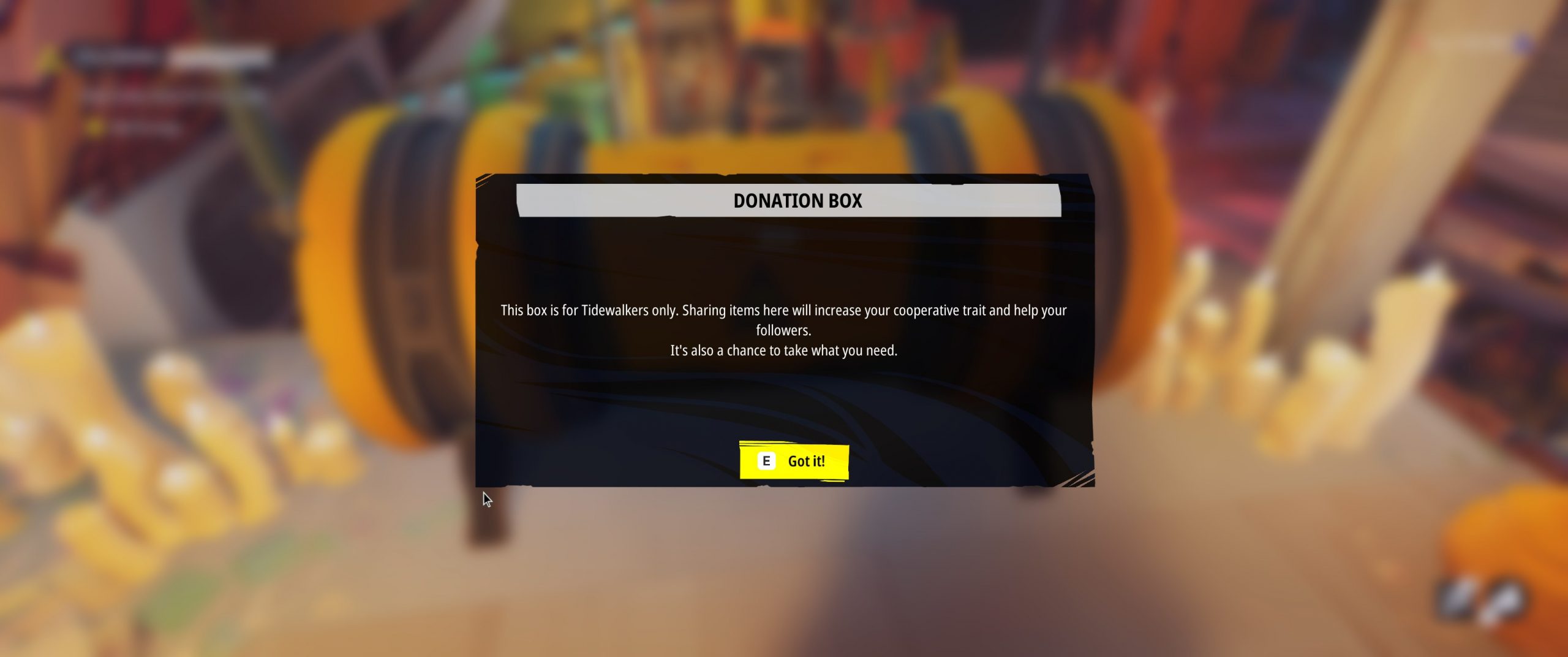
Another feature that uses this system is the “gifting” mechanic. There are chests littered here and there, into which a player can deposit or withdraw scrap or Ozen; depositing helps the next player, while withdrawing takes advantage of the previous player’s generosity. In another case, I had the option to deposit a “tip” of scrap at the Ozen dealer’s shop, and the amount tipped determines how large of a discount on an Ozen purchase the next player will receive, if any.
Naturally, players can drain these caches dry if they want, but actions that a player takes affect several meters that are used to track the “type” of player they are. Are they Pro-Mankind? Cooperative? A Survivalist? These traits are displayed to new players when they are deciding who to follow, as they give a broad sense of the kind of world interactions they’ll experience when following a particular person. And if I don’t like who I follow, I can change when making a transition to a new zone. I chose to start by following a bot, and in doing so was getting the “best” possible options as bots are designed around a specific set of types from which I doubt they deviate much. The echoes of the bots are the best, most pure representations of those types; the one I chose, DigiBaguette, was helpful in pointing out things to look at and places to go, left items in the stash, and never took much from them, if anything at all, leaving me with a pretty comfortable intro. However they were the one who stole from the NPC and left them to die, destitute, so there’s that.
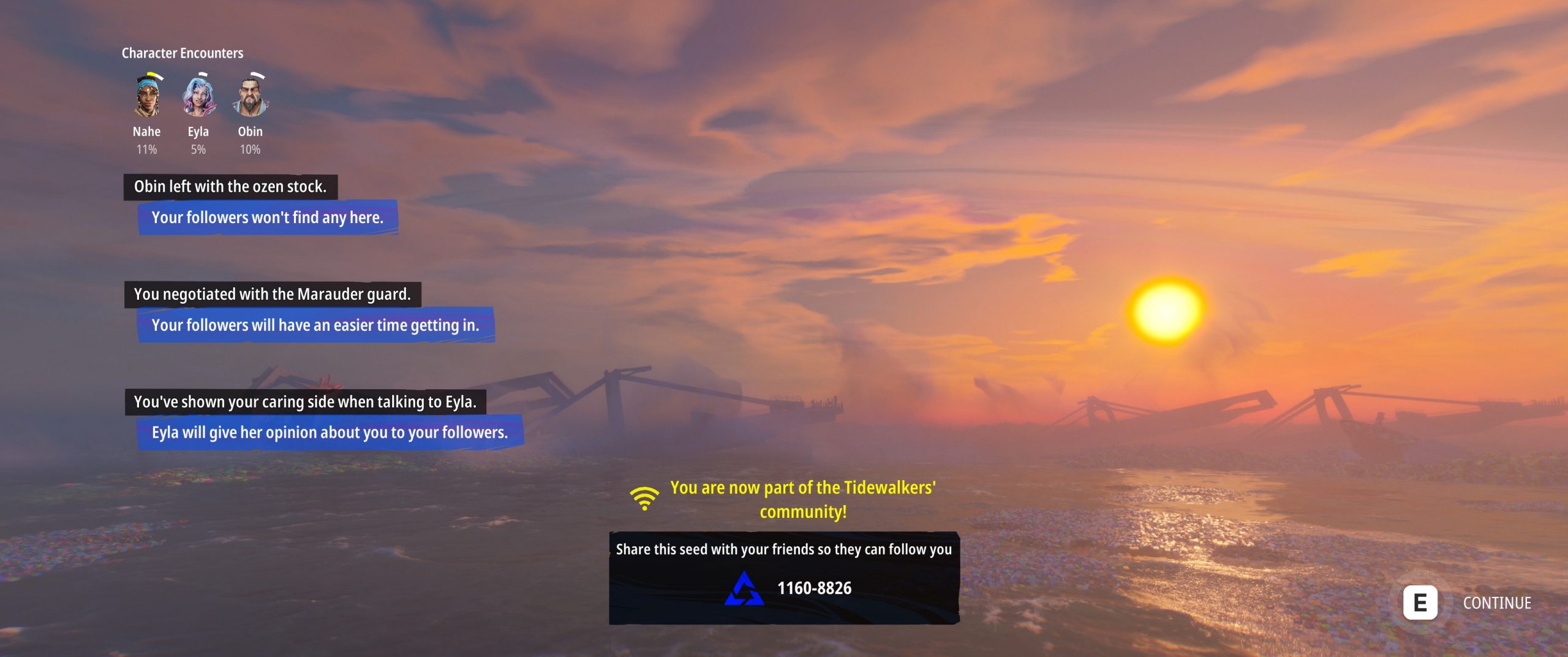
I am absolutely fascinated by this design decision, almost to the point where I’m thinking this is as important a game mechanic as the “nemesis” system was in Middle-Earth: Shadow of Mordor. While that system didn’t upend the gaming ecosystem as much as it should have, people still talk about it in positive ways to this day. This async multiplayer goes beyond the types of community aggregates we see in games like Tales from the Borderlands or Dispatch as it warps the experience for us in real time. Replay value might be staggeringly high depending not just on pivotal decision trees, but on individual player behaviors…assuming enough people are playing this game. Still, following another player doesn’t actually change the outcome significantly, I don’t believe; at one point I was trying to steal some Ozen, and the player before me assaulted a guard to get it. When the same guard caught me — same place, same reason — I convinced them that the guy who came before me was an asshole. I bonded with the guard, and he let me take the Ozen and even showed me how to exit the area. I suspect the outcome of this scene is the same no matter what the circumstance — get the Ozen, find a way out — but seeing how someone else handled it, and then allowing me to handle it differently — resulting in different movement on different meters for both players — felt like it mattered beyond just moving the meters of my character’s ethos measurements.
If you are interested in playing Tides of Tomorrow and would like to add me as a precursor, my code is 1160-8826.