Scopique
 Scopique
Hi, Scopique here. Massive fan of Remedy’s Control. Massive fan. Massive fan of SCP and SCP related settings in fiction, too, though I don’t follow that scene too closely (the people who do get kind of gatekeepery from what I’ve seen). Massively excited that Control Resonant released today.
In Control, we played Jesse Faden who arrived at the Federal Bureau of Control (FBC) looking for information on her brother Dylan. When they were kids, the Fadens found a slide projector in a junk yard, and that projector turned out to be an artifact that could open doors to other realities…the exact thing the FBC was created to contain. By the time the FBC team arrived on the scene, the entire town had been wiped out, Jesse had run away, and Dylan was left holding the bag. The projector ended up at The Oldest House, the FBC’s HQ, and Dylan ended up in a lab. Over the years, it was thought that Dylan’s natural psychic talent would make him a good candidate for the FBC Director position some day, but the pesky projector wasn’t done causing issues. A collective entity known as the Hiss emerged from one of the portals, using Dylan as it’s vector, and ran amok in the Oldest House just as Jesse arrived on the scene. In the end, Jesse managed to lock the Hiss inside the Oldest House, cleanse Dylan of it’s influence, and in return was forced to take over as the FBC Director.

In Resonant, Dylan wakes from a seven year coma that followed his exorcism. Jesse has vanished (again) on some secret mission, and Dylan finds that the Hiss have broken free of containment within the Oldest House and are reshaping Manhattan.
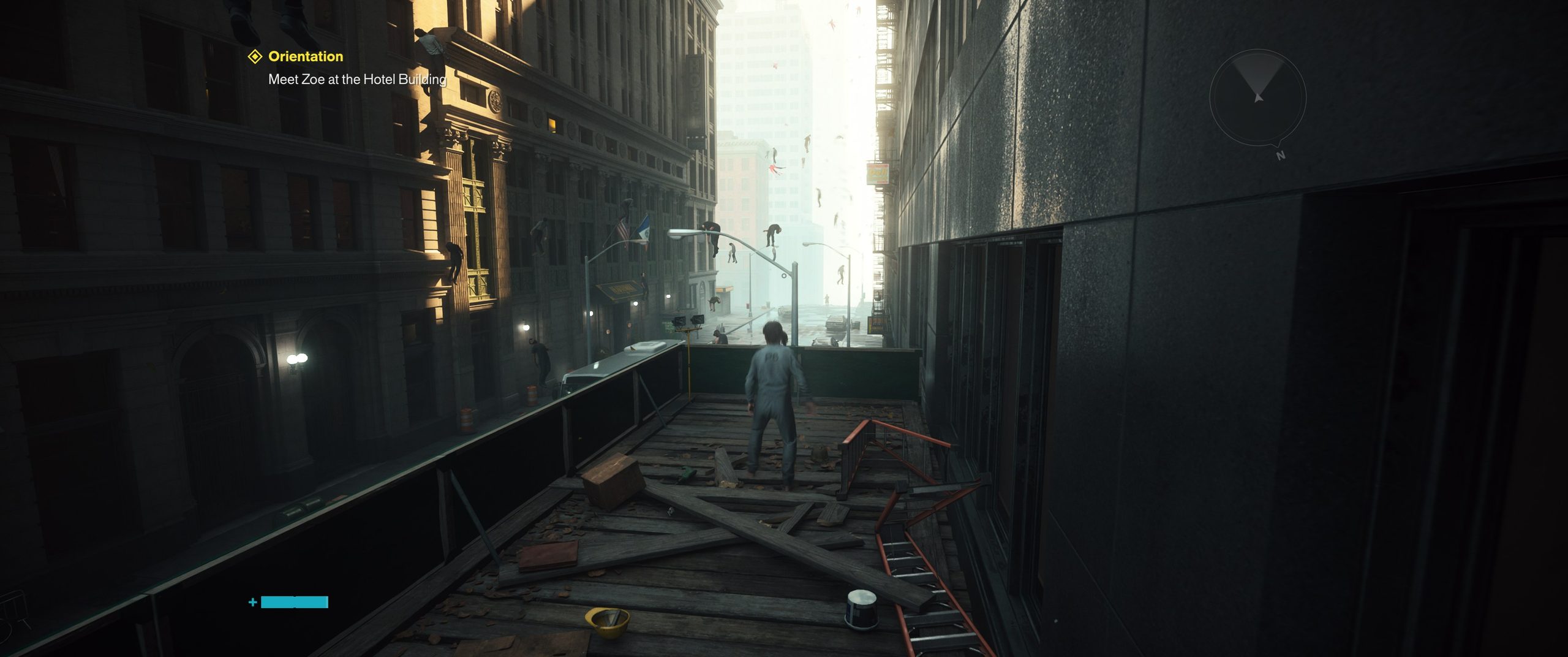
Whereas Control took place inside the warped interior of the Oldest House and associated dimensions, Resonant sends Dylan out into the streets of New York City. Right off the bat, this gives Resonant a completely different mandate from Control.
The first act is basically the tutorial, teaching us and Dylan about his abilities. Before leaving, Jesse gives Dylan the Aberrant, a shape-shifting melee weapon that could be related to Jesse’s own Service Weapon. The obvious difference is that while the Service Weapon appears in the shape of a gun, the Aberrant manifests as a metal bar. As a result, combat in Resonant is mainly melee.
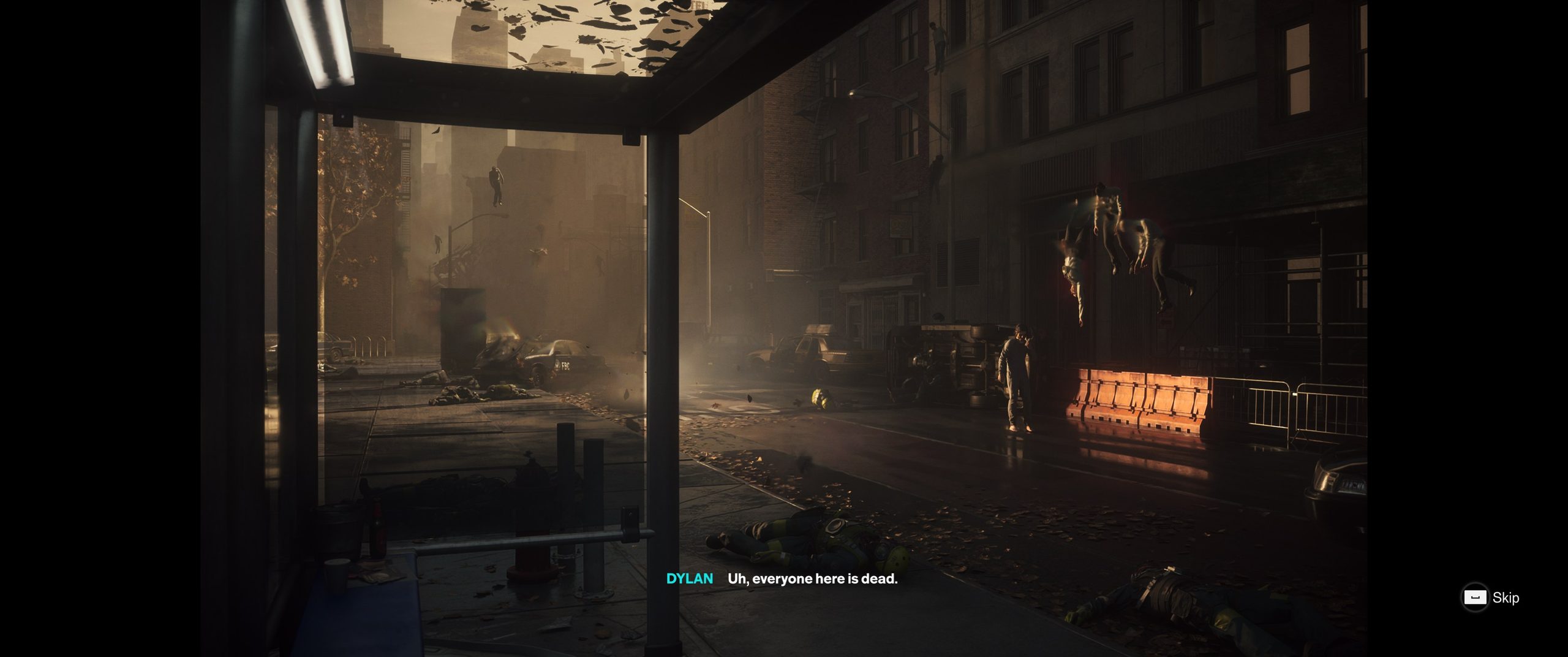
Dylan’s abilities are legion. Before the tutorial is over, we gain:
- Double jump
- Dodge
- Levitation
- Enhanced sprinting
- Primary form for the Aberrant
- Secondary form for the Aberrant
- Special combat abilities
- Combo attacks
- Finisher attacks
Using a keyboard & mouse, this is all handled through left and right mouse buttons, space bar, shift, control, and various combinations thereof. I don’t use a controller so I can’t speak to whatever unholy configuration is needed to manage all of this with a gamepad.
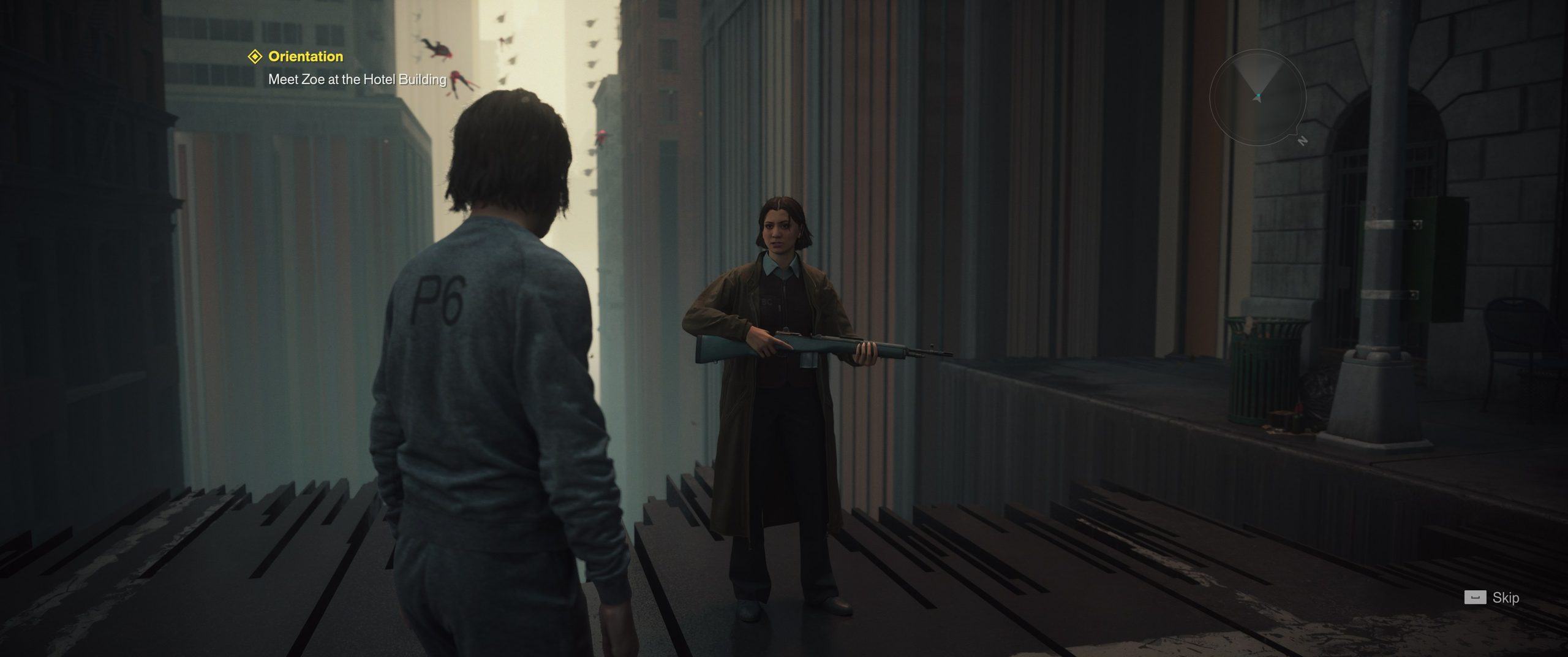
Once we leave the Oldest House, we meet Zoe, an FBC operative who we find shouting into the literal void looking for any FBC team who might be alive. At first she doesn’t recognize Dylan, nor does she care, but once the other shoe drops she embodies exactly how everyone else in the FBC feels about him. He was, after all, the reason why the Hiss had to be contained within the Oldest House for seven years of lockdown. None of the NPCs that Dylan meets are happy to see him. Only through his sense of confusion and his desire to find Jesse does Dylan submit to wearing a dead-man’s switch that will fry his brain on Zoe’s say-so, just so he can work with the FBC to return Manhattan to it’s original state.
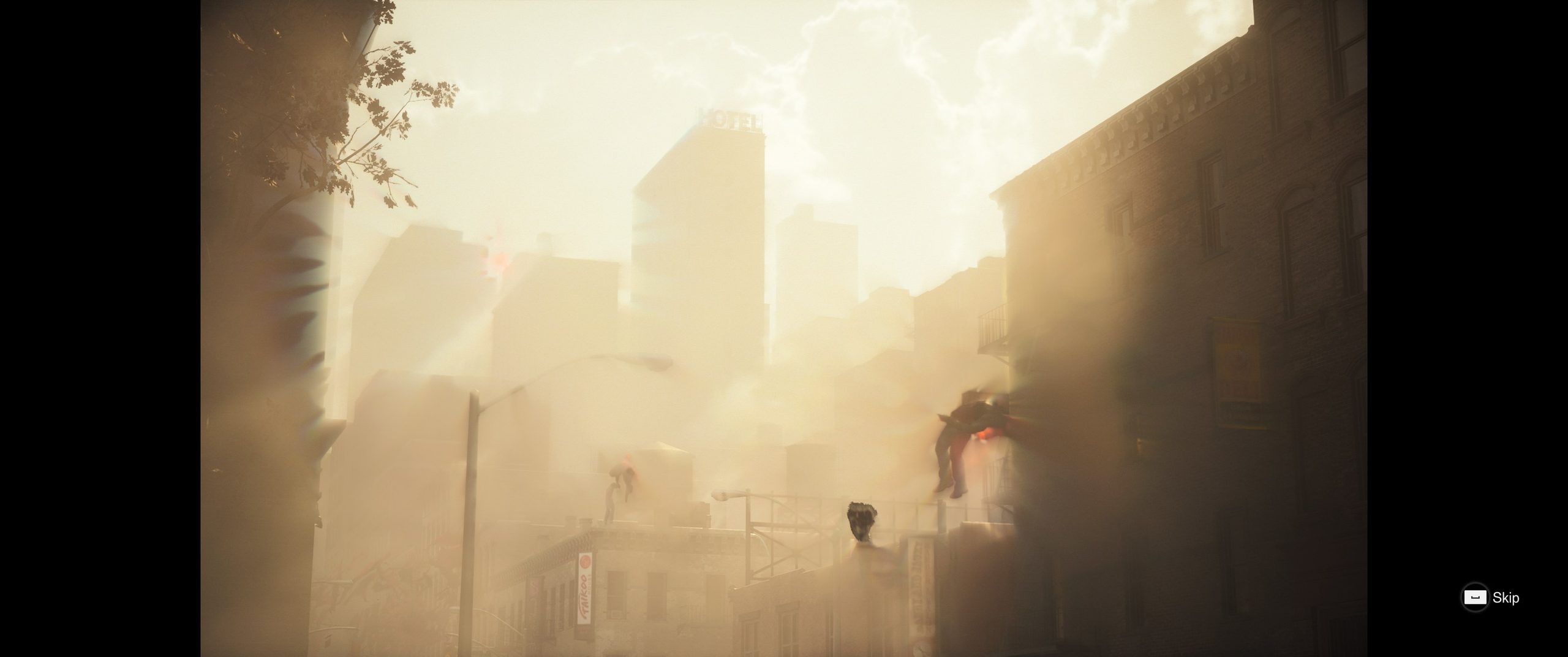
A lot of the promotional materials for Resonant focus on the trippy visuals and how they feed into the gameplay requirements. Early on, we see the altered city skyline, but we really don’t get to partake in the Esceherian parkour that featured prominently in the trailers. We are mostly using our bevvy of powers to jump from roof to roof, fighting enemies, and undertaking a whole host of smaller jobs on our way to the tentpole locations.
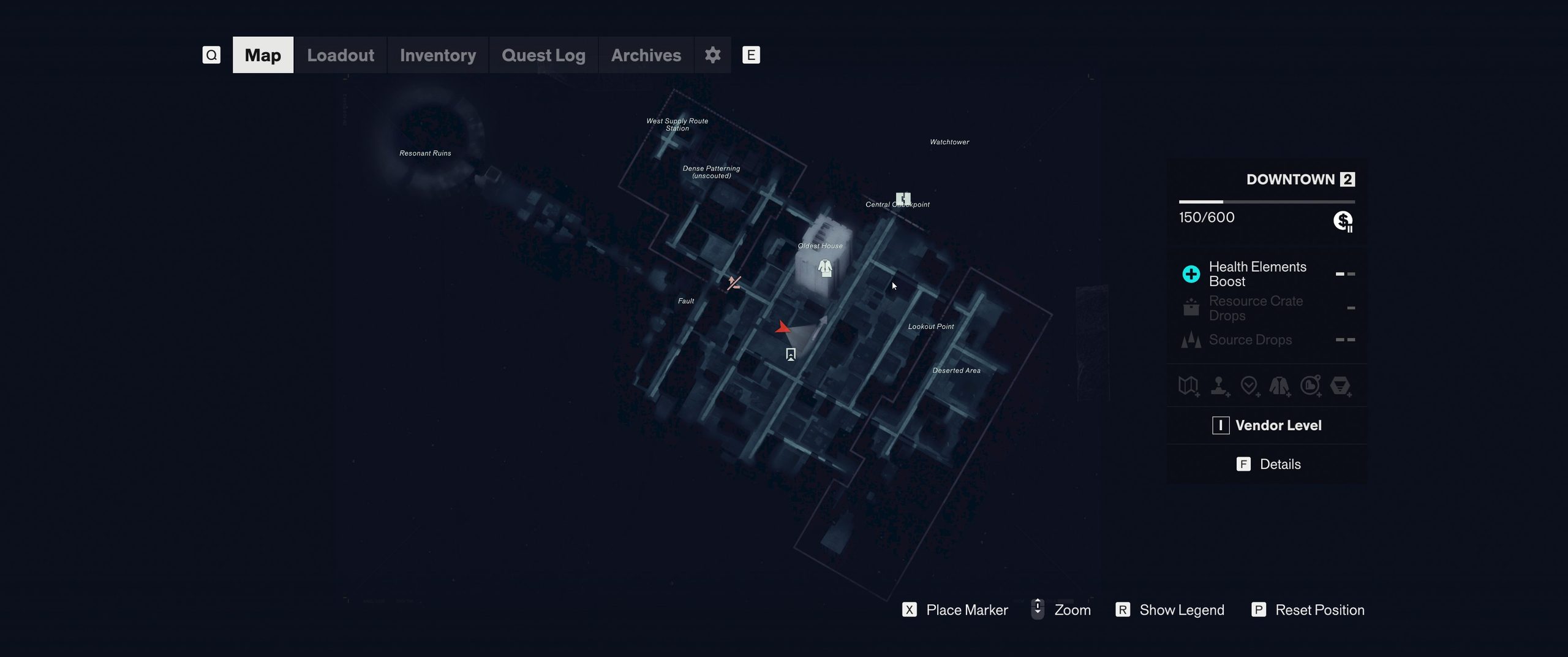
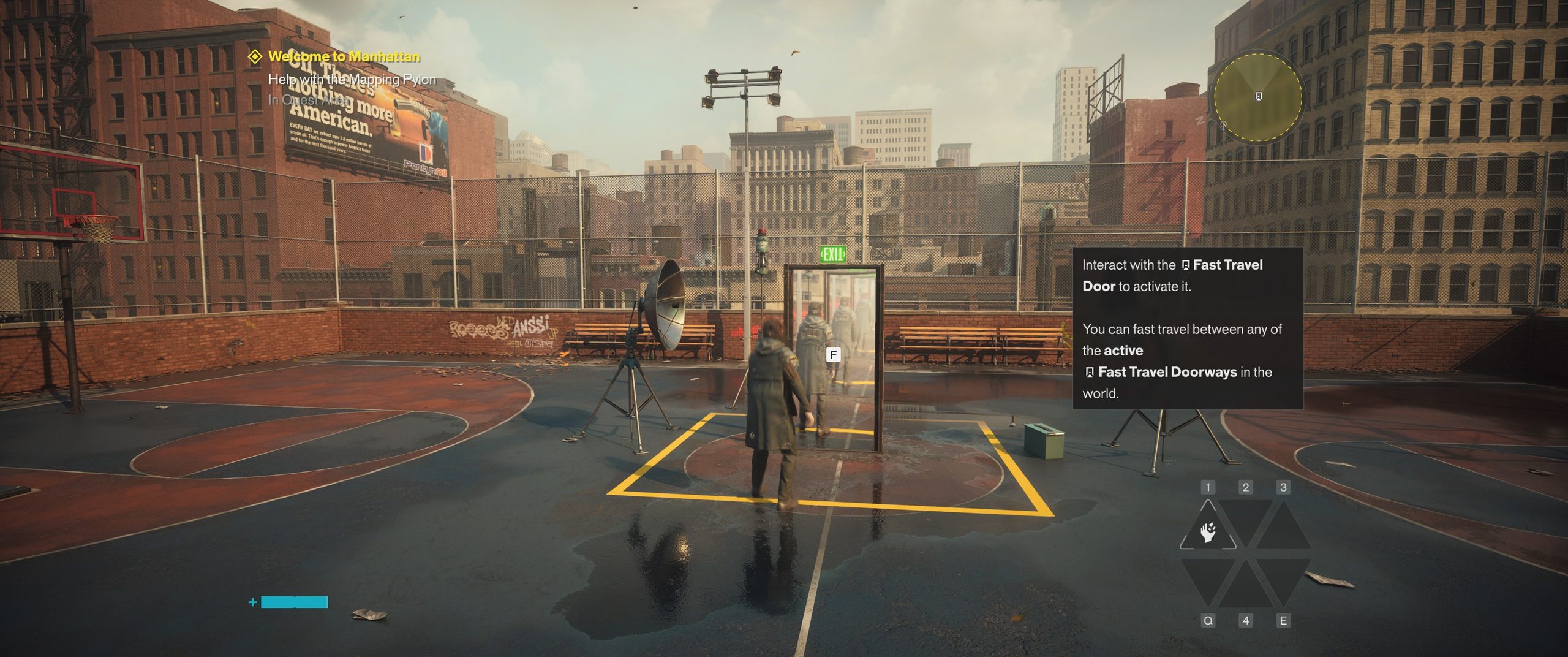
I don’t know what I expected with Resonant, but it wasn’t this. With the NYC setting and incredibly realized environments, I felt like I was in a supernatural version of The Division. Once I completed the steps to map my first zone, I realized that, unlike Control, Resonant was going to be more or less and open world game. I have constant main objectives from Zoe, but I can also talk to NPCs to get side-quests. Each new zone requires that I activate antenna to reveal the map. Doing so pinpoints missions, and locations I can visit. At the street level, there are caches of materials to be found, enemies to fight, and puzzles to solve. I can spend as much or as little time screwing around the city as I like, with what feels like limited guard-rails controlled by the environmental design, which is more vertical than horizontal, and feels deceptively larger than it really is.
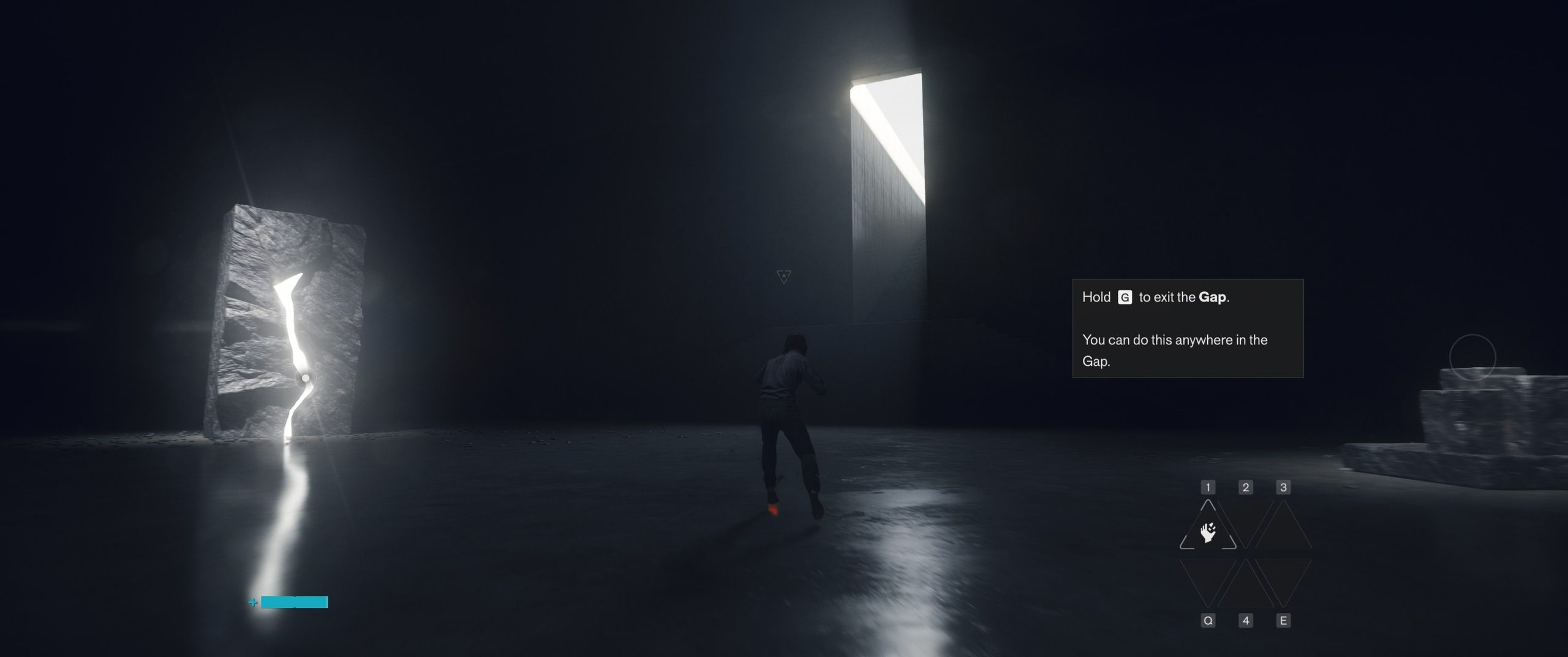
As the game progresses, Dylan will enter The Gap at any time. This is an interdimensional space that offers the ability to upgrade or swap Dylan’s abilities. Most abilities require materials found in the world or obtained by defeating tougher creatures. I can also refund points at any time, rebuilding Dylan’s skill-set almost at will.
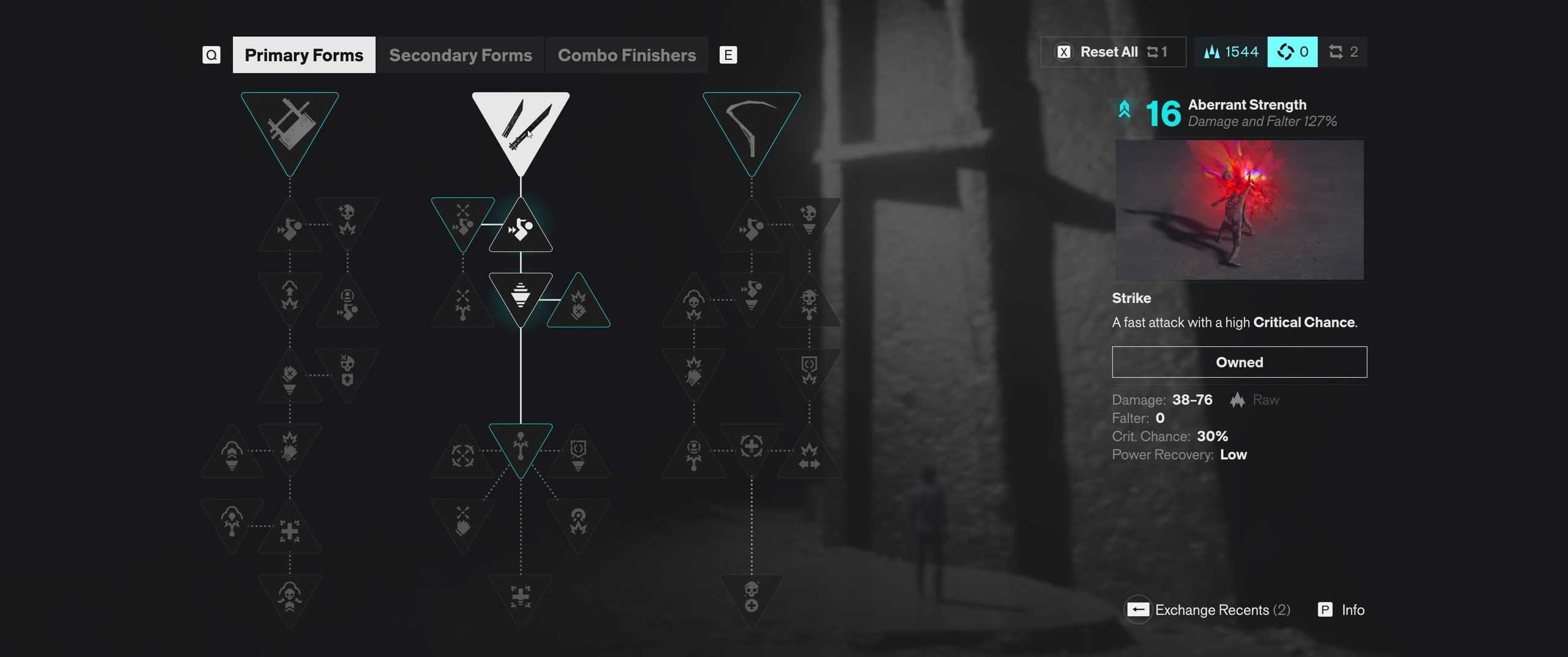
There are a lot of progression tracks, maybe more than in Control if I remember correctly. There are three tracks just for the Aberrant: primary, secondary, and combo finishers. There’s a branching talent tree for Dylan. There’s also the ability craft artifacts which I have looked at in The Gap, but haven’t unlocked just yet. The good news is that the number of options allows for re-playability, I’m sure. The bad news is analysis paralysis.
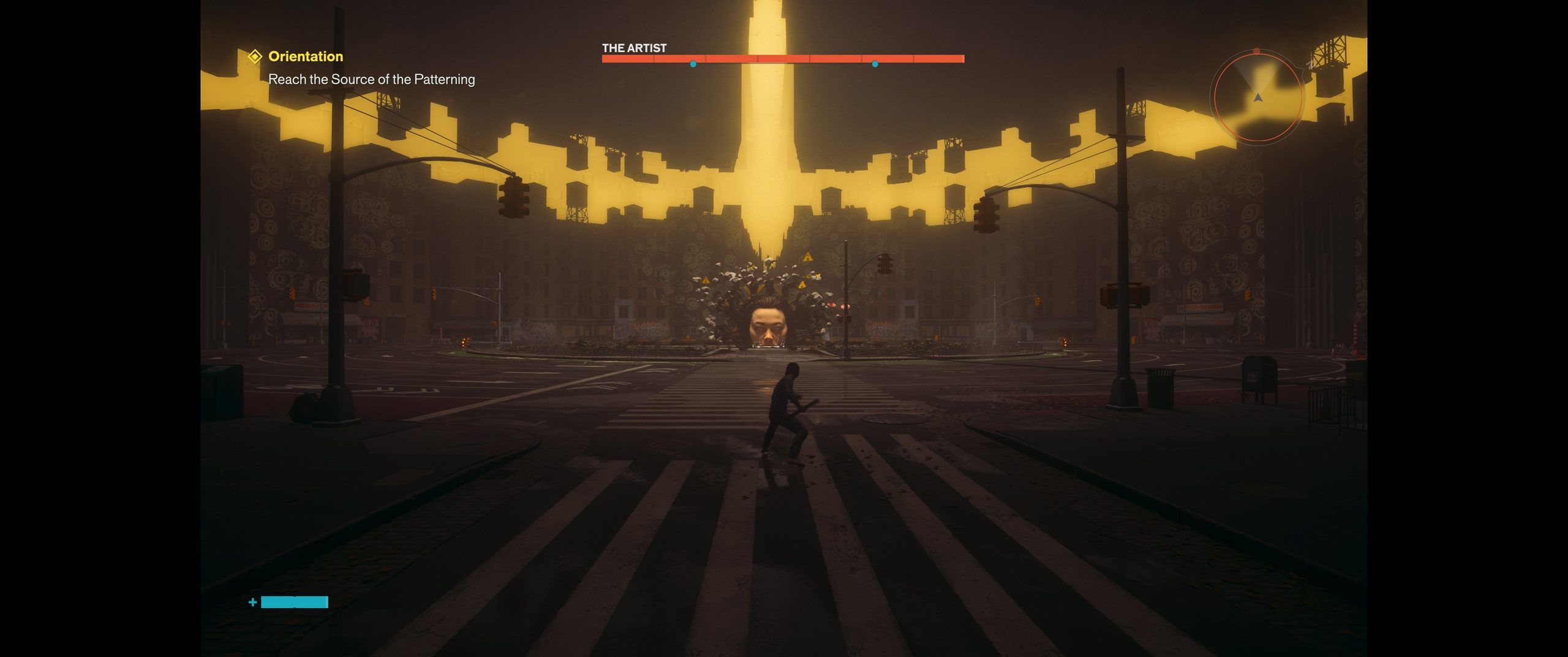
As mentioned, combat is 95% melee, and that disappoints me; I’m almost never a melee player. The main reason is because in games like Resonant, where enemies don’t follow the movie ninja rule of “one at a time”, I often find myself surrounded. Because dodging is a big mechanic to avoid damage, and because I suck at situational awareness and positioning in action combat games, I often find myself wedged in a place I can’t dodge my way out of. Plus, I tend to get so focused that I completely ignore all enemy tells, choosing to out-beat-down my opponent before they out-beat-down me, which rarely ends in my favor.
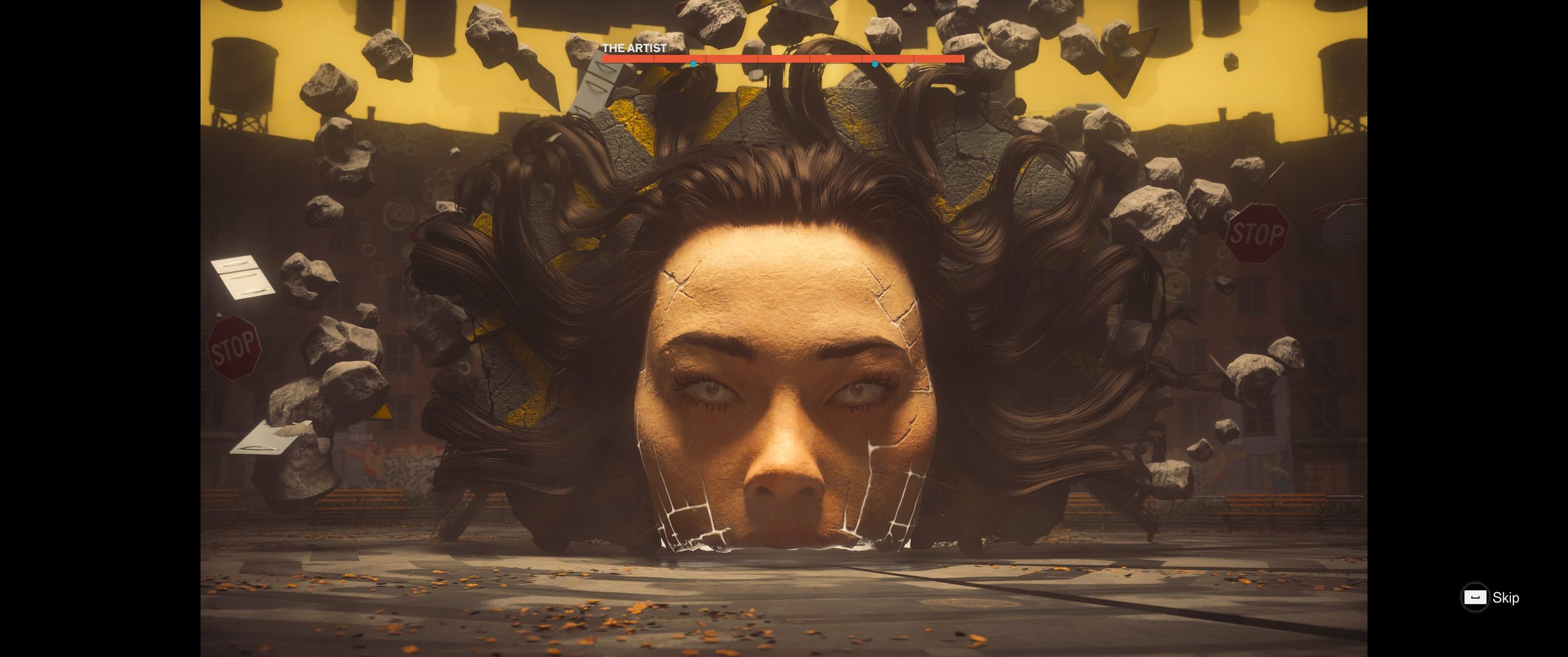
The good thing is that the first boss fight — this creepy head called “The Artist” — has milestones which automatically healed me. Often times enemies will drop healing motes, but the boss fight did not, so that was welcome and I feel like I should expect this mechanic in boss fights going forward. Still, I prefer Jesse’s Service Weapon over Dylan’s Aberrant, but I will make due.
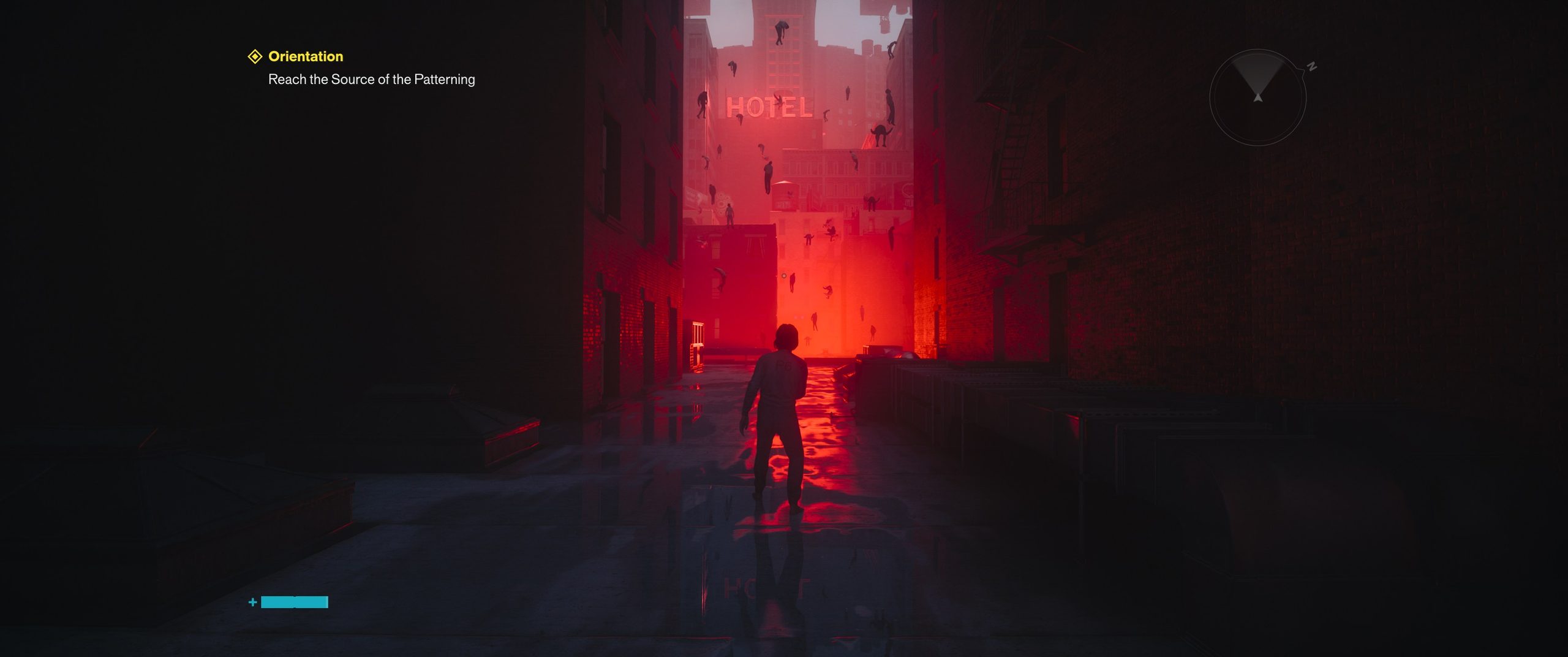
In fact — and I am not ashamed to say this — one way I make due is through Resonant’s accessibility options. I played through Control mainly using this feature, which allowed Jesse to take damage but not to die, and I’m happy to report the Resonant carries on with this tradition. I started Resonant on normal, unassisted mode but died early on. There are a few pre-set modes which make the game easer (or much, much harder if you’re here for that), but there are also individual settings for how fast Dylan heals, how much damage enemies do, or how aggressive enemies are in general. As much as I’d like to play the game unaltered, my main goal is to experience the story, not to get frustrated that my reaction time sucks bad enough to prevent that from happening unless I alter the settings.
So far Resonant is suitably creepy and trippy, more so than Control. The Board, an omnipresent entity that is the real force behind the FBC, speaks in a voice reminiscent of the spine-tingling chant we heard on Salusa Secundus in the recent Dune: Part One. There are also portals which we can unlock for fast travel, and the parallax effect is really cool to see. Remedy is really on pointe with their VFX in both Control and Resonant, and I really appreciate how the aesthetics contribute to unsettling the player in otherwise mundane surroundings.
I am 90% happy with Control Resonant, with my only reservation centered entirely on the fact that it’s primarily dealing with melee combat. Dylan did get a power like Jesse’s that allows him to gather and fling debris, but in the middle of a skirmish, when I’m trying to land a swing on several enemies at once, trying to remain airborne, and trying to dodge incoming attacks, I find it difficult to remember that the ability is there, and when I do, how to execute it. There is a lot going on during combat and while it’s a key part of the game, I’m really here for the SCP-ness of the whole thing.