
 Scopique
 Scopique
When Starfleet Academy was announced, I think many Star Trek fans were disappointed that the next “Nu-Trek” show wasn’t going to be about the Fenris Rangers from Picard, and instead was going to be a far-future high school drama. Personally and on paper, Starfleet Academy is a hitherto untapped market for Trek stories of a certain type. We’ve had decades worth of competent and experienced officers Boldly Going (or, in the case of DS9, staying mostly put) who ooze authority and look cool doing it, and it wasn’t until the Star Trek movie reboot that we got any real look at what it means to work towards becoming the icons we know and love. But “the fans” want what they want, and they don’t want to be told that the only new series they have to watch is focused on untested, half-formed, future officers who still somehow manage to save the day with the levels of aplomb we’ve come to expect from characters twice or three times their age.
Welcome to Star Trek: Starfleet Academy. Spoilers ahoy for the first two episodes, though I’ll try and keep things brief enough to not blog your eyeballs out.
Preface
Note that this series takes place in the Discovery era, specifically after the resolution of “The Burn” crisis. With warp speed travel restored, the Federation’s first priority is to rebuild their explorer corps…A.K.A. Starfleet. Their second priority is to re-gather the worlds who, through necessity, withdrew from the Federation as a result of The Burn.
Tropes Never Die
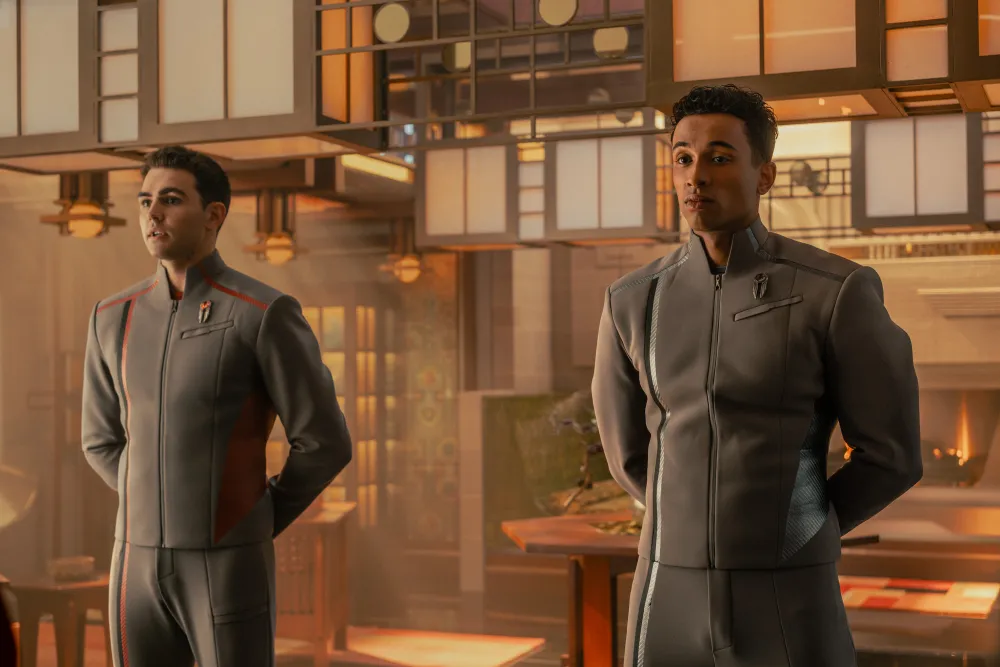
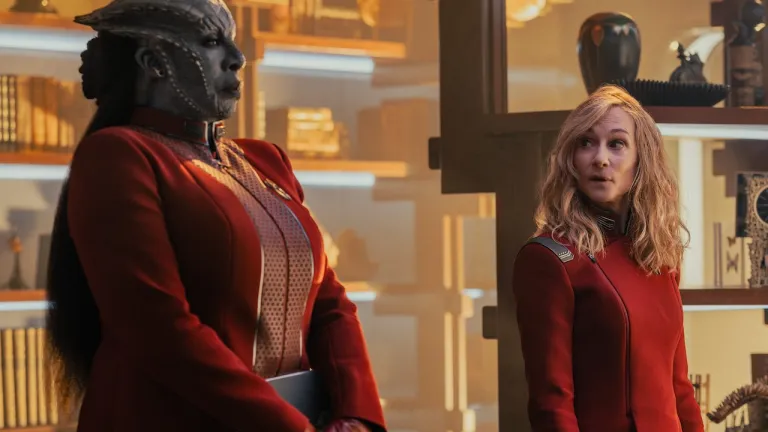
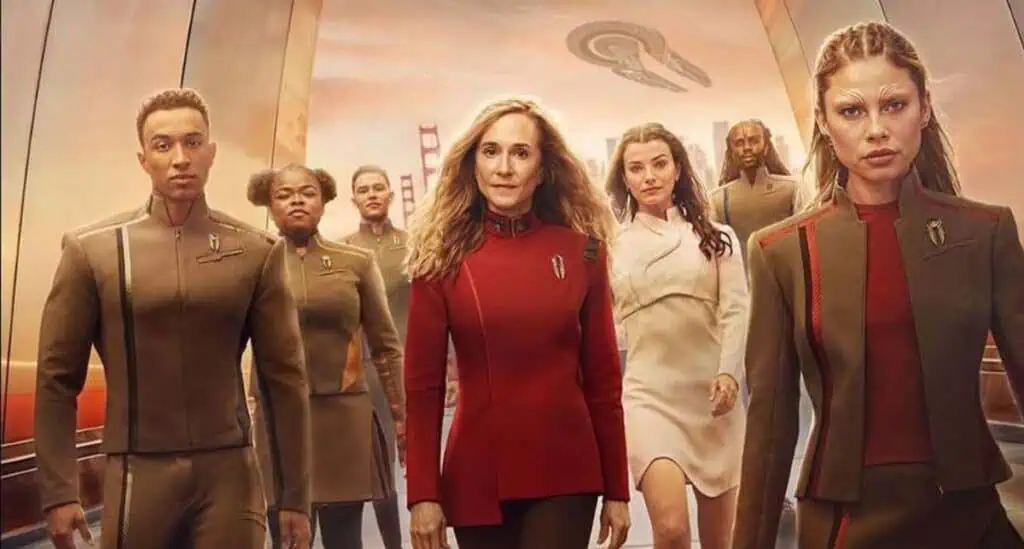
At the head of the class is Caleb Mir (Sandro Rosta), the requisite “special case” because the new Chancellor of the Academy (Nahla Ake played by the adorably 5″ 2″ Holly Hunter) separated him from his mother Nahlia 15 years prior and now feels really bad about it. During those years, Caleb had “done what he had to do in his search for his mother” which means a lot of petty crimes, but nothing so bad as what got his mother thrown into a rehabilitation colony when he was only 6 years old. In exchange for sticking around the Academy, Ake promises Caleb that she’ll do whatever she can to help him find his mother and assuage her guilt in the process.
The student body is rounded out with a compliment of fresh-faced and diverse young people that will make any Conservative pop a blood-vessel. As of right now, they’re not sufficiently rounded out to warrant naming names, but suffice to say that they cover most bases we need a central cast to cover, including their suspiciously advanced skill-sets which allow them to save the day in the very first episode.
Starfleet has always been sold as “the best among us”, implying that applicants should already be exceptional by the time they’re old enough to apply. And because this is a Star Trek show, we should expect the core cast to find themselves embroiled in situations that require more brains than brawn to complete.
So if we need characters racing around spouting Treknobabble, and our core cast is a bunch of 20-somethings, no one should be surprised when the returning and more well-known cast members are merely the glue that makes the decisions that the initiate events that allow the students to exhibit their skills. If that’s a given, what does Starfleet Academy bring to the Trek-shaped table?
(Not) Another Teen Drama
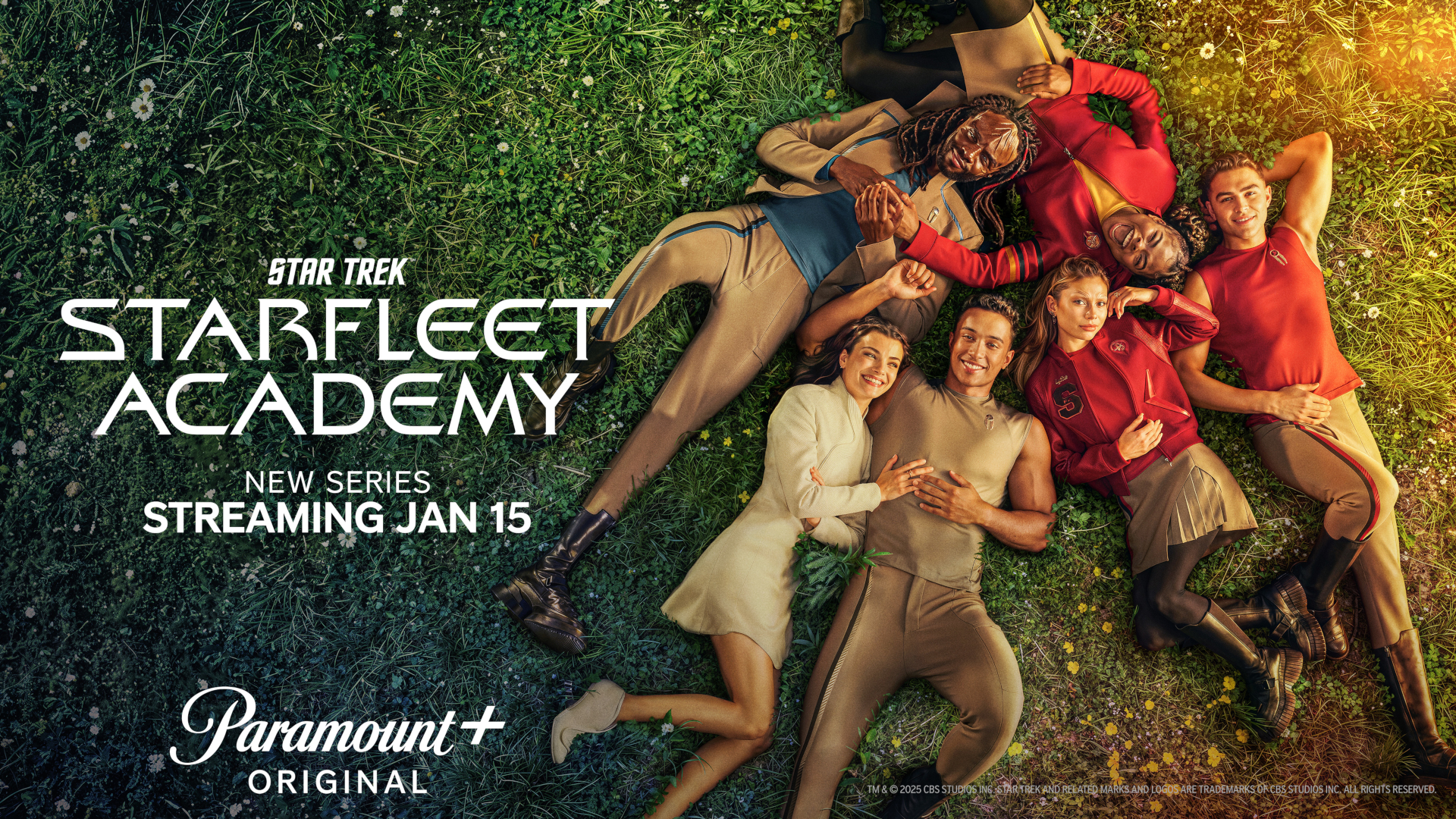
I don’t have the source, but several months ago I did read an article in which someone from Paramount/Trek HQ attempted to reassure Trek fans that Starfleet Academy would not be “90210 in space”. Naturally, the peanut gallery was skeptical because how could the show not be exactly that? While we could expect the usual level of Trek — starships, really bright lights, impossibly clean surfaces, and more weird alien prosthetics than a Mos Eisley cantina — if we strip all of that out we’re still dealing with young people getting to know one another through crisis management of the week stories, both personal and galactic in scale. All Trek shows focus as much on interpersonal relationships as they do tech and Starfleet Academy should be no exception.
That being said, the only stumbling block in this case is that the people doing the interpersonal relating are adult-written-young-adult characters. While we’ve all been young adults, I don’t think many of us would be very good at writing younger characters who don’t come out as a bundle of cliches. Long-running sci-fi properties like Star Trek and Star Wars must be doubly-difficult, as they’re made up entirely of archetypes performing in archetypical ways. In the first episode of Starfleet Academy, we’ve already seen two of the male leads get up in each other’s faces, trading sarcastic and testosterone-fueled one-liners, only to be pulled apart by one of the young women of the group. There’s also the hyperactive ADHD stand-in “photonic person” — yes, we now have holograms as recognized Federation citizens — and a soft-spoken, non-violent Klingon who likes bird watching. I’m all for subverting tropes within canon, but I sometimes think the Trek writers have purposefully pulled Mirror Universe personalities into the Prime for some of their characters “just to be different”. We’ll see how it goes.
What’s weird, though is that within the first two episodes, I did not get the sense that these were obnoxious young adults who needed to be “straightened out”. I actually don’t know how to explain it, really, as it’s a feeling belied by a guarded sense of cynicism. While Caleb and Darem Reymi (George Hawkins) are obviously the typical male rivals in a place dedicated to “being the best”, they weren’t overly violent to one another. They didn’t like one another, but they seemed to understand what a lot of people — and to pick a nit, Star Trek fans — don’t: you don’t need to like someone, but you also don’t need to instantly hate them with passion, either. Naturally, Caleb and Darem end up a dorm-mates, and by the end of the second episode, they seem to have found a begrudging respect for one another as a result of their roles in solving the catastrophes they have already encountered. This is, if nothing else, the Star Trek Way.
Oddly Weird
This is the part where I talk about the vibe I did not expect: how silly some of the show can be. We’ve had several Nu-Trek shows over the years, and while all of them have brief flashes of levity (Lower Decks taking it to the extreme), Starfleet Academy is a kind of repudiation of whatever John Wick/The Matrix BS they tried to do with Section 31.
Since this is Starfleet Academy, we should expect it to be the nexus of All Things Trek, although being in the 3Xth century makes it kind of difficult to port TOS and 90’s Trek wholesale. The one exception is the return of The Doctor (Robert Picardo) who is, of course, eternal. The Doctor was always a source of disgruntled comedy in Voyager, and thankfully Picardo remembers his character well (he even resurrects the “Tricorder…Medical tricorder” joke). Jett Reno (Tig Notaro) surfaces in one episode as her usually dry and no-bullshit self, and has an interaction with Caleb that I think might be the Chekov’s Gun for the season. Continuing to break new ground and give “Trek purists” a headache, we also have Lura Thok (Gina Yashere), child of a Klingon mother and a Jem’Hadar father, I guess? I saw a comment that made a point to mention that Jem’Hadar are clones and as a result don’t need genitals, so…how? Personally, I don’t care because Thok channels R. Lee Ermy in every military role he’s ever played and it’s kind of funny. The good news is that I don’t personally feel that what silliness there is goes overboard. Right now the Academy is a closed environment, relatively free of the usual kinds of outside interference we expect to generate the crisis of the week in Trek shows. Anyone who has been to college will understand that such environments are one part controlled care and one part personal growth and experience, and while the desired outcome is serious, the day-to-day lives lead getting there can be anything but.
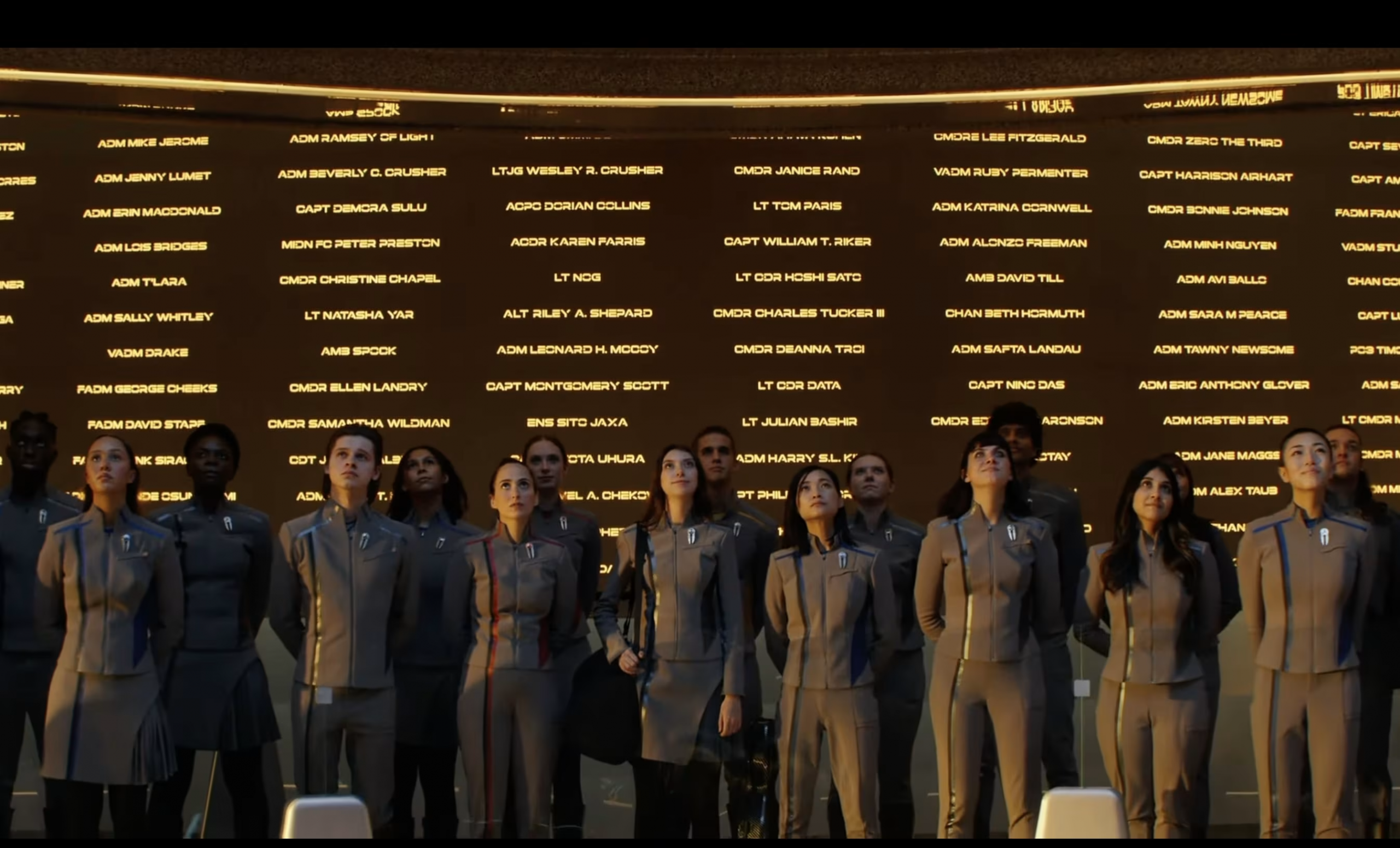
There are other interesting touches here and there, such as the occasional appearance of the an exocomp named Almond Basket and a Brikar (a species introduced in the criminally underrated Star Trek: Prodigy). The DOT-23 droids are also ubiquitous, and occasionally offer some non-sequitur injections of their own. I’m sure there are a ton of other easter eggs for the eagle eyed, but I’d be remiss to not give a shout out to Admiral Harry Kim, mentioned on the wall of notable Starfleet officers of the past. Good job, Harry. You made it.
The Seasonal Narrative
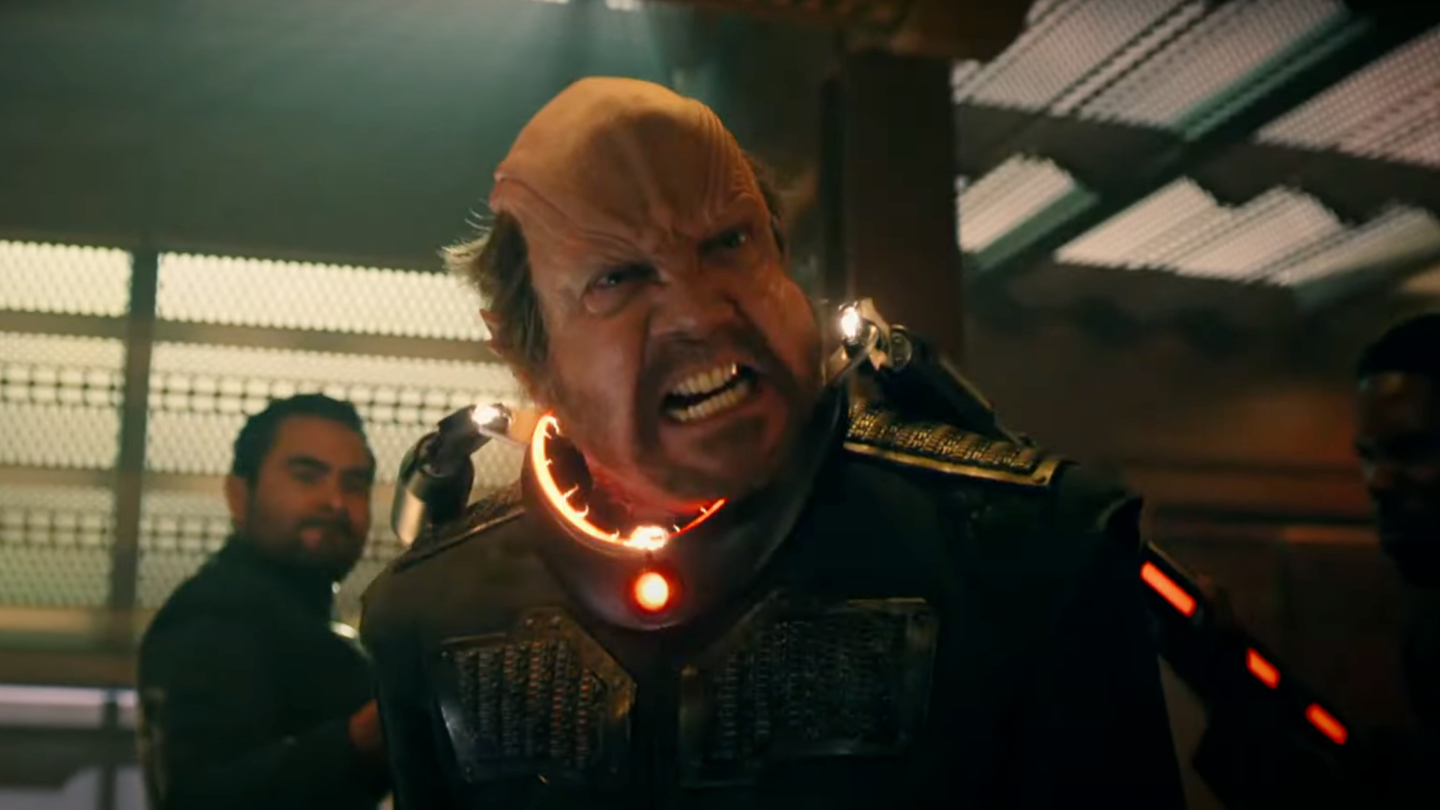
One character I haven’t mentioned is the one who started this whole thing: Nus Braka (Paul Giamatti). He’s a member of the Venari Ral, a pirate group that had taken advantage of the dissolution of the Federation during The Burn. In the first episode, we find that Braka had taken Caleb’s mother and him onboard, offering to feed and clothe them in exchange for her participation in the hijacking of a Federation transport. Braka killed a Federation officer and as a result, Caleb’s mother was named as a accomplice, leading to her internment and Caleb becoming a ward of the Federation for about an hour before he escaped towards his future. I think we all know the extent of Giamatti’s acting skills, and he doesn’t hold back here. Braka is obviously a criminal, but he’s not portrayed as insane; just really, really intense. I really like this character because I like Giamatti. Having escaped from the penal colony where Ake had remanded him to 15 years prior, they meet again as the U.S.S. Athena — a starship that serves as both an Academy classroom and no doubt the vehicle for getting students into dangerous situations later on — is hijacked by the Venari Ral.
While I really like Giamatti’s Braka and hope to see him again, I have a theory about this season. In the second episode, Reno is teaching a class on temporal mechanics. She reiterates that she was born in 2215 and catapulted almost 1000 years into the future. Later, she verbally spars with Caleb who is doing research to find his mother rather than participate in the class, and he explains that “…there’s nothing you can teach me that I don’t already know about temporal mechanics.” I also swear — but cannot find the scene — that someone told Caleb that his mother had become quite adept at physics during her incarceration. I figure that eventually, when Caleb and his mother are reunited, it’s going to be about Nahlia having created or is attempting to create a temporal anomaly to go back and either kill Braka before he hijacks the Federation transport, or to get her and Caleb out of the initial series snafu so that they don’t get separated. Of course, this would have to happen at the end of the season, by which time Caleb will have suitably integrated into the Academy and realize that if events of the past didn’t happen the way they had, he would never have gotten to where he enjoys being now. That sounds like a prime Nu-Trek moment, so if I’m wrong, you have to admit that I could have just as well have been right.
Verdict
Honestly, I had felt myself sliding into the pit of expectations that this was going to be “90210 in space”, but so far I’m not really feeling that. The older cast and at least one story so far that’s external to the goings-on at the Academy (the courting of Betazed to rejoin the Federation) have provided a good balance to what could have easily been a seriously insufferable group of young people mucking about in the guise of a Star Trek series. I like the elder cast, but I’m not 100% sold on all of the younger; I’m a bit annoyed by the relationship between Caleb and Ake as it seems way too familiar, although that’s a mechanic that allows Caleb to be the kind of character he is. I hope it comes back to bite Ake in the butt later on as I think it would be only natural and provide a good crisis point. I am worried to eventually learn about the rest of the young principals as they are currently and fairly undefined, and shining a light on each of them in turn might ultimately resolve that they didn’t get enough time to “bake” and are just roster filler in the most tropey ways imaginable.
Since it’s not set on a starship all the time, and since it seems to be giving the Trek universe a kind of reboot, Starfleet Academy can bring back what many claim was lost in this era of Nu-Trek: the feeling of hope in the future of humanity. The Academy is on the cutting edge of rebuilding the Federation basically from scratch, and if the second episode serves as a template for this, they’ll have their work cut out for them in convincing old allies that the Federation does have their best interests at heart. I’d like to continue to see these kinds of storylines alongside whatever “coming of age” stories I think we have to brace ourselves for in the coming weeks.
Overall, then, I’d say the series is off to a good start. Paramount released two episodes, one of which is available on YouTube for your viewing pleasure, so if you don’t subscribe to Paramount Plus, be sure to take advantage of this. Every series has their ups and downs, though, so I expect that my satisfaction will be uneven over the course of the next 9 episodes. The thing is, I hope this isn’t destroyed by the trolls and gatekeepers, because for me, even bad Trek is better than no Trek at all. Except Section 31. Let’s not ever talk about that again.
As a footnote, I had to slap myself from veering off into a bitchfest about the trolls and gatekeepers; as of the writing of this post, IMDB has an aggregate rating of 4.9/10 from 2300 people who think their opinions are more important than anyone else’s. I cannot say enough bad things about gatekeepers. Go fuck yourselves.



4 Comments
Tipa
January 16, 2026 - 10:29 amI’ve only seen the first episode; I resubbed to P+ for the series, but I just ran out of time last night to watch both of them. I posted my reactions to the first episode on Gamepad.Club. Since I didn’t see the second episode, I didn’t know anything about time travel. In the first episode, it was fairly clear that Caleb’s mom had aided Giamatti’s escape and will show up at some point later to really complicate things. This is made clear in the first episode when Giamatti plays back the message that was encrypted with a code only Caleb and his mother knew.
My problem with Trek in general is that all problems can be solved with sufficient technobabble. Every tense situation just becomes a waiting game for the technobabble to form and solve it. I’d have been far happier if they’d just faked everyone out and had a second Burn that forced them to land on a hostile world and rebuild a society according to Starfleet ideals. Maybe that would end up too much like Battlestar Galactica’s reboot — but we need more of that kind of show. Who hasn’t seen Adama’s warning about when the military become the police these days? When have we seen any reference to anything from Trek outside of Trekkies memeing each other? They always, always resort to the deus ex machina to solve their problems.
If SF Academy has Caleb’s mom showing up to tell him how disappointed he is that he is embedded with the enemy and explains the Federation’s blind spots and inability to deal when the technobabble stops working (see: the Burn, that left the Federation nearly powerless while all sorts of other factions flourished), maybe this show will become something memorable.
I’ll watch it, of course. But I felt Prodigy did far better, even from the start, of explaining the Federations virtues and its flaws.
Scopique
January 16, 2026 - 11:24 amI’ve no doubt that Caleb’s mother threw in wholesale with Braka, as I’m sure leaning into the “enemy of my enemy” is the easiest shortcut for a character that probably won’t get much screentime by the end of the season. But we also don’t know if she’s in for a penny, or if it would be an alliance of convenience so she could get out of prison and work on her OWN agenda.
TOS wasn’t much about the babbling…I mean, judging by the sets no one was really super-concerned about realism at that time. It wasn’t until TNG that things got technical, and I think people DO gravitate towards that. But Trek is not ABOUT that. In the first episode of SA, we had characters who had to put aside their differences to enact their technological solutions, and it’s really about the characters and relationships and what the plot is saying allegorically (if anything) about our modern society. They make up dire situations, they have to get out of dire situations, and considering it’s a sci-fi show, it’s either a tech solution, a combat solution, or a people solution. Trek often times uses all three, but mostly the first and last which I think gives a wide audience approaches that can ground the story in both reality and fantasy at the same time.
I AM still going to look at this as a “reboot” of the Federation. The second episode actually hits that nail squarely on the head without ambiguity as they try to get Betazed back into the band. Since they state it outright, I’m going to hold them to it so I hope they don’t drop the ball on “Federation 2.0”.
Nimgimli
January 16, 2026 - 11:51 amI only skimmed this cuz I’m a spoiler-phobe but somehow that it is set in the Discovery era makes me somewhat more likely to sub up to P+ to give it a chance. Have to admit that some of my resistance is political ill-will towards CBS but otoh you have to pick your battles.
We’re a little behind (re-watching S1 of Fallout before watching the new season… I think it’s my 4th time through S1 and still love it) but will probably give this a go next.
Scopique
January 16, 2026 - 12:38 pmJust to be clear: it’s the 33rd (?) century Discovery era, not the pre TOS era. Not sure how much of that is communicated through the trailer and previously released materials.
Comments are closed.