
 Scopique
 Scopique
I like to think of myself as a methodical gamer. I know I’m not an action gamer nor a twitch gamer, and any title which requires reflexes is going to get a hard pass from me (though probably not without me trying to power through it first). In my mind I see myself sitting back and pondering my next move, and my next, and the one after that like a chess grand master who has the whole competition sewn up before he takes a seat at the board. In reality, I tend to get overwhelmed, bored, and confused with these deeper titles I so want to like. I’ve managed to kick my way through several strategy games through sheer force of will, but any resemblance to thoughtful success is purely accidental. That’s why I appreciate Star Wars: Zero Company.
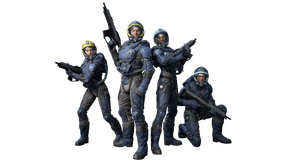
The game takes place in the waning years of the Clone Wars, something which probably means something to someone who isn’t me. We play as Hawkes, a former Republic military leader who got their squad killed and then got the boot, so they’re now running their own mercenary squad, Zero Company. The game starts with a mission already in progress, where Hawkes and their team are apparently tasked with recovering some kind of holopuck for an as-of-yet-unnamed employer.
Zero Company is a tactical turn-based game which is being lovingly compared to X-Com, the grandaddy of such titles. I’ve played a few X-Com games, of course, never to completion, of course, and I think that the comparison is a bit over-generous; it certainly tells us that Zero Company has a lot of similar mechanics to those found in X-Com but beyond that, it prefers to focus more on narrative and less on the bureaucratic and military management that X-Com relies on. For example, Zero Company substitutes the base-building of X-Com with a fully voiced narrative and cut-scenes. This makes things feel far more personal as our soldiers aren’t merely NPCs-we-named-after-friends-and-family. I am finding that when played on the Normal difficulty (the default), Zero Company isn’t terribly hard on me (at least in it’s opening hours). While permadeath for characters is the norm, a character needs to be downed three times before they’re considered KIA. The good news is that this is an option we can turn off if we want, so that every character would need just a dip in the batca for a while before they’re fit to return to duty.
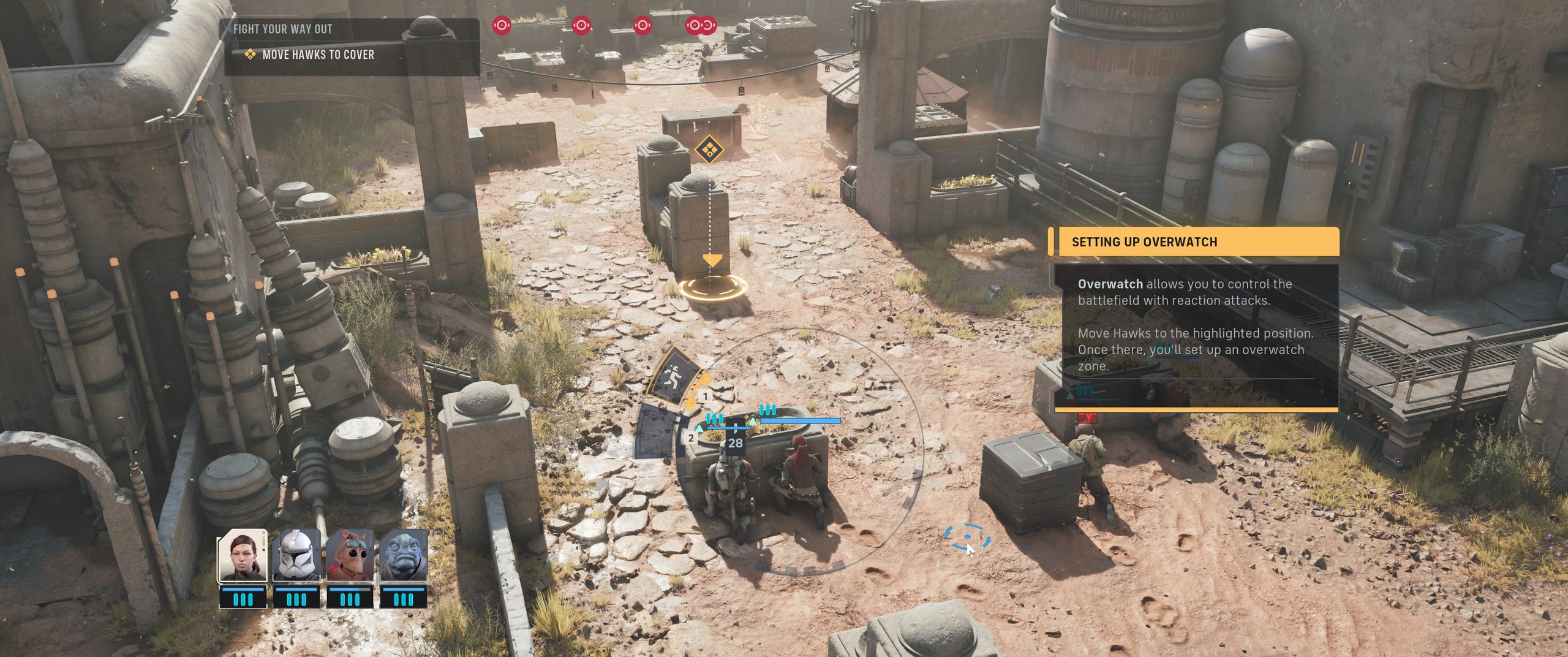
There are a lot of fun systems involved here, but I won’t recount them all because I am writing this shortly after waking and can’t recall all of the mechanics that Zero Company brings to the table. In combat, there’s a cool feature that allows one squad member to designate another as a target so when the target successfully hits an enemy, the squad member will get a free and immediate attack on the same target. Overwatch is also an active affair which not only allows us to sweep a cone of observation in the direction we want to monitor, but also the distance, complete with to-hit chance represented as we do so.
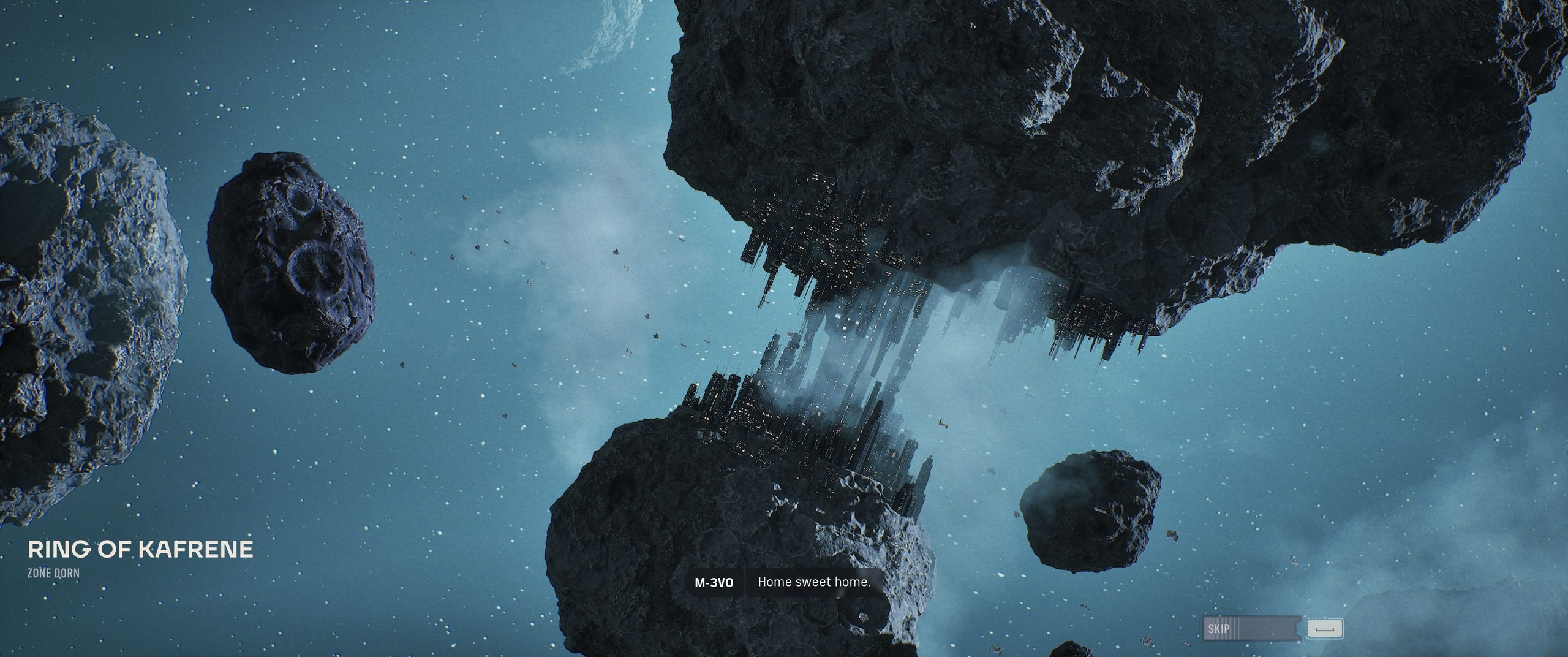
In between missions we return home to our base in the Ring of Kafrene. This is where we manage and converse with our team, level up our surviving characters, swap out and customize weapons, change character appearance, and manage inter-character bonds. Zero Company really wants us to treat our squad with respect, so there are many options that reward us for keeping as many of them alive as possible.
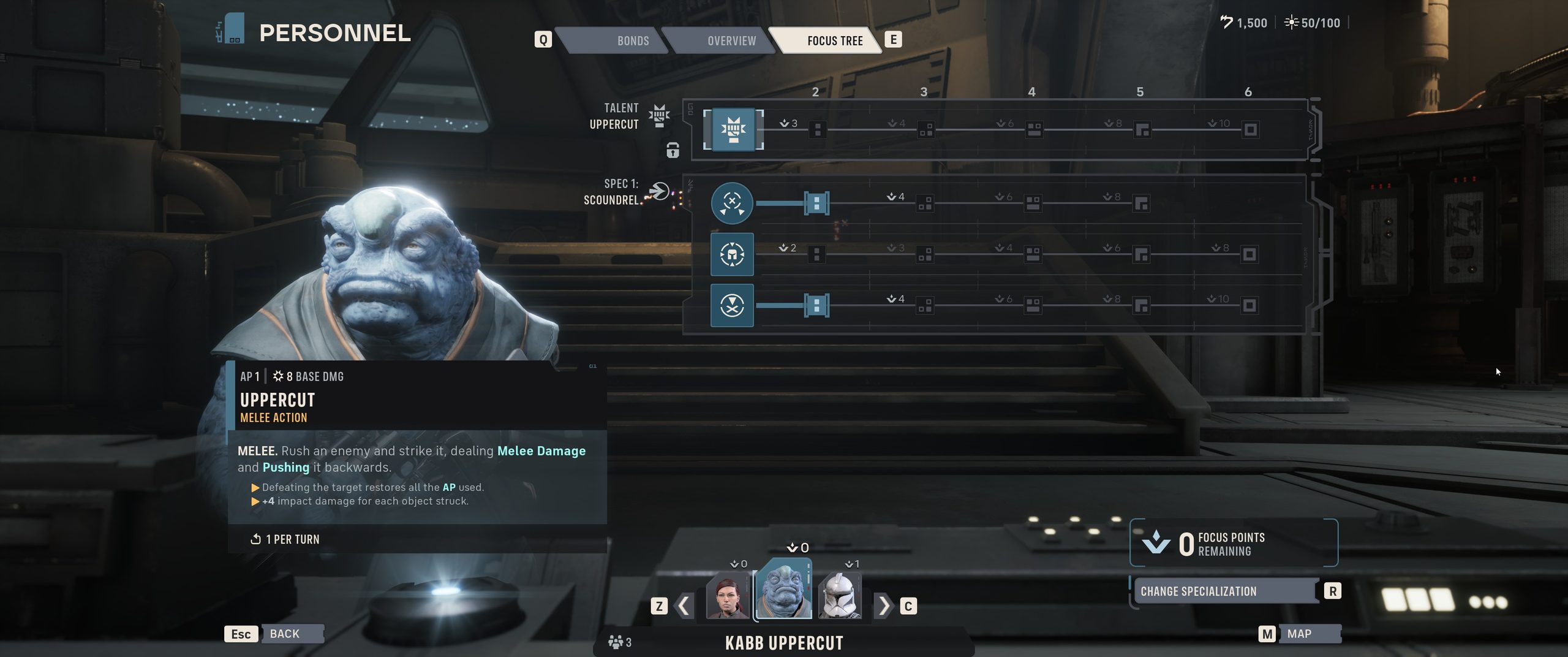
When starting out, we can create our Hawkes from several typical Star Wars archetypes such as gunslinger and scoundrel and soldier. After that, each squad member we acquire is unique and of a particular archetype. That means that each character is locked into a particular set of skills based on that archetype. As characters level up, we can increase the effectiveness of their combat talent, and each of their three archetype specialties.
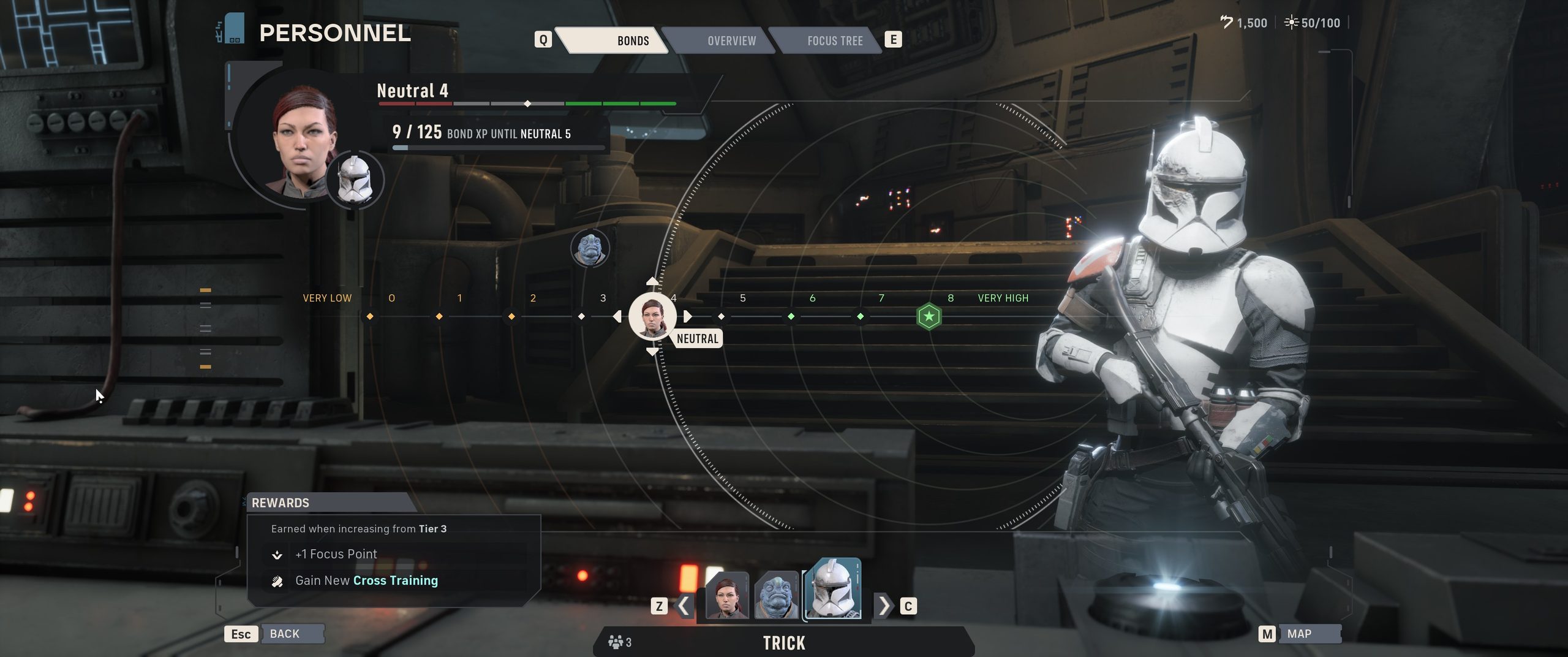
The bond system is where things get really sappy. The longer characters fight together, the greater their bonds. When two characters reach a bond milestone, they can select a shared trait that both receive to make each of them more effective in combat. The trick here (I assume, and no pun intended) is to pick a trait that will serve both archetypes effectively. Not only does this make everyone a better combatant, but it provides additional incentive for keeping the squad alive.
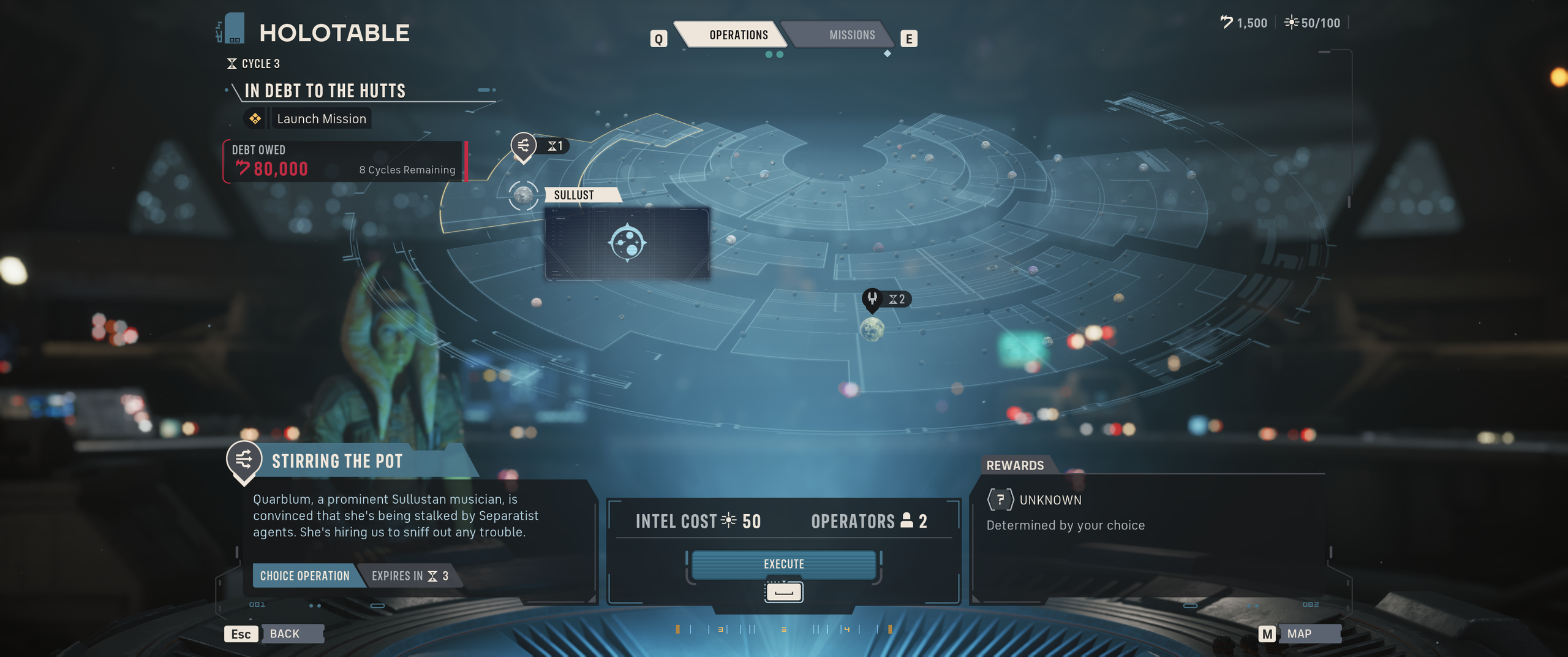
There are two types of missions in Zero Company. The first is an operation. When starting out, this is a quick narrative paragraph which explains a situation and provides a choice. Each choice can provide different rewards such as rep, cash, or a mission. Missions are where we head to a location for the tactical combat. Each mission takes one cycle, and that’s important. Not only does the game start out by giving us a deadline for paying back a loan to the Hutts, but some operations or missions will only be available for a certain number of cycles, forcing us to make decisions about which content we are going to tackle. I’ve heard that replayability of Zero Company isn’t as flexible as it is with X-Com on account of it being narrative-based, but starting a new game just to take activities we passed over might be a salve for that particular itch.
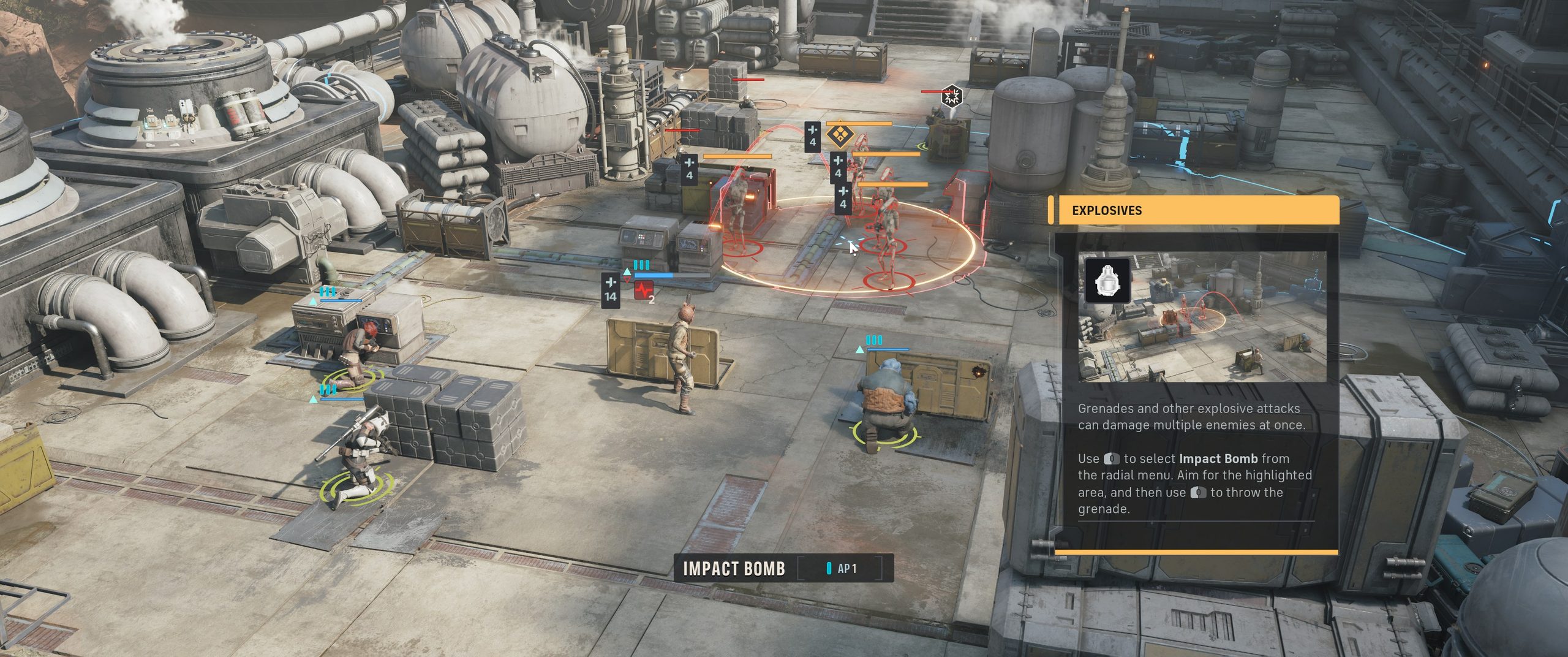
The combat missions are pretty standard fare if you’re familiar with X-Com and it’s ilk. Maps are much smaller in Zero Company so there’s not a lot of pre-positioning required, and there’s not a lot of side-skirmishes going on. Each character has a certain number of action points which are used for movement, attacks, overwatch, support, and other actions. Cover, flanking, and setting or disrupting overwatch are all things we need to consider. Melee is also an option, with the bonus of a successful melee attack pushing the target a certain number of positions. This can be used to push a target into a friendly cone of fire or, as I saw in a video, off the battlefield entirely.
Personally, I feel like Zero Company’s combat management is less stressful than how I felt about X-Com. Since the playfield is smaller, I don’t have to make scouting decisions. The game knows we’re on the map to shoot enemies, so it puts us in relative position to do that. Keeping actions limited to mainly moving, shooting or punching, overwatch, and occasionally assisting other characters means I don’t have to overthink things; when I get the opportunity to trigger an archetype special, I need to consider which character would be most effective. For die-hard X-Commers that might sound like a “dumbing down” of the genre, but it makes each combat mission fairly quick and keeps the momentum of the story going.
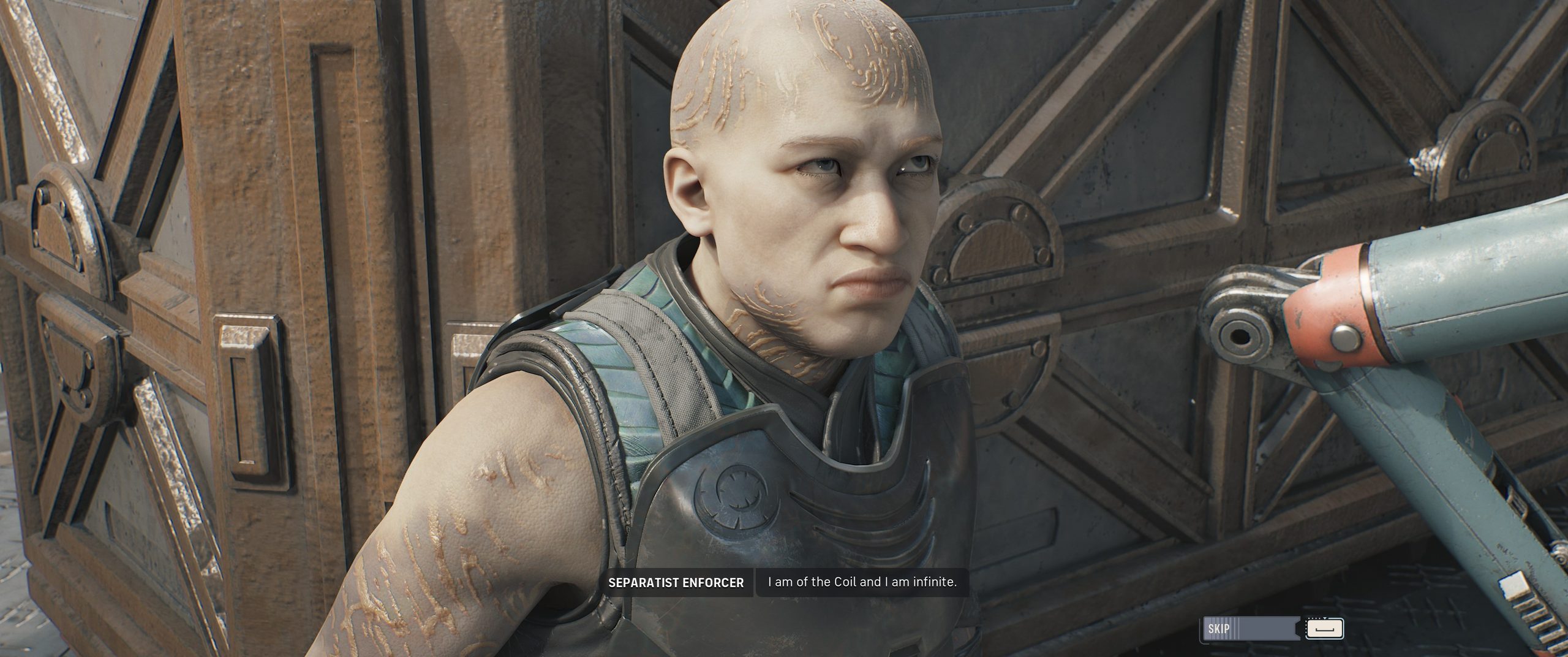
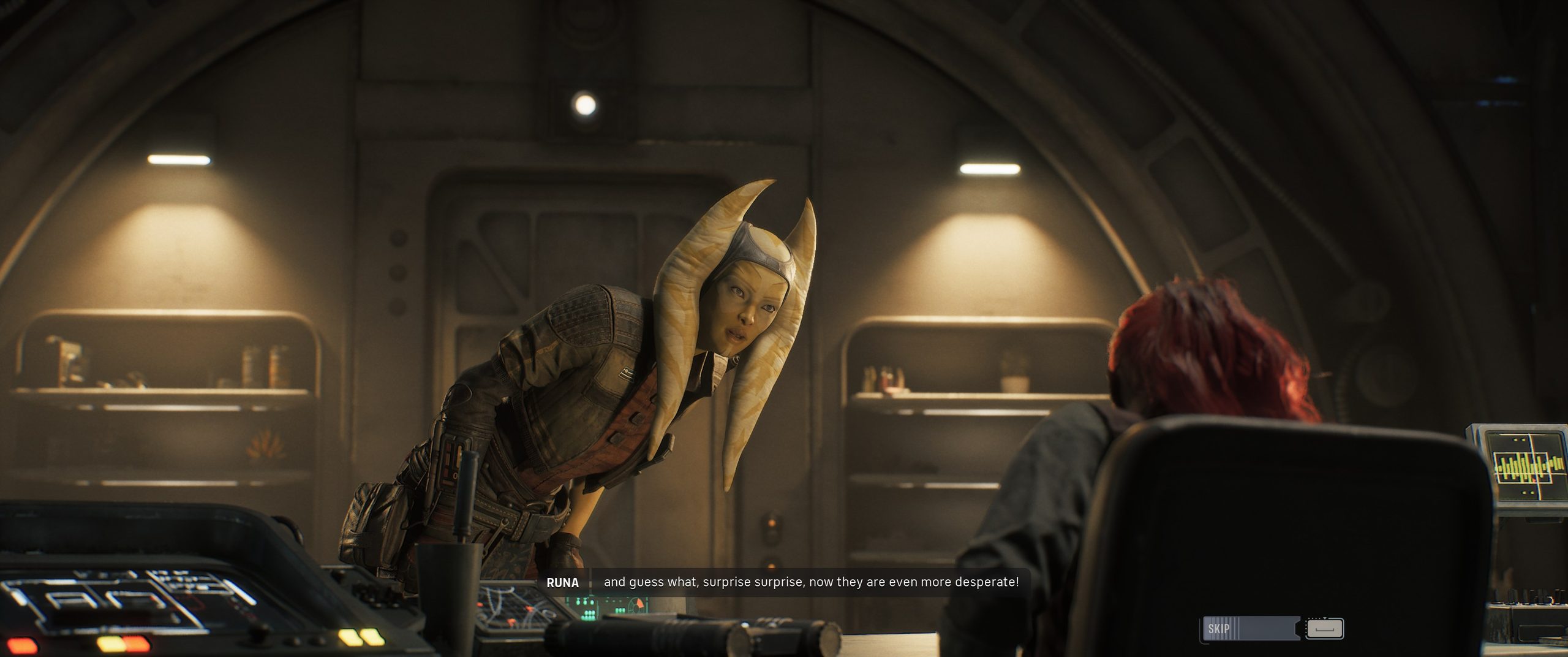
Speaking of story, there’s apparently some kind of cult that’s spreading throughout the galaxy against the backdrop of the dissolution of the Republic. Zero Company finds themselves smack-dab in the middle of this, having been hired by the Republic to deal with it. The good news is that Zero Company is not about Jedi or the Force, although being a Star Wars product it can’t outright ignore it so it does make an occasional appearance. This in-universe side-story is a great way to get me, a non-Star Wars guy, to care about what’s going on because without all of the space wizard nonsense it’s a decently gritty sci-fi drama.
I think the best part about Zero Company for me is that it’s almost an instant-action game. I can log in, do a mission or two, see some cut-scenes and manage my team, and bug out. I’m hoping that this will mean that I can keep interest in the game, either mainline or as a side-quest for when I’m not really sure what else I’d want to do. I don’t know if die-hard X-Com fans will find a lot to be excited about with Zero Company as it seems less intense than it’s forebearers, but I am finding this game to be fun, quick to play, deep where I prefer it to be deep and less so where I’d rather it not be, quite enjoyable.



2 Comments
Nimgimli
August 28, 2026 - 8:42 amIt’s always low-key soothing to hear from someone else who thinks “the Force” isn’t what makes Star Wars interesting. I’ve always been more about the blasters then the finger waving.
I have also never finished an X-Com but this write-up has me adding Zero Company to my wishlist. Been trying to get back into strategy games without being completely overwhelmed (in my younger days I LOVED complex strategy games that came with a 100 page manual but now I bounce off anything too complex/intense) since these days I find myself struggling with ‘action games.’ Even when I do ok in them I’m playing with this vague dread that ‘any minute now they’re going to throw a boss at me that I can’t get past.’
I do not recommend getting old though I suppose the only alternative is less preferable!
Scopique
September 1, 2026 - 8:31 amI think it’s lazy for Star Wars to rely on Jedi and the Force for everything. I get that it’s kind of been made the central theme of the tentpoles, but even Han said early on in the original trilogy that the Force was a hokey religion, meaning not everyone in the universe is down with it. Personally, I think Andor is the pinnacle of Star Wars media, and it had absolutely NOTHING to do with space wizards.
Comments are closed.