Scopique
 Scopique
I don’t know if it’s in the water or if it’s my age but I’m regressing in a lot of aspects of my life right now. I’ve talked about my interest in starting up a new collection of cassette tapes, which has segued somewhat logically into CDs and maybe even vinyl, assuming I can get the hardware to play each format. A few years ago I decided I wanted to get into Old School Photography so I picked up a Panasonic Lumix G7 and a few lenses, and went really hardcore into it for a while but ultimately the idea and strain of having to lug around a whole backpack full of equipment, thinking I knew what I was doing, meant that I ended up using the camera more as a webcam than a photo camera. Maybe as a repudiation of that phase of time, though, I picked up a nouveau point-and-shoot digital camera from Camp Snap, which arrived today.
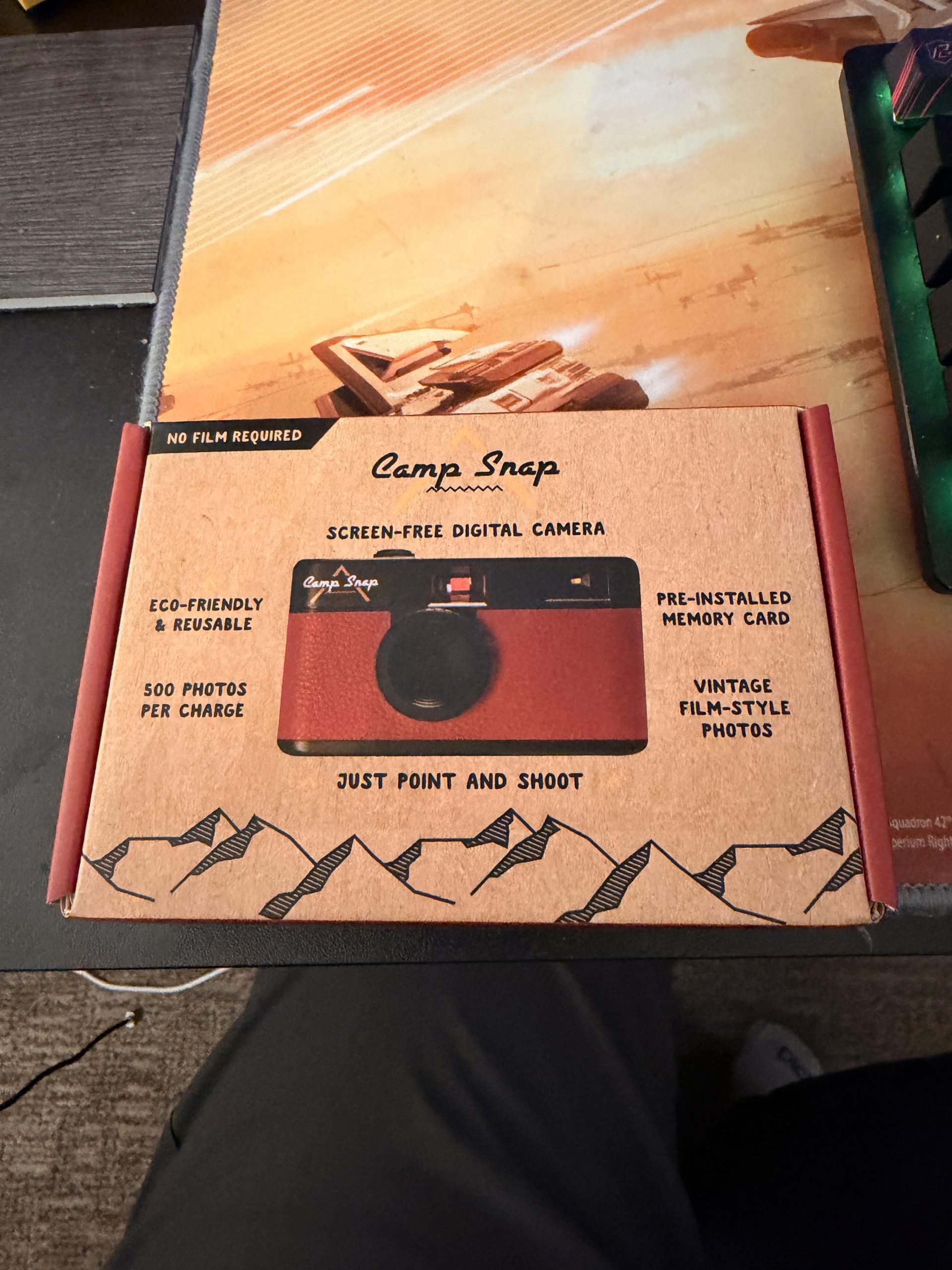
As you can see, the camera comes in a pretty low-rent cardboard box. In the box is the camera, a USB-C to USB-C (ugh) cable, and a one sheet rundown of how to manage the device. It has a 4GB SD card which can hold 2000 photos, so not shabby at all, though the box says it can take 500 photos per charge…also not shabby. Sadly, it doesn’t come with a lanyard (the cool one with integrated USB cable was sold out), nor does it come with a lens cap. Thankfully, I have a 3D printer and a design file specifically for a lens cap!
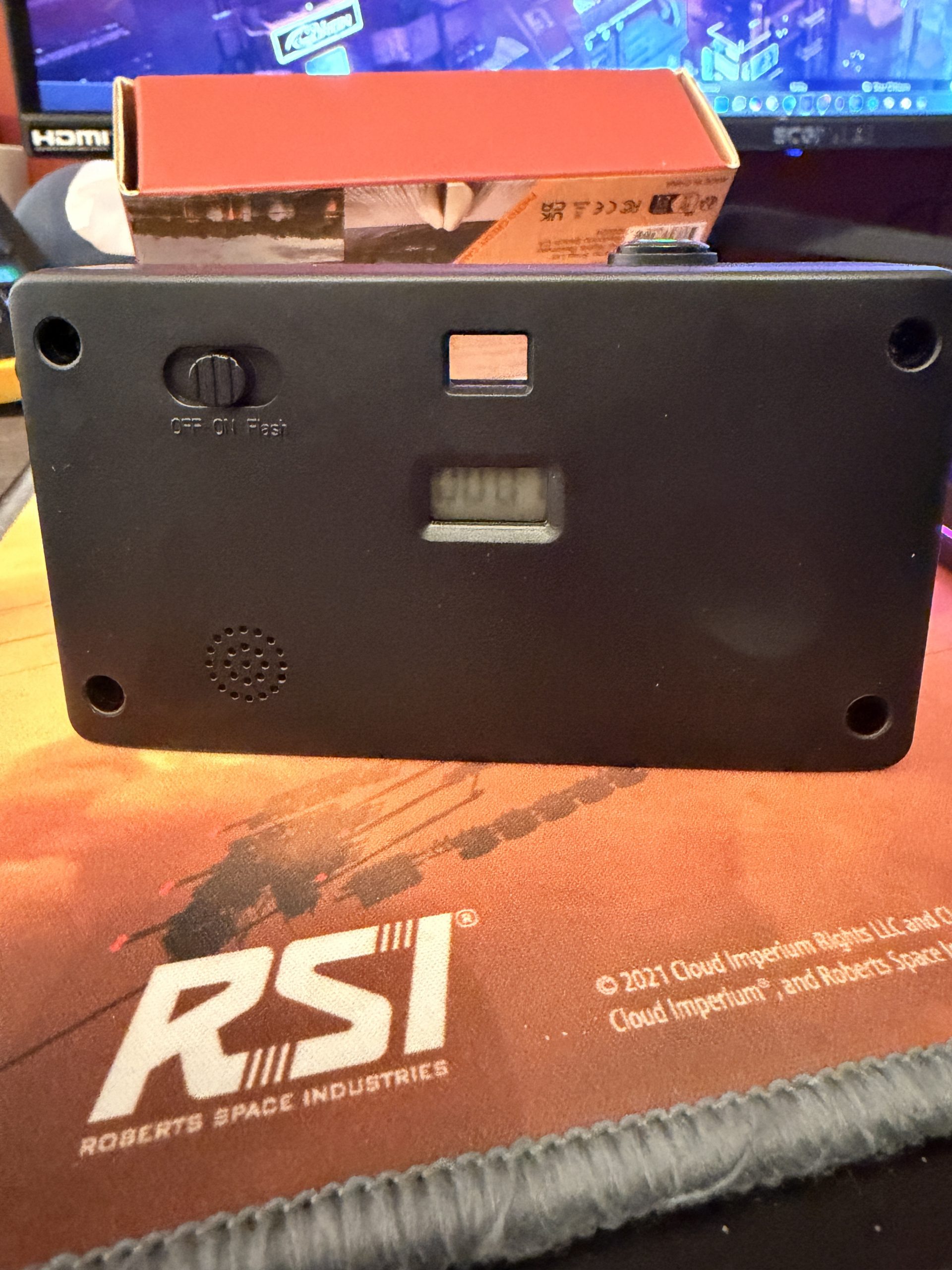
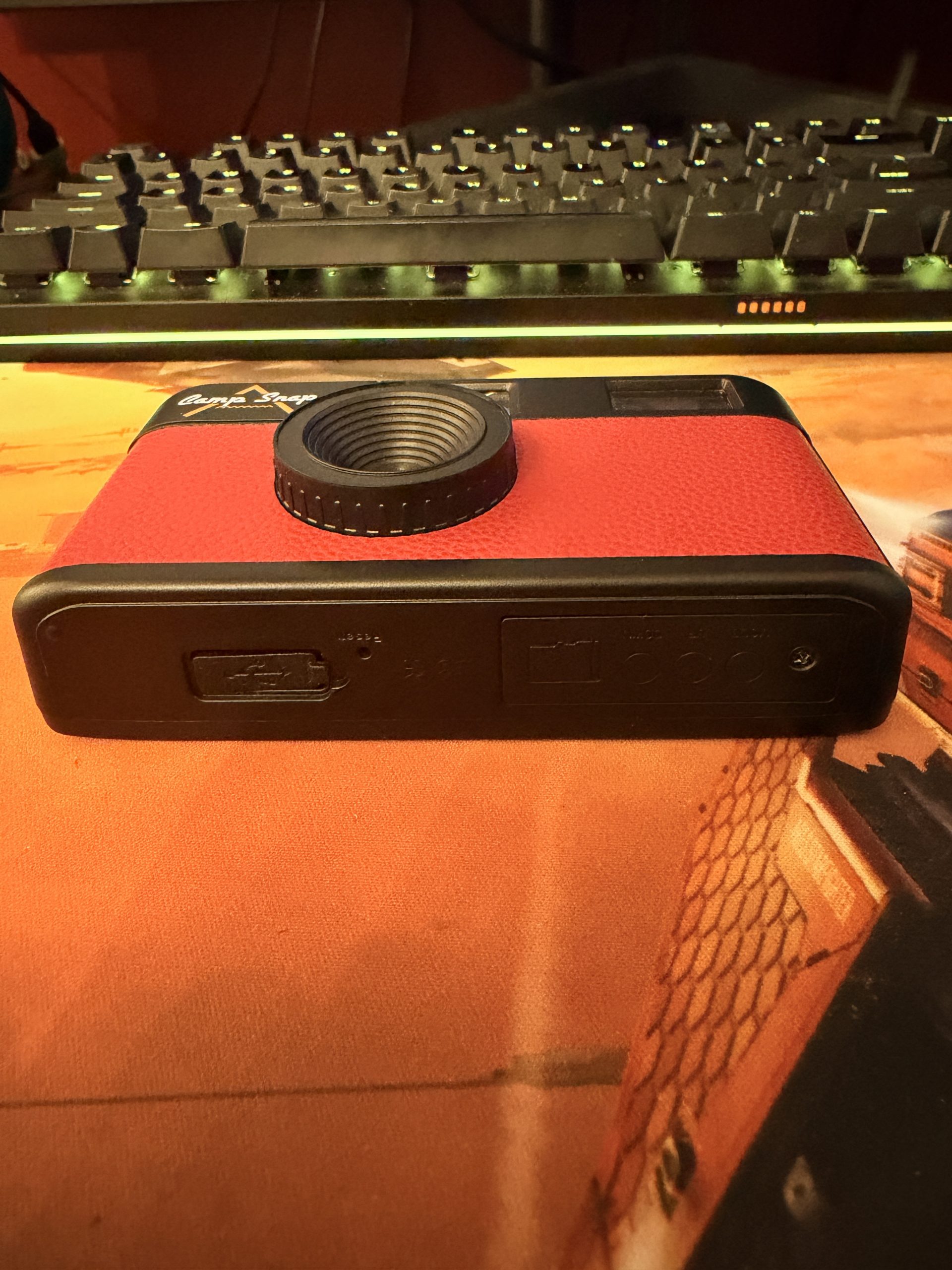
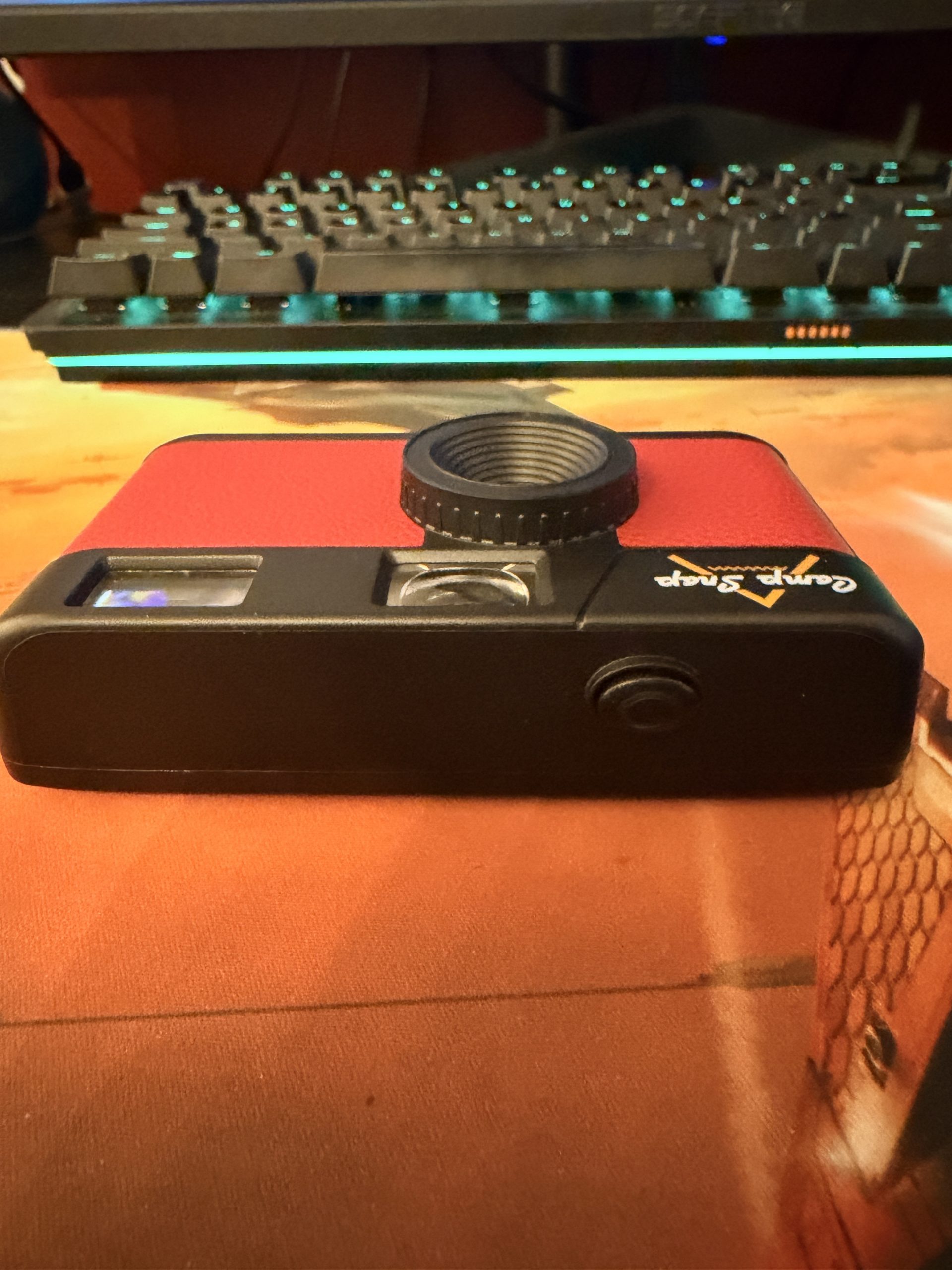
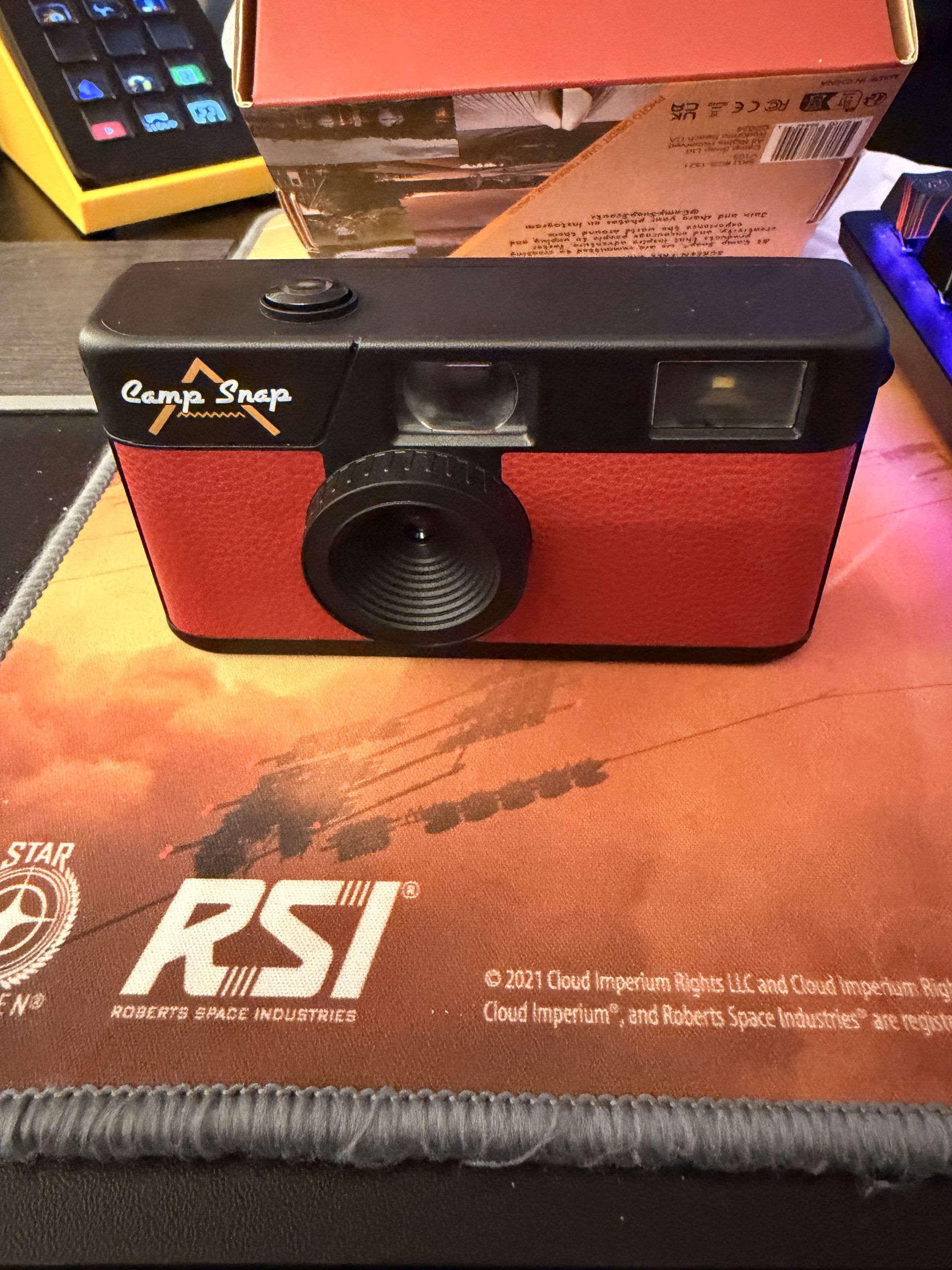
The camera itself is really light. If you remember the days of Kodak disposable cameras…it’s literally about the same weight if not lighter. I kind of feel scammed because I’m sure that the innards are just some circuit board, a battery, a flash, and a lens with a really nice plastic exterior. Is this the kind of thing I could buy in parts for less than the $60 I paid for the pre-constructed version? I guess paying for convenience is a thing, so I’m not really sad about it. Considering we’re going back to Ireland in a few months, I wanted to have something dedicated to picture-taking that felt better in my hand than my phone, so hopefully this does the trick.
Filters
The Camp Snap camera is a digital camera in all ways, including how it can use a variety of filters to provide a specific look to all images taken with the camera. By default, the camera comes with a “vintage” filter installed (which is really just a file that processes the image, and is not a feature of the hardware itself). Only one filter can be on the device at a time, and since there’s no UI to manage the camera, I’d have to be absolutely sure the filter I’m using is the one I want to use for the duration if I don’t have access to a computer that would allow me to change the filter file on the SD card.
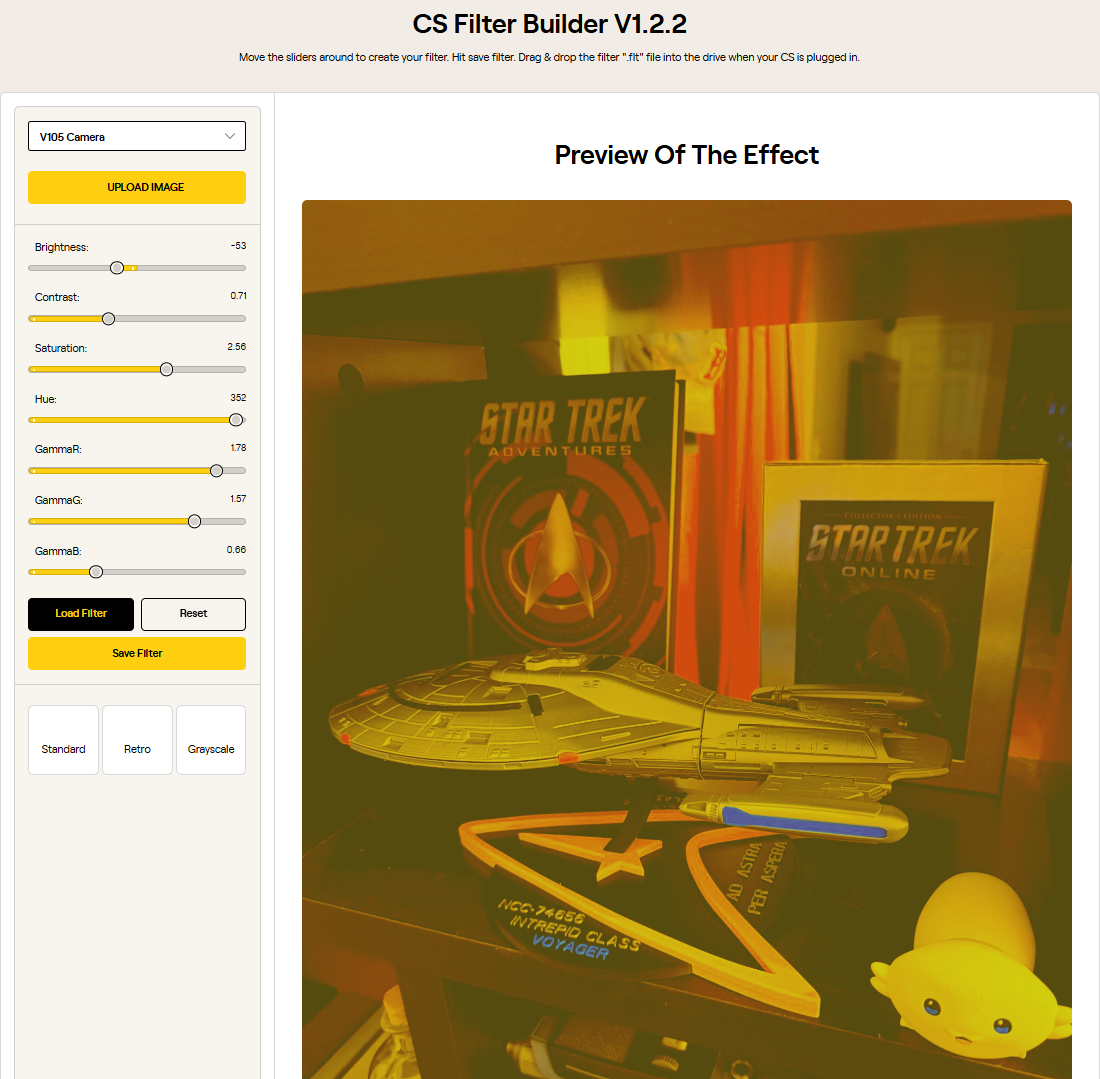
Interestingly enough, Camp Snap has a utility on their website which allows users to create their own filters, download them, and then use them with the camera.
Taking Pictures


This picture on the left was taken with Camp Snap camera using the default “vintage” filter and no flash. You can see the “grain” being added, especially in the lower-left corner. The color range is also artificially limited. The photo on the right was taken with the iPhone 17 Pro (I think my lenses are smudged).
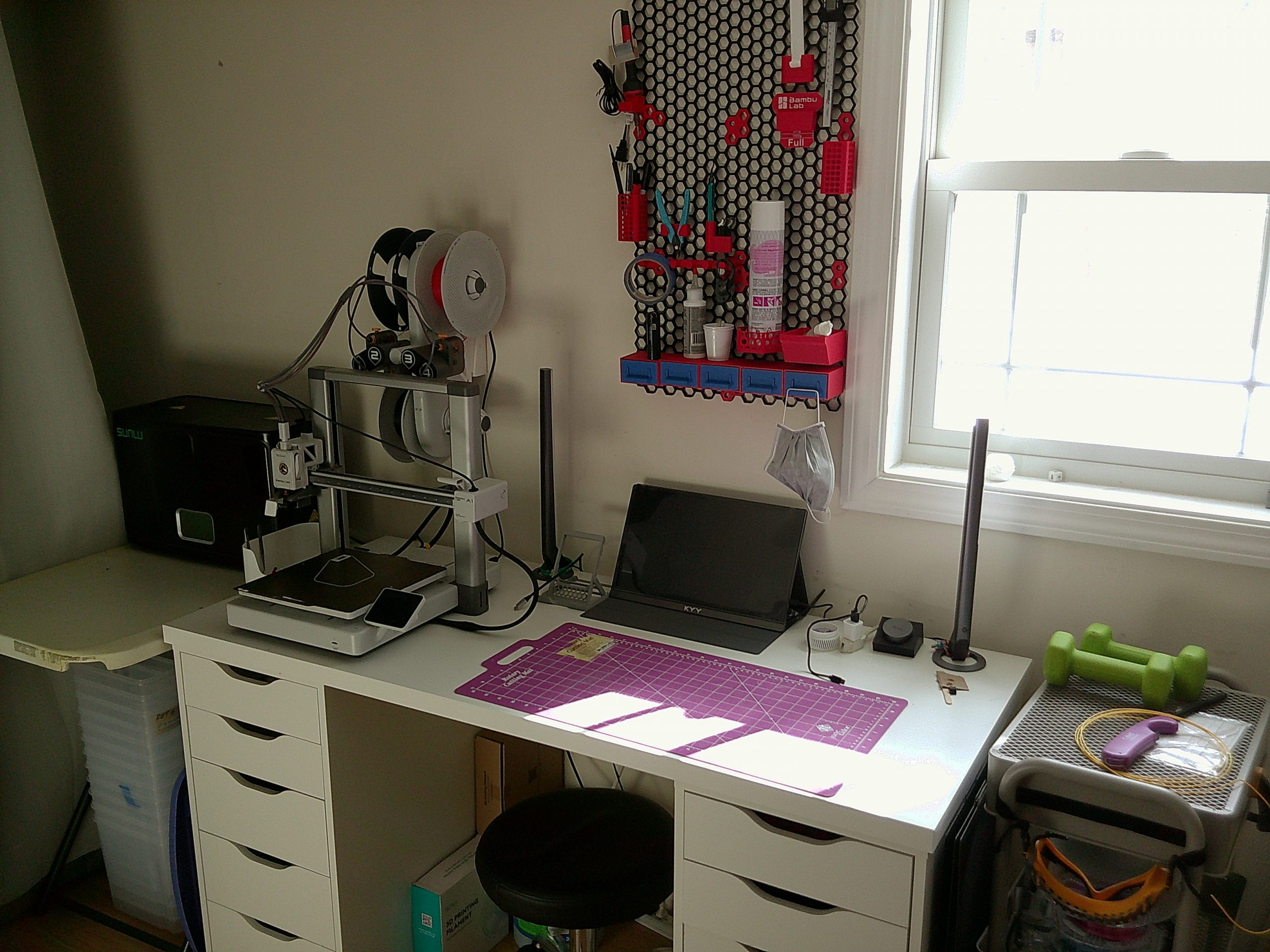
This is my printer workspace, taken with the Camp Snap and using natural light. It’s not terrible!

This photo was taken out my basement door with the Camp Snap. Again, not terrible. If you zoom in, however, you’ll see what you might expect from an old-school scanned photo or early-era digital camera image:

The images are actually recorded at a resolution of 3264x2448x24, so this “still from a VCR” doesn’t look like this because I cropped an image and zoomed it; this is the “real deal”.
Why Tho?
I don’t know. I like the idea of having a dedicated picture-taking device. Our cell phones are always with us and the iPhone 17 has a dedicated button on the side which instantly opens the camera and acts as a shutter release button, so it’s almost like having a point and shoot device. I will say that the relative mystery of taking a photo with the Camp Snap, using only the pass-through viewfinder, has a certain allure. Did the image come out OK? Did I get my finger in front of the lens?
More importantly, how essential are photos to us these days? Maybe because we have a camera with us all the time, being able to take photos and videos means that we care a little less about what we’re taking photos of. I know I use my camera to take photos of recipes, the back of my PC, serial numbers from the bottom of devices, or even random things I have no interest in keeping, but wanted friends or family to see what I see. On occasion I go through my photo library and can’t remember what or why I have certain images because a lot of them have no meaning outside of the momentary context in which they were taken.
Not having a viewscreen on the Camp Snap camera is a selling point. I can’t just take a photo for the hell of it because I don’t get that immediate feedback. I have to want to have a specific image at a specific angle with specific conditions, as best as I can get in the moment, and then pray that the resulting image is good enough to memorialize the moment the way I want it to. If not…well, that’s how we used to roll and we didn’t know any different. I could talk about the question of “quality”, though, because with a smartphone camera quality is a priority. I can choose to apply digital fixin’s to it, like bokeh or vignette, either during or after taking the picture. Many photographers spend post-processing time making their completely crisp and clear photos look like some other kind of output. Do I want my vacation photos to look like they were taken on a disposable camera or processed by some guy in a Port-A-Potty in a department store parking lot? I honestly do not know yet and by the time I have run some tests to decide that answer, the moments I wanted to capture will have passed. I think I’m willing to give it a try, though, because how it looks is only part of the reason why I’d be taking pictures anyway. The real reason is to have that jolt to the memory later on in life when I’m looking back through my past. Not only will I remember (hopefully) what the picture was about and why I took it, but it will also remind me of that time I tried a point-and-shoot digital device in an age of crystal clear smartphone cameras.